🩺Medically reviewed by Dr Saurabh Mishra, MD 

- 🧠 What Is Prostate Cancer?
- 📊 How Common Is Prostate Cancer?
- ⚠️ What Causes Prostate Cancer?
- 👴 Age Is the Biggest Risk Factor
- 🧬 Family History and Genetics
- 🌍 Race and Ethnicity Matter
- 🍔 Diet and Lifestyle Factors
- 🔥 Chronic Inflammation May Play a Role
- 🚨 Early Symptoms of Prostate Cancer
- 🩺 How Doctors Diagnose Prostate Cancer
- 🧬 Understanding Prostate Cancer Stages
- 🛡️ Can You Prevent Prostate Cancer?
- 🔍 When Should Men Start Screening?
- 💊 Treatment Options for Prostate Cancer
- 🧠 Emotional Impact of Prostate Cancer
- 🌱 Life After Prostate Cancer
- 💬 Final Thoughts on What Is Prostate Cancer: Causes, Symptoms, Prevention
- ❓FAQs About What Is Prostate Cancer: Causes, Symptoms, Prevention
Let’s talk about Prostate Cancer prevention today. And African American men, pay special attention. Prostate cancer develops when abnormal cells grow inside the prostate gland, a small gland located below the bladder in men. Although many prostate cancers grow slowly, some forms spread aggressively if doctors do not detect them early. Fortunately, early diagnosis often leads to highly successful treatment outcomes.
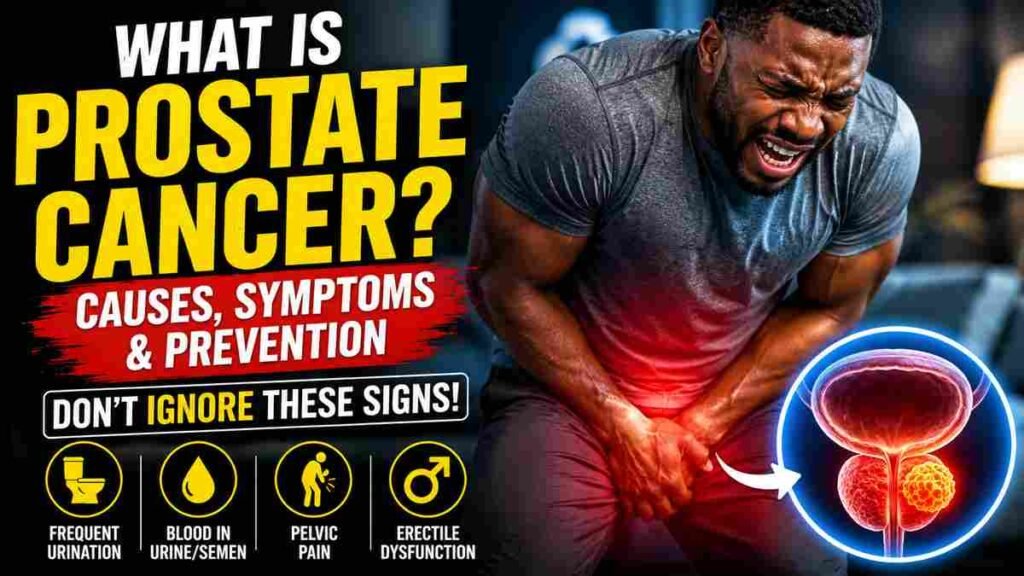
The most common warning signs include:
- difficulty urinating
- weak urine flow
- blood in urine or semen
- pelvic discomfort
- erectile dysfunction
- frequent nighttime urination
However, many men experience no symptoms during the early stages. Therefore, regular screening and awareness matter tremendously, especially after age 50 or earlier for high-risk individuals.
This guide explains what is prostate cancer: causes, symptoms, prevention in clear and practical language. Additionally, we’ll explore risk factors, early signs, diagnosis, lifestyle prevention strategies, treatment options, and frequently asked questions.
🧠 What Is Prostate Cancer?
The prostate is a walnut-sized gland that helps produce seminal fluid. It sits just below the bladder and surrounds part of the urethra, which carries urine out of the body.
Prostate cancer begins when prostate cells mutate and multiply uncontrollably. Over time, those abnormal cells may form tumors and potentially spread to nearby tissues, lymph nodes, or bones.
Although prostate cancer primarily affects older men, younger men can also develop it.
Moreover, prostate cancer remains one of the most common cancers among men worldwide.
📊 How Common Is Prostate Cancer?
Prostate cancer affects millions of men globally each year. In fact, it ranks among the leading causes of cancer-related deaths in men.
However, survival rates improve dramatically when doctors detect the disease early.
That’s why understanding what is prostate cancer: causes, symptoms, prevention becomes critically important for long-term health.
⚠️ What Causes Prostate Cancer?
Doctors still do not know one single exact cause. Nevertheless, researchers have identified several strong risk factors.
Usually, prostate cancer develops because of a combination of:
- genetics
- aging
- hormonal influences
- inflammation
- lifestyle factors
- environmental exposure
Let’s break these down further.
👴 Age Is the Biggest Risk Factor
Age plays the strongest role in prostate cancer risk.
Most cases occur after age 50. Additionally, risk rises significantly with each passing decade.
As men age:
- DNA damage accumulates
- hormone levels shift
- immune function changes
- cell repair mechanisms weaken
Consequently, abnormal prostate cells become more likely to grow uncontrollably.
🧬 Family History and Genetics
Genetics also influence prostate cancer risk heavily.
If a father, brother, or close relative had prostate cancer, the risk increases considerably.
Certain inherited gene mutations may also contribute, including:
- BRCA1
- BRCA2
- HOXB13
Therefore, men with strong family histories should discuss early screening with healthcare providers.
🌍 Race and Ethnicity Matter
Research shows that Black men face a higher risk of:
- developing prostate cancer
- developing aggressive forms
- dying from prostate cancer
Meanwhile, Asian men generally show lower incidence rates.
Scientists continue studying why these differences exist. Genetics, healthcare access, diet, and environmental factors may all contribute.
🍔 Diet and Lifestyle Factors
Although lifestyle alone does not directly “cause” prostate cancer, several habits may increase risk over time.
Possible contributors include:
- obesity
- smoking
- excessive alcohol
- processed meat consumption
- sedentary lifestyle
- chronic inflammation
Additionally, diets high in saturated fats and ultra-processed foods may negatively affect hormonal balance and inflammation levels.
🔥 Chronic Inflammation May Play a Role
Long-term inflammation inside the prostate may damage cells gradually.
Possible inflammation triggers include:
- infections
- obesity
- smoking
- poor diet
- hormonal imbalance
Repeated cellular damage may increase mutation risk over time.
🚨 Early Symptoms of Prostate Cancer
One challenging aspect of prostate cancer is that many men notice no symptoms initially.
However, when symptoms appear, they often involve urinary changes.
🚽 Urinary Symptoms
Common urinary symptoms include:
- weak urine stream
- difficulty starting urination
- interrupted flow
- painful urination
- frequent nighttime urination
- inability to empty the bladder fully
Because the prostate surrounds the urethra, enlargement or tumors may interfere with urine flow.
🩸 Blood in Urine or Semen
Some men notice:
- pink urine
- blood in semen
- unusual discoloration
Although other conditions can also cause these symptoms, medical evaluation becomes essential immediately.
💔 Erectile Dysfunction
Erectile difficulties may occasionally occur with prostate cancer.
However, many other conditions can also contribute, including:
- diabetes
- stress
- cardiovascular disease
- medication side effects
Still, persistent erectile dysfunction deserves medical attention.
🦴 Bone Pain and Advanced Symptoms
If prostate cancer spreads beyond the prostate, symptoms may become more serious.
Advanced-stage symptoms may include:
- back pain
- hip pain
- pelvic pain
- unexplained weight loss
- fatigue
- leg weakness
Bone metastasis commonly occurs in advanced prostate cancer.
Therefore, early detection matters enormously.
🩺 How Doctors Diagnose Prostate Cancer
Doctors use several tools to diagnose prostate cancer accurately.
🧪 PSA Blood Test
The PSA test measures prostate-specific antigen levels in the blood.
Higher PSA levels may indicate:
- prostate cancer
- inflammation
- enlarged prostate
- infection
Although PSA testing helps detect problems early, it does not confirm cancer by itself.
👨⚕️ Digital Rectal Exam (DRE)
During a DRE, doctors physically check the prostate for:
- lumps
- irregularities
- hardness
- enlargement
Although uncomfortable briefly, the exam takes only seconds.
🖥️ MRI and Imaging
Modern imaging techniques help doctors identify suspicious areas more accurately.
MRI scans may:
- improve diagnosis
- guide biopsies
- determine cancer spread
🔬 Prostate Biopsy
A biopsy confirms prostate cancer diagnosis.
Doctors remove tiny tissue samples and examine them under a microscope to determine:
- cancer presence
- aggressiveness
- Gleason score
🧬 Understanding Prostate Cancer Stages
Not all prostate cancers behave the same way.
Some grow extremely slowly. Others spread aggressively.
Doctors classify prostate cancer using:
- stage
- grade
- PSA level
- Gleason score
These factors help guide treatment decisions.
🛡️ Can You Prevent Prostate Cancer?
No guaranteed prevention method exists. However, healthy lifestyle habits may reduce risk significantly.
Moreover, prevention strategies support overall health regardless of cancer risk.
🥗 Eat a Nutrient-Dense Diet
A balanced diet may support prostate health.
Helpful foods include:
- vegetables
- berries
- tomatoes
- fatty fish
- nuts
- olive oil
- legumes
- whole grains
Tomatoes contain lycopene, an antioxidant researchers continue studying for prostate health benefits.
🏃 Stay Physically Active
Regular exercise supports:
- hormone balance
- weight management
- immune health
- insulin sensitivity
- inflammation control
Even moderate activity improves long-term metabolic health substantially.
⚖️ Maintain a Healthy Weight
Obesity may increase the risk of aggressive prostate cancer.
Excess body fat can:
- disrupt hormones
- increase inflammation
- worsen insulin resistance
Therefore, maintaining healthy body composition matters.
🚭 Avoid Smoking
Smoking damages blood vessels, increases oxidative stress, and worsens overall cancer risk.
Additionally, smokers often experience poorer cancer outcomes.
Quitting smoking benefits nearly every organ system in the body.
🍺 Limit Alcohol Consumption
Heavy alcohol intake may contribute to:
- inflammation
- liver stress
- hormonal imbalance
- poor sleep
Moderation supports better overall health.
🧘 Reduce Chronic Stress
Chronic stress affects:
- hormones
- sleep quality
- immune function
- inflammation
Consequently, stress management may support long-term wellness.
Helpful stress-reduction strategies include:
- meditation
- walking
- deep breathing
- social support
- proper sleep
🔍 When Should Men Start Screening?
Screening recommendations vary depending on risk level.
General guidance often suggests:
- age 50 for average-risk men
- age 45 for higher-risk men
- earlier for strong family history
However, screening decisions should remain individualized.
Men should discuss:
- risks
- benefits
- PSA testing
- personal history
with qualified healthcare providers.
💊 Treatment Options for Prostate Cancer
Treatment depends on:
- cancer stage
- aggressiveness
- age
- overall health
- patient preference
👀 Active Surveillance
Some slow-growing prostate cancers require monitoring rather than immediate treatment.
Doctors may recommend:
- PSA monitoring
- repeat imaging
- periodic biopsies
This approach avoids unnecessary side effects in low-risk cases.
🔪 Surgery
Prostatectomy involves surgical removal of the prostate gland.
Doctors may recommend surgery for:
- localized cancer
- younger healthy patients
- aggressive tumors
☢️ Radiation Therapy
Radiation uses targeted energy to destroy cancer cells.
Treatment options include:
- external beam radiation
- brachytherapy
💉 Hormone Therapy
Because testosterone can fuel prostate cancer growth, doctors sometimes use hormone-blocking therapies.
This approach may slow cancer progression.
🧪 Chemotherapy and Advanced Treatments
Advanced prostate cancer may require:
- chemotherapy
- immunotherapy
- targeted therapy
- clinical trials
Medical advances continue improving outcomes dramatically.
🧠 Emotional Impact of Prostate Cancer
A prostate cancer diagnosis affects more than the body.
Many men experience:
- anxiety
- fear
- depression
- relationship stress
- sexual health concerns
Therefore, emotional support becomes critically important throughout treatment and recovery.
🌱 Life After Prostate Cancer
Many men continue living healthy and fulfilling lives after treatment.
Long-term recovery often includes:
- regular monitoring
- lifestyle improvements
- exercise
- emotional support
- follow-up care
Early detection continues playing the biggest role in successful outcomes.
💬 Final Thoughts on What Is Prostate Cancer: Causes, Symptoms, Prevention
Understanding what is prostate cancer: causes, symptoms, prevention empowers men to make informed health decisions early rather than waiting for symptoms to worsen.
Although prostate cancer remains common, many cases respond very well to modern treatment when detected early. Consequently, awareness, screening, healthy lifestyle habits, and medical guidance can make a life-saving difference.
Most importantly, men should never ignore persistent urinary changes, pelvic discomfort, or unusual symptoms. Early conversations with healthcare professionals often lead to better outcomes, reduced complications, and greater peace of mind.
❓FAQs About What Is Prostate Cancer: Causes, Symptoms, Prevention
What is the first sign of prostate cancer?
Many men experience urinary symptoms first, such as weak urine flow, frequent urination, or difficulty starting urination. However, some men have no symptoms initially.
Can young men get prostate cancer?
Yes, although it occurs more commonly after age 50.
Is prostate cancer curable?
Many prostate cancers are highly treatable, especially when doctors detect them early.
Does prostate cancer spread quickly?
Some forms grow slowly, while others spread aggressively. Doctors use staging and grading to determine behavior.
What foods may help prostate health?
Vegetables, tomatoes, fish, olive oil, nuts, and fiber-rich foods may support overall prostate health.
Can exercise reduce prostate cancer risk?
Regular physical activity may help lower inflammation, improve weight management, and support hormonal balance.
Is PSA testing accurate?
PSA testing helps detect abnormalities, but elevated PSA levels do not always mean cancer.
Can prostate cancer affect sexual function?
Yes. The disease itself and some treatments may affect erectile function or sexual health.
Reviewer Bio:
Dr Saurabh Mishra, MD, is the Director and Head Synergy Cancer Institute and Superspeciality Hospital Gorakhpur & Tender Palm Superspeciality Hospital Lucknow | He is MD ,DNB, DM, Communication/Medical Oncologist &Haematoncologist Cofounder & CEO Synergy
Authoritative Source Links
- American Cancer Society – Prostate Cancer Guide
- Mayo Clinic – Prostate Cancer Overview
- National Cancer Institute – Prostate Cancer Information
- Cleveland Clinic – Prostate Cancer Symptoms and Causes
- Johns Hopkins Medicine – Prostate Cancer Resource Center
- Centers for Disease Control and Prevention (CDC) – Prostate Cancer
You may also like to read other health related articles here also authored by me :
Mt Everest Physical Standard and Medical Requirement
Russell Andrews ALS Diagnosis: Actor Opens Up
Ebola Outbreak: Why Africa Always Gets Affected?
Inflation: How to Eat Healthy During Volatile Times