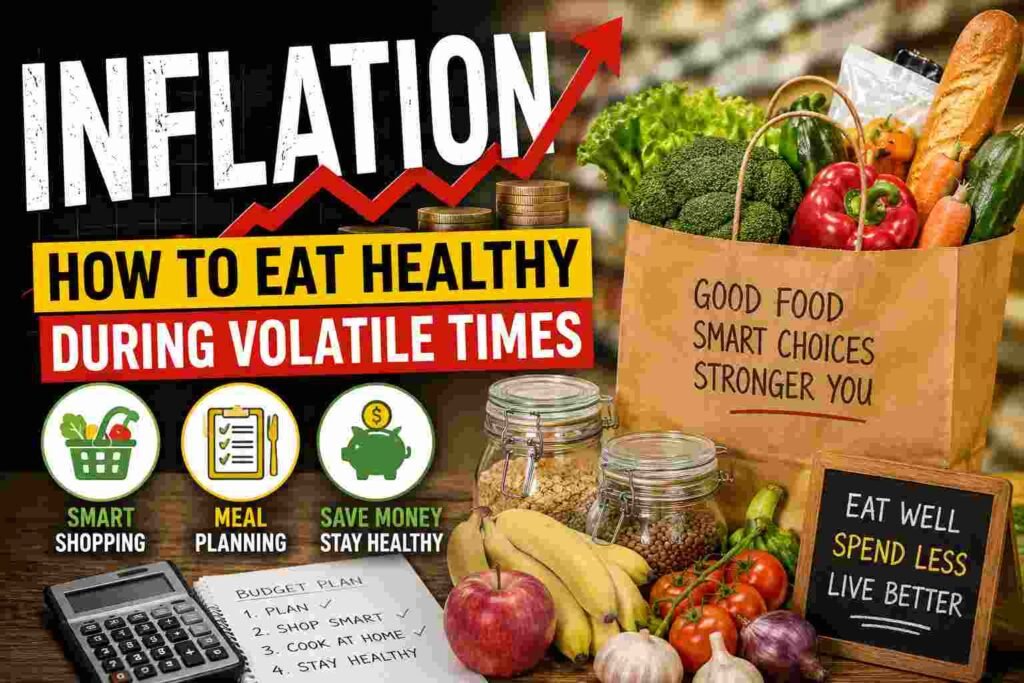
- 🥗 Healthy Eating in Inflation: Why Food Costs Are Rising
- 🍎 Healthy Eating in Inflation: Focus on Nutrient-Dense Foods
- 🛒Shop With a Strategic Grocery Plan
- 🍲 Cook More Meals at Home
- 🥬 Healthy Eating Inflation: Buy Seasonal and Local Foods
- 💰 Reduce Food Waste to Save More Money
- 🥚 Protein Does Not Always Need to Be Expensive
- 📦 Avoid the “Cheap Junk Food” Trap
- 🧠 Healthy Eating in Inflation: Use Smart Psychological Habits
- 🌍 How Different Countries Handle Food Inflation
- 🥗 Healthy Eating in Inflation: Best Budget-Friendly Healthy Foods
- 🚶 Small Lifestyle Changes Make a Big Difference
- 🌟 Final Thoughts on Healthy Eating Inflation
- FAQs About Healthy Eating During Inflation
Food prices keep rising, grocery bills feel heavier every month, and many families now struggle to maintain healthy eating habits. During periods of inflation, people often cut nutritious foods first because processed meals appear cheaper and more convenient. However, eating healthy during economic uncertainty is still possible with the right strategy, planning, and mindset.
Although inflation affects almost everyone, smart food choices can protect both your health and your wallet. In fact, many affordable foods offer excellent nutrition when people shop wisely and cook intentionally. Moreover, healthy eating does not always require expensive organic products, trendy diets, or luxury ingredients.
In this guide, you will learn practical ways to maintain a nutritious diet during rising inflation, reduce food expenses without sacrificing health, and make smarter grocery decisions during volatile times.
🥗 Healthy Eating in Inflation: Why Food Costs Are Rising
Inflation affects food prices because production, transportation, labor, and energy costs increase across the supply chain. Consequently, supermarkets raise prices to cover higher operating expenses.
Over the past few years, several factors have intensified global food inflation:
- Climate-related crop failures
- Supply chain disruptions
- Fuel price increases
- Global conflicts
- Labor shortages
- Economic instability
As a result, staples like eggs, vegetables, grains, dairy, and meat have become significantly more expensive in many countries.
Unfortunately, unhealthy ultra-processed foods sometimes remain cheaper because manufacturers produce them at massive industrial scales. Therefore, families facing financial pressure may shift toward fast food, sugary snacks, and packaged meals.
However, long-term unhealthy eating can increase healthcare expenses later. Because of this, maintaining balanced nutrition becomes even more important during inflationary periods.
🍎 Healthy Eating in Inflation: Focus on Nutrient-Dense Foods
One of the smartest ways to handle rising food costs involves prioritizing nutrient-dense foods.
Nutrient-dense foods provide more vitamins, minerals, fiber, and protein per serving. Consequently, they keep you fuller for longer while supporting better health.
Affordable nutrient-rich foods include:
- Beans
- Lentils
- Oats
- Brown rice
- Eggs
- Bananas
- Potatoes
- Frozen vegetables
- Chickpeas
- Peanut butter
- Yogurt
Instead of buying expensive “superfoods,” focus on simple whole foods that deliver consistent nutrition.
For example, lentils offer protein, iron, and fiber at a fraction of the cost of red meat. Similarly, oats provide long-lasting energy while remaining one of the cheapest breakfast options available.
Moreover, frozen fruits and vegetables often cost less than fresh produce while retaining most nutrients.
🛒Shop With a Strategic Grocery Plan
Impulse shopping becomes extremely costly during inflation. Therefore, grocery planning can save substantial money every month.
Before visiting the store:
- Create a meal plan
- Check existing pantry items
- Make a shopping list
- Compare local prices
- Avoid shopping while hungry
Additionally, buying ingredients with multiple uses helps reduce waste.
For instance, one bag of rice can support stir-fries, soups, burrito bowls, and side dishes throughout the week. Likewise, roasted vegetables can become lunch wraps, salads, or pasta additions later.
Furthermore, generic store brands often match premium brands in quality while costing significantly less.
Because of this, comparing unit prices rather than package appearance helps consumers make smarter decisions.
🍲 Cook More Meals at Home
🏠 Cooking at home remains one of the most effective ways to eat healthy during inflation.
Restaurant meals, food delivery apps, and takeout orders often cost far more than homemade alternatives. Moreover, home cooking allows better portion control and healthier ingredient choices.
Simple homemade meals can include:
- Vegetable soups
- Rice and bean bowls
- Stir-fried vegetables
- Lentil curry
- Egg sandwiches
- Pasta with vegetables
- Homemade oatmeal
Additionally, batch cooking saves both time and money.
Preparing large portions allows families to freeze leftovers for future meals. Consequently, this reduces food waste while minimizing expensive last-minute takeout purchases.
Even learning just a few low-cost recipes can significantly lower monthly food expenses.
🥬 Healthy Eating Inflation: Buy Seasonal and Local Foods
Seasonal produce usually costs less because supply remains higher during harvest periods.
For example:
- Watermelon becomes cheaper during summer
- Root vegetables cost less during winter
- Mangoes become more affordable during peak season
Therefore, adjusting meals according to seasonal availability can reduce grocery bills naturally.
Additionally, local farmers’ markets sometimes offer better prices than large supermarkets, especially near closing hours.
Because locally grown produce travels shorter distances, transportation costs remain lower. Consequently, consumers may access fresher foods at reduced prices.
💰 Reduce Food Waste to Save More Money
Food waste silently drains household budgets.
Many families throw away spoiled vegetables, expired dairy products, stale bread, and forgotten leftovers every week. However, reducing waste can dramatically improve food affordability.
Practical ways to reduce waste include:
- Store food properly
- Freeze leftovers
- Use older produce first
- Repurpose leftovers creatively
- Label expiration dates
For instance, slightly overripe bananas can become smoothies or banana bread. Similarly, leftover vegetables work well in soups or omelets.
Moreover, using every ingredient fully stretches grocery spending further during volatile economic conditions.
🥚 Protein Does Not Always Need to Be Expensive
🍳 Many people assume healthy protein sources always cost a lot. However, several affordable proteins provide excellent nutrition.
Budget-friendly protein sources include:
- Eggs
- Lentils
- Beans
- Greek yogurt
- Peanut butter
- Cottage cheese
- Tofu
- Canned tuna
Although meat prices continue rising globally, plant-based proteins often remain affordable and nutritious.
Furthermore, combining grains with legumes creates complete protein meals. Rice and beans, for example, provide balanced amino acids while costing far less than many meat dishes.
Therefore, strategic protein choices can protect both health and finances.
📦 Avoid the “Cheap Junk Food” Trap
Inflation often pushes consumers toward highly processed foods because they appear cheaper upfront.
However, junk food usually lacks fiber and protein. Consequently, people feel hungry again quickly and end up eating more overall.
Additionally, excessive processed food consumption increases risks for:
- Obesity
- Diabetes
- High blood pressure
- Heart disease
Therefore, short-term savings may eventually create higher medical costs.
Instead of focusing only on immediate price, evaluate foods based on nutrition per serving and long-term health value.
For example, a large bag of oats may cost less per meal than sugary breakfast cereal while providing far greater nutritional benefits.
🧠 Healthy Eating in Inflation: Use Smart Psychological Habits
Financial stress can influence eating behavior significantly.
During difficult times, many people emotionally eat, overspend on comfort foods, or abandon healthy routines entirely. Therefore, maintaining healthy habits requires mental awareness as well.
Helpful strategies include:
- Eating slowly
- Avoiding stress shopping
- Planning meals ahead
- Drinking enough water
- Keeping healthy snacks available
Additionally, social media trends often encourage unnecessary spending on expensive wellness products.
In reality, balanced nutrition usually depends more on consistency than trendy supplements or luxury foods.
🌍 How Different Countries Handle Food Inflation
Countries worldwide experience food inflation differently.
In some nations, governments subsidize staple foods like rice, bread, or cooking oil. Meanwhile, others support farmers directly to stabilize food supplies.
However, global inflation still affects international trade, fertilizer prices, and transportation costs almost everywhere.
Consequently, consumers worldwide now search for affordable nutrition strategies.
Interestingly, many traditional diets already offer low-cost healthy eating models. Mediterranean, Indian, African, and Asian home-cooked meals often rely heavily on grains, legumes, vegetables, and simple ingredients.
Therefore, returning to traditional cooking methods may help families manage rising costs more effectively.
🥗 Healthy Eating in Inflation: Best Budget-Friendly Healthy Foods
Here are some of the best affordable healthy foods during inflation:
| Food | Benefits |
|---|---|
| Oats | Cheap, filling, high fiber |
| Lentils | High protein and iron |
| Eggs | Excellent protein source |
| Bananas | Affordable potassium source |
| Frozen vegetables | Long shelf life and nutritious |
| Brown rice | Budget-friendly whole grain |
| Potatoes | Filling and versatile |
| Peanut butter | Protein and healthy fats |
| Yogurt | Good for gut health |
| Chickpeas | Cheap plant protein |
These foods support balanced nutrition without overwhelming grocery budgets.
🚶 Small Lifestyle Changes Make a Big Difference
Healthy eating during inflation does not require perfection.
Instead, small consistent habits often create the biggest long-term impact.
For example:
- Cooking two extra meals weekly
- Replacing soda with water
- Buying fewer processed snacks
- Planning leftovers intentionally
- Choosing affordable whole foods
Over time, these small changes improve both financial stability and physical health.
Moreover, healthy eating supports better energy, mental clarity, and immune function during stressful periods.
🌟 Final Thoughts on Healthy Eating Inflation
Inflation creates real challenges for millions of families worldwide. Nevertheless, healthy eating remains possible even during volatile economic conditions.
Although grocery prices continue rising, strategic planning, simple cooking habits, smart shopping, and affordable whole foods can help people maintain balanced nutrition without overspending.
Most importantly, healthy eating does not depend on expensive trends or luxury ingredients. Instead, consistency, preparation, and mindful choices matter far more.
By focusing on nutrient-dense foods, reducing waste, cooking at home, and avoiding processed food traps, families can protect both their health and their finances during uncertain times.
Ultimately, inflation may change food prices, but smart habits still give consumers control over their daily nutrition choices.
FAQs About Healthy Eating During Inflation
❓How can I eat healthy on a tight budget?
Focus on affordable whole foods like oats, beans, lentils, eggs, rice, potatoes, and frozen vegetables. Additionally, cooking at home and planning meals helps reduce costs significantly.
❓What are the cheapest healthy foods during inflation?
Some of the cheapest healthy foods include oats, bananas, eggs, lentils, brown rice, chickpeas, potatoes, and peanut butter.
❓Is frozen food healthy?
Yes, many frozen fruits and vegetables retain most of their nutrients. Moreover, frozen produce often lasts longer and reduces food waste.
❓Why does inflation affect food prices so much?
Inflation increases fuel, labor, farming, transportation, and packaging costs. Consequently, supermarkets raise prices across many food categories.
❓Can healthy eating actually save money long term?
Yes. Healthy eating may reduce future healthcare costs while improving energy, productivity, and overall well-being.
❓Should I avoid all processed foods during inflation?
Not necessarily. Some minimally processed foods like canned beans, frozen vegetables, and yogurt remain nutritious and affordable. However, highly processed junk foods should stay limited.
❓How can families reduce food waste?
Meal planning, freezing leftovers, proper storage, and using ingredients creatively help families waste less food and save more money.
This article has been made with the help of AI for better SEO but the research and inputs have been provided by me. Sources cited below.
- World Health Organization (WHO) – Healthy Diet Guidelines
- Harvard T.H. Chan School of Public Health – Nutrition Source
- United States Department of Agriculture (USDA) – Nutrition and Food Cost Resources
- Food and Agriculture Organization (FAO) – Global Food Price Monitoring
- Centers for Disease Control and Prevention (CDC) – Healthy Eating Tips
- World Bank – Food Security and Inflation Insights
You may also like to read other health related articles here also authored by me :
Simi Valley Fire: How to Protect Yourself in Such Situations
Amy Schumer Opens Up About ‘Botched’ Medical Procedure
Silent Signs of Dementia: Early Symptoms Many Families Overlook
Warm Lemon Water: First Thing You Should Take After Waking Up?
HRSA Community Health Centre: #cheapermedicare
Tecentriq SC Injection: The New 7-Minute Cancer Shot for Patients