- 🔥 The First Seconds After Getting Shot
- 🧠 Why Pain Often Arrives Late
- 💥 What Does a Gunshot Actually Feel Like?
- 🩸 What Happens Inside the Body After a Gunshot?
- 🫁 What Happens When You Get Shot in Different Areas?
- 😨 The Psychological Experience of Getting Shot
- 🧩 Why Time Feels Strange During Trauma
- 🚑 What Emergency Responders Focus On First
- 🩹 Why Some Gunshot Wounds Look Small but Cause Massive Damage
- ⚠️ Emotional Trauma After Surviving a Shooting
- 🧠 How the Brain Protects Itself During Extreme Trauma
- 🏥 Recovery After a Gunshot Wound
- 🔍 Common Myths About Getting Shot
- 📚 Why Real Gunshot Experiences Differ From Movies
- 💬 Final Thoughts
- ❓FAQs
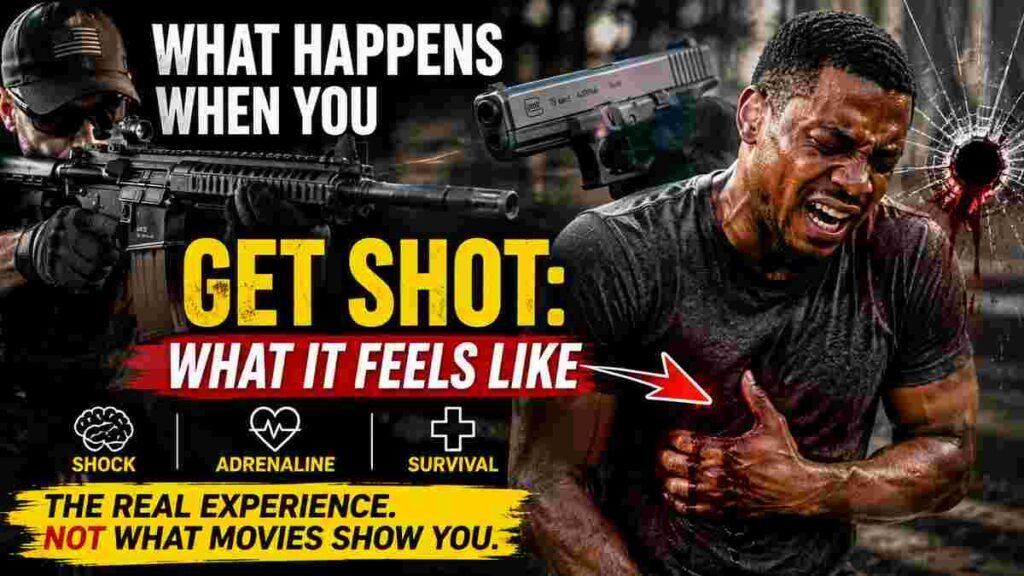
Most people imagine getting shot as an instant collapse followed by unbearable pain. I mean i as a child used to imagine getting shot means dropping dead on spot. However, to get shot in reality often looks very different. In fact, many gunshot survivors say they didn’t even realize they had been shot at first. Some describe a hard punch, intense pressure, burning heat, numbness, or sudden confusion instead of immediate agony.
Moreover, adrenaline changes everything.
During the first few seconds, the body enters survival mode. As a result, pain may arrive late, emotions may shut down temporarily, and the brain may struggle to process what just happened. Meanwhile, the actual sensation depends heavily on:
- bullet caliber
- impact location
- organ damage
- nerve involvement
- blood loss
- mental state
Therefore, no two gunshot experiences feel exactly alike.
This article explores what happens when you get shot: what it feels like from a medical, psychological, and human perspective. Additionally, we’ll examine how the body reacts second by second, why some people feel almost nothing initially, and how trauma continues long after the injury itself.
🔥 The First Seconds After Getting Shot
Congratulations, you got shot but have not knock knock knocked on Heavens Door. The moment a bullet entered your body, several things happened almost simultaneously.
First, the projectile teared through skin, tissue, blood vessels, nerves, and sometimes bone. At the same time, the body instantly activated its emergency stress response.
Consequently, survivors often report:
- shock
- confusion
- tunnel vision
- ringing ears/ tinnitus
- disorientation
- numbness
- delayed pain
Interestingly, many people initially think:
“dayumnn! Did someone sucker punch me?”
Others believe they simply fell or got hit by debris.
That reaction happens because adrenaline floods the nervous system immediately.
🧠 Why Pain Often Arrives Late
One of the most misunderstood part is the delayed sensation of pain.
Hollywood usually portrays screaming instant agony. Yet many real survivors describe the first moments as strangely absolutely painless.
Why?
Because the brain prioritizes survival first.
During extreme danger, the body releases:
- adrenaline
- cortisol
- norepinephrine
These hormones temporarily reduce pain perception while increasing alertness and reaction speed.
As a result:
- some people keep running
- others continue fighting (if he/she was fighting before)
- some don’t notice severe injuries for several seconds or minutes
However, once adrenaline fades, the pain can become overwhelming.
💥 What Does a Gunshot Actually Feel Like?
Different survivors describe different sensations. Nevertheless, several descriptions appear repeatedly in trauma interviews and emergency medicine reports.
Common Sensations Include:
🔴 A Violent Punch or Hammer Blow
Many people compare the impact to:
- getting hit by a baseball bat
- a powerful punch
- a sledgehammer strike
Even smaller bullets transfer enormous force into tissue.
🔥 Burning Heat
After the initial shock, intense burning sensation often develops around the wound.
This occurs because:
- nerves become damaged
- tissue tears
- inflammation begins rapidly
Some survivors describe it as:
“Fire under the skin.”
⚡ Sharp Electric Pain
If the bullet strikes nerves, the sensation may resemble:
- electrocution
- stabbing lightning
- electric shocks
Nerve damage often creates long-lasting pain even after healing.
❄️ Numbness
Paradoxically, some people feel almost nothing in the injured area.
This usually happens because:
- nerves become disrupted
- shock sets in
- blood flow decreases
Consequently, numbness can signal severe injury rather than minor damage.
🩸 What Happens Inside the Body After a Gunshot?
The body reacts incredibly fast after ballistic trauma.
Blood Loss Begins Immediately
If major vessels rupture, internal or external bleeding may become life-threatening within minutes.
The body tries to compensate by:
- increasing heart rate
- tightening blood vessels
- redirecting blood toward vital organs
However, severe blood loss eventually causes:
- dizziness
- weakness
- pale skin
- confusion
- collapse
Organs May Shut Down
When oxygen delivery decreases, organs start struggling quickly.
For example:
- lung injuries impair breathing
- liver injuries trigger internal bleeding
- intestinal injuries increase infection risk
- brain injuries alter consciousness instantly
Therefore, bullet location matters far more than caliber alone.
🫁 What Happens When You Get Shot in Different Areas?
The experience changes dramatically depending on impact location.
🦵 Getting Shot in the Leg
Many leg gunshot survivors remain conscious and mobile initially.
Common sensations include:
- burning pain
- cramping
- numbness
- instability
However, femoral artery injuries can become fatal very quickly due to massive blood loss.
💪 Getting Shot in the Arm
Arm wounds may feel:
- intensely hot
- electric
- paralyzing
Additionally, shattered bones can create secondary damage inside tissue.
Some survivors lose arm function temporarily or permanently because nerve bundles become damaged.
🫀 Getting Shot in the Chest
Chest wounds often produce:
- difficulty breathing
- crushing pressure
- coughing blood
- panic
- dizziness
Furthermore, lung collapse can occur rapidly.
A bullet near the heart may also trigger cardiac tamponade or catastrophic bleeding.
🧠 Getting Shot in the Head
You are one lucky sob if you have not crossed the gates of Valhalla even after getting a head shot because head injuries vary enormously.
Some cause immediate death. Others create:
- confusion
- memory loss
- blindness
- speech problems
- personality changes
Remarkably, some people survive seemingly impossible head wounds depending on bullet trajectory.
😨 The Psychological Experience of Getting Shot
Physical pain tells only part of the story.
The mental experience often leaves the deepest scars.
Immediately after the injury, many survivors describe:
- disbelief
- surreal calmness
- emotional numbness
- fear of dying
- detachment from reality
Meanwhile, others enter complete panic.
The brain struggles to process violent trauma because sudden life-threatening events overwhelm normal cognition.
🧩 Why Time Feels Strange During Trauma
One fascinating aspect of what happens when you get shot: what it feels like involves altered time perception.
Many survivors report:
- slow-motion experiences
- hyper-detailed memories
- distorted sounds
- fragmented recall
This happens because adrenaline changes how the brain encodes memory during danger.
Consequently, survivors often remember tiny details vividly while forgetting major events entirely.
🚑 What Emergency Responders Focus On First
After a gunshot injury, medical teams prioritize survival immediately.
They focus on:
- stopping bleeding
- protecting breathing
- maintaining circulation
- preventing shock
Contrary to popular belief, removing the bullet often becomes a lower priority initially.
Doctors care more about:
- damaged organs
- blood vessel injuries
- infection risk
- oxygen delivery
🩹 Why Some Gunshot Wounds Look Small but Cause Massive Damage
Bullets create more than simple holes.
As they travel through tissue, they produce:
- cavitation
- pressure waves
- fragmentation
- secondary tearing
Therefore, internal destruction may greatly exceed the visible entry wound.
High-velocity rounds especially can devastate surrounding tissue even without direct contact.
⚠️ Emotional Trauma After Surviving a Shooting
Long after physical wounds heal, many survivors continue struggling psychologically.
Common long-term effects include:
- PTSD
- anxiety
- nightmares
- depression
- hypervigilance
- panic attacks
Loud sounds may trigger flashbacks for years afterward.
Additionally, many survivors develop survivor’s guilt or chronic fear in public spaces.
🧠 How the Brain Protects Itself During Extreme Trauma
The brain often disconnects emotionally during violent events.
This protective mechanism may cause:
- dissociation
- emotional numbness
- memory gaps
- dreamlike sensations
As a result, some survivors describe watching events unfold “like a movie.”
Although this response feels strange, it represents a normal survival adaptation.
🏥 Recovery After a Gunshot Wound
Recovery depends heavily on:
- injury location
- blood loss
- infection
- nerve damage
- rehabilitation access
Some people recover within months. Others face lifelong complications.
Possible long-term effects include:
- chronic pain
- mobility problems
- nerve dysfunction
- organ damage
- psychological trauma
Therefore, survival itself often marks only the beginning of recovery.
🔍 Common Myths About Getting Shot
Myth 1: Everyone Falls Immediately
Reality:
Many people remain standing or mobile temporarily because adrenaline masks damage initially.
Myth 2: Small Bullets Cause Small Injuries
Reality:
Internal damage may become catastrophic regardless of entry wound size.
Myth 3: Pain Is Always Instant
Reality:
Shock and adrenaline often delay pain significantly.
Myth 4: Bullet Removal Is Always Necessary
Reality:
Doctors sometimes leave bullets inside the body safely if removal risks more harm.
📚 Why Real Gunshot Experiences Differ From Movies
Movies simplify ballistic trauma dramatically.
In reality:
- reactions vary wildly
- people rarely fly backward
- shock dominates early moments
- confusion often replaces screaming
- survival depends heavily on rapid medical care
Moreover, emotional trauma usually lasts far longer than action films portray.
💬 Final Thoughts
Getting shot represents one of the most physically and psychologically overwhelming experiences a human being can endure.
Initially, many people feel:
- shock
- pressure
- numbness
- confusion
Then, as adrenaline fades, pain and fear often intensify dramatically.
However, the true impact extends far beyond the wound itself. Gunshot trauma affects the body, brain, emotions, and identity all at once. Consequently, recovery involves much more than stitches or surgery.
Understanding the real experience behind ballistic trauma helps replace Hollywood myths with medical and human reality. Furthermore, it reminds us how fragile the human body truly is under sudden violence.
❓FAQs
Does getting shot always hurt immediately?
No. Many survivors report delayed pain because adrenaline temporarily suppresses pain signals during extreme stress.
Can someone keep running after getting shot?
Yes. Depending on the injury location and severity, some people continue moving for seconds or minutes.
Why do some gunshot victims not realize they were shot?
Shock, adrenaline, confusion, and sensory overload can delay awareness temporarily.
Is getting shot instantly fatal?
Not always. Survival depends heavily on:
- bullet location
- blood loss
- organ damage
- emergency treatment speed
What hurts more: getting stabbed or shot?
Experiences vary widely. Gunshots often create massive internal trauma and shock, while stabbings may involve more localized pain initially.
Why do gunshot wounds burn?
Burning sensations usually occur because bullets damage nerves and surrounding tissue rapidly.
Can bullets stay inside the body permanently?
Yes. Doctors sometimes leave bullets or fragments inside if removal creates greater risk.
Do gunshot survivors develop PTSD?
Many do. Psychological trauma frequently continues long after physical healing.
Authoritative Source Links
- Mayo Clinic – Traumatic Injuries and Shock
- Cleveland Clinic – Gunshot Wound Overview
- Johns Hopkins Medicine – Trauma and Emergency Care
- National Center for PTSD
- MedlinePlus – Shock and Trauma
- American College of Surgeons – Stop the Bleed Initiative
You may also like to read other health related articles here also authored by me :
Surprise Billing in USA: No Surprises Act Explained
What Is a Hospital Facility Fee in USA, Can You Negotiate It?
How to Prepare for Colonoscopy: Complete Step-by-Step Guide
Inculcate the Habit of Investing in Your Kids: Calculator Included