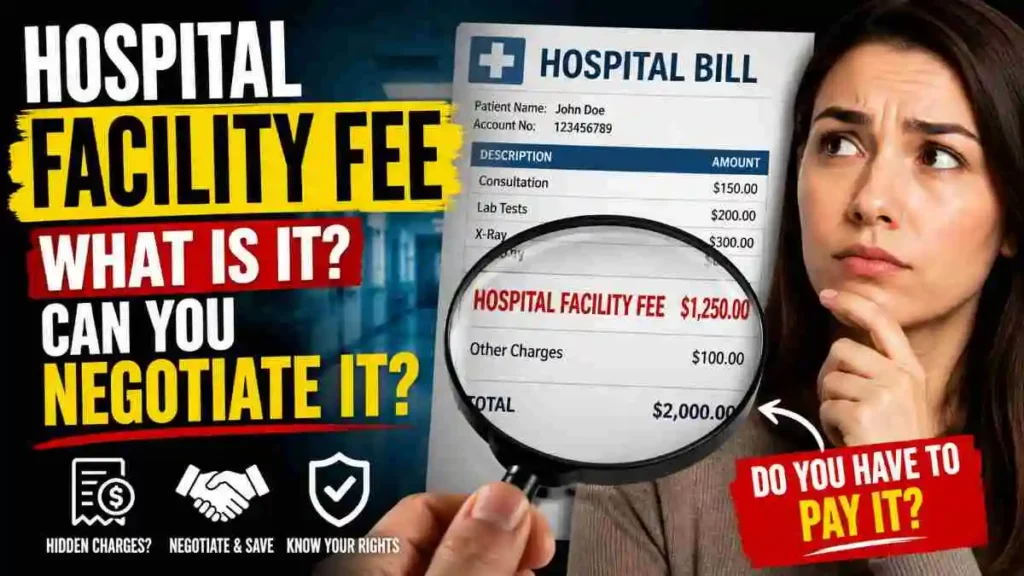
- 🏥 What Is a Hospital Facility Fee?
- 💡 Why Do Hospitals Charge Facility Fees?
- 📋 How Hospital Facility Fees Appear on Bills
- ⚠️ Why Hospital Facility Fees Shock Patients
- 💰 How Much Is a Hospital Facility Fee?
- 🔍 Are Hospital Facility Fees Legal?
- 🤝 Can You Negotiate a Hospital Facility Fee?
- 🛠️ How to Negotiate a Hospital Facility Fee
- 🚨 Common Mistakes Patients Make
- 🩺 Why Hospital Facility Fees Are Increasing
- 📍 How to Avoid Hospital Facility Fees
- 🏛️ Are Lawmakers Trying to Stop These Fees?
- 👨⚕️ What Doctors Think About Facility Fees
- 📊 Real-Life Example of a Hospital Facility Fee
- 🧭 When You Should Challenge a Facility Fee
- 🏥 Hospital Facility Fee vs Doctor Fee
- 🌎 Why Transparency Matters in Healthcare
- Final Thoughts
- ❓ FAQs About Hospital Facility Fees
Healthcare bills often surprise people, especially when they notice an extra charge called a hospital facility fee. In simple words, a hospital facility fee is an additional amount hospitals charge for using their building, equipment, staff support, and operational services — even if you only saw a doctor for a short visit.
The good news is this: Yes, you can often negotiate a hospital facility fee. Many patients successfully reduce or remove these charges by asking for an itemized bill, checking for errors, comparing prices, or requesting financial assistance. Moreover, hospitals sometimes lower fees if you pay quickly or prove financial hardship.
Now that you have the short answer, let’s dive deeper into how hospital facility fees work, why hospitals charge them, and most importantly, how you can fight unfair medical costs.
🏥 What Is a Hospital Facility Fee?
A hospital facility fee is a separate charge hospitals add to your medical bill for the use of the hospital itself. While your doctor charges for medical care, the facility fee covers operational expenses such as:
- Building maintenance
- Medical equipment
- Nursing staff
- Administrative services
- Electronic records systems
- Emergency readiness
- Utilities and sanitation
For example, you may visit a doctor for a 20-minute consultation. However, if that doctor’s office belongs to a hospital network, you could receive two bills:
- A professional fee from the doctor
- A hospital facility fee from the hospital system
Consequently, your total bill may become hundreds of dollars higher than expected.
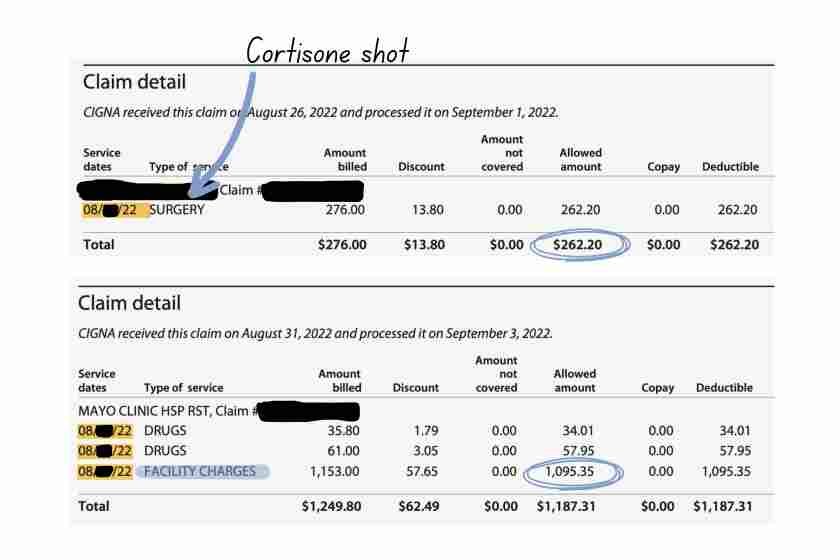
The bills are inflated with jargons of every size and color, the fees can have different names so the patients need to ask each and every part of their overall bill to see if they can have it reduced.
💡 Why Do Hospitals Charge Facility Fees?
Hospitals argue that facility fees help maintain high-quality patient care. Since hospitals operate 24/7 and maintain expensive infrastructure, they say these costs support:
- Emergency preparedness
- Advanced technology
- Specialized medical staff
- Compliance with healthcare regulations
Additionally, hospitals claim that outpatient clinics connected to hospital systems require more resources than independent private practices.
Still, many patients and consumer advocates believe these charges often lack transparency. As a result, facility fees remain highly controversial.
📋 How Hospital Facility Fees Appear on Bills
Many patients do not even realize they paid a facility fee until they review their bill carefully. Typically, the fee may appear under names such as:
- Outpatient facility fee
- Hospital outpatient charge
- Ambulatory facility fee
- Provider-based billing fee
- Clinic facility charge
Sometimes, hospitals combine these charges into complicated billing statements. Therefore, patients often miss them entirely.
⚠️ Why Hospital Facility Fees Shock Patients
Facility fees surprise people because they frequently appear in situations that do not feel “hospital-like.”
For instance:
- A routine checkup
- A telehealth appointment
- A specialist consultation
- A simple lab test
- Preventive screenings
In many cases, patients visit what looks like a regular doctor’s office. However, because the clinic belongs to a hospital system, the hospital adds an extra facility charge.
Furthermore, these fees can vary dramatically. One patient may pay $50, while another pays $500 for nearly the same visit.
💰 How Much Is a Hospital Facility Fee?
Hospital facility fees vary based on:
- Location
- Hospital network
- Insurance coverage
- Type of visit
- Complexity of services
Generally, fees range from:
| Visit Type | Possible Facility Fee |
|---|---|
| Routine office visit | $50–$350 |
| Specialist appointment | $100–$500 |
| Outpatient surgery | $500–$4,000+ |
| Emergency room visit | $200–$3,000+ |
Because pricing lacks standardization, many patients struggle to predict costs beforehand.
🔍 Are Hospital Facility Fees Legal?
Yes, hospital facility fees are legal in many regions. Nevertheless, several states and governments have started regulating them more aggressively.
Some laws now require hospitals to:
- Inform patients in advance
- Display pricing transparency
- Explain separate billing clearly
Even so, enforcement varies widely. Therefore, many patients still receive unexpected bills.
🤝 Can You Negotiate a Hospital Facility Fee?
Yes — and you absolutely should try.
Although hospitals rarely advertise it, patients often negotiate lower medical bills successfully. In fact, many healthcare providers prefer partial payment over unpaid debt.
Moreover, billing departments usually have flexibility, especially if:
- You ask politely but firmly
- You pay quickly
- You lack insurance
- You face financial hardship
- The bill contains errors
Importantly, negotiation works better when you act quickly after receiving the bill.
🛠️ How to Negotiate a Hospital Facility Fee
📄 1. Request an Itemized Bill
First, ask for a detailed breakdown of every charge.
Itemized bills frequently reveal:
- Duplicate charges
- Incorrect billing codes
- Services you never received
- Inflated costs
Surprisingly, billing mistakes happen often in healthcare systems.
🧾 2. Verify Insurance Processing
Next, contact your insurance company and confirm:
- Whether the fee qualifies under your plan
- If the hospital billed correctly
- Whether the clinic was in-network
- If coding errors occurred
Sometimes insurance companies reject claims because hospitals use incorrect billing codes.
💬 3. Ask Directly for a Reduction
Many patients skip this step because they feel uncomfortable. However, simply asking can work.
Try saying:
“I was not informed about this facility fee beforehand. Is there any way to reduce or remove it?”
In many cases, billing representatives offer:
- Discounts
- Payment plans
- Financial aid options
- Prompt-pay reductions
📉 4. Compare Costs With Other Providers
Research similar services at:
- Independent clinics
- Urgent care centers
- Non-hospital practices
Then use those prices during negotiations.
For example:
“Another clinic charges significantly less for this same service. Can you match or reduce the fee?”
Hospitals sometimes adjust pricing when confronted with market comparisons.
🧠 5. Mention Financial Hardship
Hospitals often maintain financial assistance programs. Yet many patients never apply.
If medical bills strain your budget:
- Explain your situation honestly
- Ask about charity care programs
- Request hardship discounts
Even middle-income patients may qualify for partial assistance.
📅 6. Negotiate Before Paying
Once you pay the bill in full, negotiating becomes much harder.
Therefore:
- Review charges immediately
- Contact billing departments quickly
- Document every conversation
Additionally, keep copies of:
- Bills
- Emails
- Insurance statements
- Payment agreements
🚨 Common Mistakes Patients Make
Many people accidentally weaken their negotiating position. Here are mistakes to avoid:
❌ Ignoring the Bill
Ignoring medical bills may lead to collections or credit damage.
❌ Paying Immediately Without Review
Always inspect bills for errors before paying.
❌ Assuming Fees Are Non-Negotiable
Hospitals negotiate more often than many people realize.
❌ Failing to Ask Questions
If something looks confusing, ask for clarification.
🩺 Why Hospital Facility Fees Are Increasing
Healthcare consolidation plays a major role.
Over the last decade, hospitals purchased many independent doctor practices. Consequently, visits that once occurred in private clinics now count as “hospital outpatient services.”
As a result:
- Costs increased
- Facility fees became more common
- Patients faced higher out-of-pocket expenses
Additionally, hospitals argue rising labor costs and technology investments justify higher fees.
📍 How to Avoid Hospital Facility Fees
While avoiding every fee is impossible, you can reduce your chances significantly.
✅ Choose Independent Clinics
Private practices often charge lower overall costs.
✅ Ask Questions Before Appointments
Before scheduling, ask:
“Will this visit include a hospital facility fee?”
✅ Compare Locations
The same doctor may practice in:
- A hospital-owned office
- An independent clinic
One location may cost far less.
✅ Use Urgent Care When Appropriate
For minor issues, urgent care centers may cost substantially less than hospital outpatient departments.
🏛️ Are Lawmakers Trying to Stop These Fees?
Yes. Several governments have introduced regulations aimed at:
- Improving transparency
- Limiting surprise billing
- Restricting outpatient facility fees
Some states already prohibit certain facility fees for routine care.
Meanwhile, consumer advocacy groups continue pushing for stronger protections nationwide.
👨⚕️ What Doctors Think About Facility Fees
Doctors hold mixed opinions.
Some physicians support facility fees because hospitals provide:
- Better infrastructure
- Access to specialists
- Advanced equipment
Others believe these charges:
- Hurt affordability
- Reduce trust
- Confuse patients
Independent doctors often criticize hospital systems for inflating routine healthcare costs.
📊 Real-Life Example of a Hospital Facility Fee
Imagine Sarah visits a cardiologist for a follow-up appointment.
She expects a $60 specialist copay. However, weeks later she receives:
- $60 doctor bill
- $320 hospital facility fee
Since the clinic belonged to a hospital network, the hospital added a separate operational charge.
Sarah calls the billing office, requests an itemized bill, and explains she was never informed about the fee. Eventually, the hospital reduces the fee by 40% after negotiation.
Stories like this happen every day.
🧭 When You Should Challenge a Facility Fee
You should question charges if:
- The fee seems unusually high
- Nobody informed you beforehand
- You received minimal treatment
- The clinic appeared like a regular office
- Insurance denied part of the claim
- Billing descriptions look unclear
Even if negotiation fails initially, persistence often helps.
🏥 Hospital Facility Fee vs Doctor Fee
Many patients confuse these two charges.
Doctor Fee
Covers:
- Diagnosis
- Medical advice
- Treatment decisions
- Physician expertise
Hospital Facility Fee
Covers:
- Equipment
- Clinic operations
- Staffing
- Facility overhead
Therefore, you may receive separate invoices for one visit.
🌎 Why Transparency Matters in Healthcare
Transparent pricing helps patients:
- Plan financially
- Compare providers
- Avoid surprise bills
- Make informed decisions
Unfortunately, healthcare pricing remains confusing in many systems worldwide.
Nevertheless, patients who ask questions early usually avoid the worst billing surprises.
Final Thoughts
Hospital facility fees have become one of the most frustrating parts of modern healthcare billing. Although hospitals defend these charges as necessary operational costs, many patients feel blindsided by unexpected expenses.
The important thing to remember is this: you are not powerless.
You can:
- Ask questions beforehand
- Request itemized bills
- Compare prices
- Challenge questionable charges
- Negotiate reductions
Most importantly, never assume the first medical bill is final.
A single phone call could save you hundreds — or even thousands — of dollars.
❓ FAQs About Hospital Facility Fees
What is a hospital facility fee?
A hospital facility fee is an extra charge hospitals add for using their building, equipment, staffing, and operational services during medical visits.
Can you negotiate a hospital facility fee?
Yes. Many hospitals reduce fees if patients ask for discounts, financial aid, or billing reviews.
Why did I get two bills after one appointment?
You likely received:
- A doctor’s professional fee
- A hospital facility fee
This commonly happens in hospital-owned clinics.
Are hospital facility fees covered by insurance?
Sometimes. Coverage depends on your insurance plan, network status, and the type of medical service provided.
How do I avoid hospital facility fees?
You can reduce the risk by:
- Choosing independent clinics
- Asking about fees before appointments
- Comparing healthcare providers
Are facility fees charged for telehealth visits?
In some cases, yes. Certain hospital systems apply facility fees even to virtual appointments.
Can hospitals send unpaid facility fees to collections?
Yes. Unpaid medical bills may eventually go to collections if unresolved.
Should I always ask for an itemized bill?
Absolutely. Itemized bills often reveal billing mistakes or unnecessary charges.
Authoritative Source Links
- Centers for Medicare & Medicaid Services (CMS) – Hospital Price Transparency
- American Hospital Association (AHA)
- KFF Health News – Medical Billing & Healthcare Costs
- Consumer Reports – How to Fight Surprise Medical Bills
- Healthcare.gov – Understanding Medical Bills
- No Surprises Act Information – CMS
You may also like to read other health related articles here also authored by me :
Simi Valley Fire: How to Protect Yourself in Such Situations
Amy Schumer Opens Up About ‘Botched’ Medical Procedure
Silent Signs of Dementia: Early Symptoms Many Families Overlook
Warm Lemon Water: First Thing You Should Take After Waking Up?
HRSA Community Health Centre: #cheapermedicare
Tecentriq SC Injection: The New 7-Minute Cancer Shot for Patients