- What The Authorities Plan To Do With The Outbreak
- Understanding the Chronology of Events
- Table for Ease of Understanding
- Daily Life Aboard the Cruise Ship
- Will They Ever Return On a Cruise Ship?
- What is Hantavirus?
- Strict Health and Safety Protocols on Expedition Ships
- The Role of Rapid Response in Travel
- How to Stay Safe on Your Next Expedition
- Final Thoughts
- Sam
The travel world recently buzzed with concerns regarding a potential Hantavirus outbreak on an Oceanwide Expeditions cruise ship. In the age of rapid-fire digital news, distinguishing between a confirmed health crisis and a developing situation is vital for travelers and industry stakeholders alike.
What The Authorities Plan To Do With The Outbreak
Health authorities were tracking down and monitoring the passengers who disembarked a hantavirus-stricken ship just before a deadly outbreak was detected. Authorities are attempting to trace others who may have come into contact with them eversince.
A team of investigators will leave for the southern Argentinian town where they suspect the outbreak originated. Allegedly, a Dutch couple may have contracted the virus while on a bird-watching trippriorto boarding the ill-fated cruise ship, the Argentine investigators suspect.
Understanding the Chronology of Events
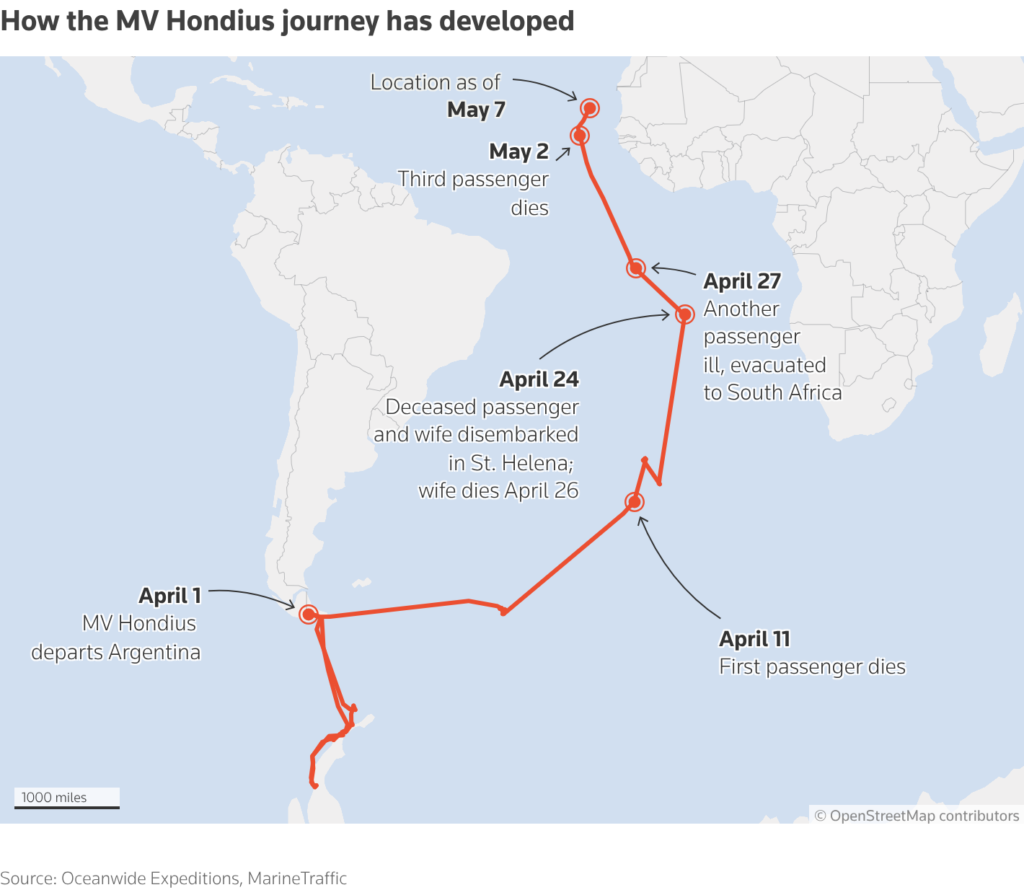
To understand how this situation unfolded, we must look at the chronology of reports and the subsequent response from health authorities. Expeditions to remote areas like Antarctica or the Arctic require complex logistics, making health protocols a top priority for operators like Oceanwide Expeditions which operates MV Hondius.
Table for Ease of Understanding
| Date | Event Description |
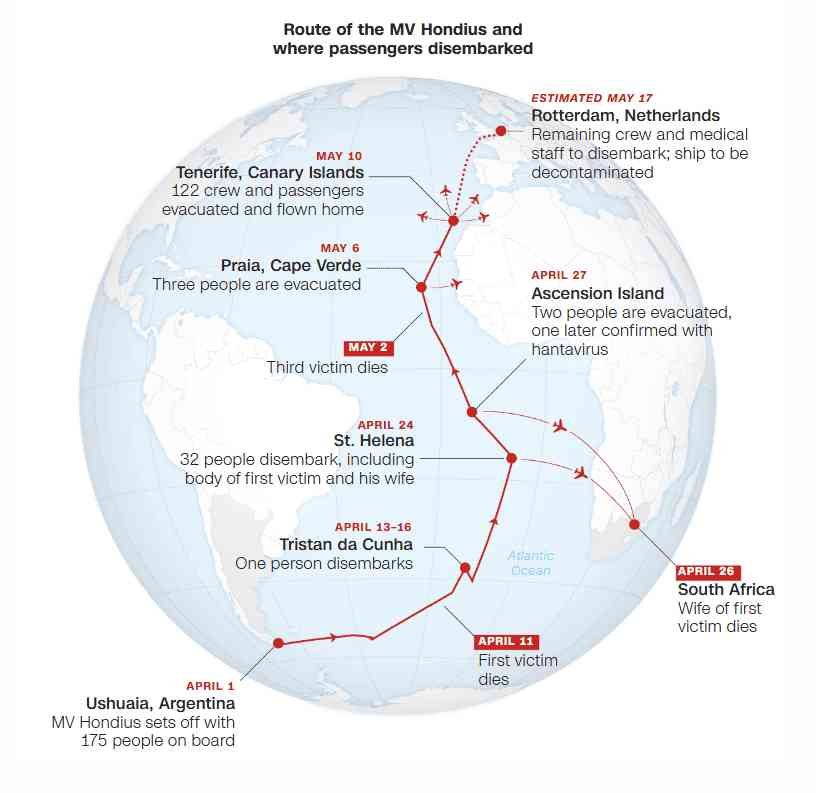
| April 1, 2026 – Day 1 | Ship sets off from Ushuaia, south of Argentina. Scheduled stops – Antarctica and several isolated South Atlantic Ocean islands. |
| April 6, 2026 – Day 6 | A 70-year-old Dutch man becomes sick on board with fever, headache and mild diarrhea. Before boarding, the man and his wife, who is also Dutch, had gone sightseeing in Ushuaia, and traveled elsewhere in Argentina and Chile, according to WHO. |
| April 11, 2026 – Day 11 | The Dutch develops respiratory distress and dies on board. The cause of death could not be determined at the time. |
| April 15, 2026 – Day 15 | 6 people join the cruise stop at archipelago of Tristan da Cunha, a British territory in the South Atlantic. The Dutch man’s body remains on board. |
| April 24, 2026 – Day 24 | The man’s body is taken off the vessel at the island of St. Helena. His wife disembarks, as do more than 24 other passengers. The stop was the end of the cruise for some on board. |
| April 25, 2026 – Day 25 | The Dutch woman, who has symptoms of illness, takes a commercial flight from St. Helena to South Africa. The plane carries 88 passengers and crew members, according to the airline. It’s not clear how many other people who got off the MV Hondius take that flight. |
| April 26, 2026 – Day 26 | The Dutch woman dies in South Africa after collapsing at an airport while trying to board another plane home. |
| April 27, 2026 – Day 27 | The ship, has now left St. Helena, a third passenger is sick. The British man is evacuated to Ascension Island. He is later moved to South Africa, where he is put in intensive care in a hospital. He has a high fever, shortness of breath and signs of pneumonia, which can be caused by hantavirus. |
| April 28, 2026 – Day 28 | Another passenger, a German woman, falls sick on board as the ship sails for Cape Verde off Africa’s west coast. |
| May 2, 2026 – Day 32 | The German woman dies onboard nearly a month after the first passenger fell ill. She is the third fatality. The same day, South African health authorities receive a positive for hantavirus from tests performed on the British man in intensive care there. It’s the first time that the virus is identified in the outbreak. |
| May 3, 2026 – Day 33 | The World Health Organization says it’s responding to a suspected hantavirus outbreak on the cruise ship, which has now arrived in Cape Verde waters. |
| May 4, 2026 – Day 34 | South African health officials receive a posthumous positive result for hantavirus for the Dutch woman who died after collapsing at an airport. They had decided to test her body after the positive test on the British man. WHO now considers it an outbreak. |
| May 5, 2026 – Day 35 | The cruise ship is in a standoff with Cape Verde authorities over whether it can evacuate more sick people and let other passengers and crew members disembark. Cape Verde is sending health workers to the ship to assist but says no one can disembark. Two crew members onboard are seriously ill, including the ship’s doctor, and another person is being monitored. |
| May 6, 2026 – Day 36 | Those three people, two of whom test positive for hantavirus, are evacuated from the ship and flown to specialized hospitals in Europe. The ship then sets sail for Spain’s Canary Islands after the country says it will accept it. Authorities in Switzerland announce another positive hantavirus test on a man who left the cruise earlier in St. Helena, bringing confirmed cases to five. Health authorities in South Africa and Switzerland say it’s the Andes virus, the only hantavirus thought to spread human-to-human. It is found in South America, primarily Argentina and Chile. |
| May 7, 2026 – Day 37 | Health authorities in Switzerland, Britain, Netherlands, France, Singapore, South Africa and elsewhere are isolating people who previously left the cruise ship and tracing people who might have come into contact with cruise ship passengers. |
| May 8, 2026 – Day 38 | Two more occurences of Hantavirus are reported — one in Spain, the other on the remote South Atlantic island of Tristan da Cunha — these are separate from the World Health Organization’s tally of eight people who became ill aboard the Dutch-flagged ship MV Hondius. |
| May 10, 2026 – Day 40 | After the Cape Verde disembarkation of three people in early May, WHO officials planned for the remaining 147 people — 87 passengers and 60 crew members — to sail to the Canary Islands. They docked there and began disembarkation |
| May 12, 2026 – Day 42 | As of Tuesday morning, 122 people — 87 passengers and 35 crew members — had been evacuated, and most had returned to their home countries. Six people going to Australia and New Zealand are in the Netherlands and set to be repatriated later this week, according to authorities. |
Daily Life Aboard the Cruise Ship
Passengers’ day-to-day routine has been tranquil. Those who venture from their cabins into common areas lounge about reading, or attend talks — all the while wearing masks and observing social distancing. Some join a 7:30 a.m. exercise group on one of the upper decks.
Others go out for air and try to spot birds; many had hoped to return from some of the most remote places on Earth with photos of wildlife, not find themselves the focus of a glaring global spotlight.
Will They Ever Return On a Cruise Ship?
Even so, some Spanish passengers said they would go on another cruise in the future.
“For me, personally, traveling is a means to … live out what I’m passionate about — which is observing nature and documenting nature,” one of them said. “Of course I would go on a cruise again.”
What is Hantavirus?
Hantavirus is a viral respiratory infection primarily spread by rodents. While the idea of an “outbreak” on a ship sounds alarming, it is important to understand how the virus actually functions. Unlike the common cold or COVID-19, Hantavirus typically does not spread from person to person. Instead, humans contract it by breathing in air contaminated with the droppings, urine, or saliva of infected rodents. This particular strain is known as Andes virus.
Symptoms to Watch For
Early symptoms of Hantavirus often mimic the flu, which can lead to initial confusion during a cruise. These include:
- High fever and chills
- Severe muscle aches (especially in the thighs, hips, and back)
- Fatigue and dizziness
- Nausea, vomiting, or stomach pain
If the illness progresses, it can lead to Hantavirus Pulmonary Syndrome (HPS), a serious condition where the lungs fill with fluid, causing shortness of breath. Because expedition cruises often travel to isolated areas, ships carry advanced medical equipment to stabilize patients until they can reach a shore-side hospital.
Strict Health and Safety Protocols on Expedition Ships
You might wonder how a virus associated with rodents could even be linked to a modern cruise ship. Expedition vessels maintain incredibly high standards of cleanliness. However, the risk often originates during the “pre-cruise” phase or during land-based excursions in rural areas.
- Rigorous Vessel Sanitation: Crew members clean high-touch surfaces multiple times daily using hospital-grade disinfectants.
- Pest Control: Ships employ strict “rat-guard” measures on mooring lines to prevent rodents from boarding while at the pier.
- Pre-Boarding Screening: Passengers must complete health questionnaires to ensure no one boards while symptomatic.
- Onboard Medical Expertise: Expedition ships like those in the Oceanwide fleet carry a doctor and a fully equipped infirmary to handle emergencies in real-time.
The Role of Rapid Response in Travel
When a health scare hits the headlines, the speed of the response defines the outcome. In the case of the Oceanwide Expeditions reports, the crew immediately implemented isolation strategies. This proactive approach prevents the spread of many common shipboard illnesses, such as Norovirus, even if the specific “Hantavirus” label later proves to be a misdiagnosis or an isolated incident.
Furthermore, transparency remains the best policy. When cruise lines communicate clearly with passengers and the public, they rebuild trust. Experienced polar travelers know that while the environment is unpredictable, the commitment to safety remains constant.
How to Stay Safe on Your Next Expedition
If you are planning a trip to the polar regions or a remote wilderness, you can take several steps to protect your health:
- Practice Good Hygiene: Wash your hands frequently with soap and water, especially after excursions.
- Report Symptoms Early: If you feel unwell, visit the ship’s doctor immediately. Early intervention is the key to a quick recovery.
- Follow Excursion Guidelines: Stay on marked paths during land landings to avoid contact with local wildlife or potential nesting sites.
- Travel Insurance: Always secure a comprehensive travel insurance policy that includes emergency medical evacuation.
Final Thoughts
While the mention of Hantavirus on a cruise ship is certainly startling, the reality is often less dire than the rumors suggest. By following expert medical advice and maintaining world-class sanitation standards, expedition companies continue to provide safe, life-changing experiences in the world’s most beautiful corners. Always look for official statements from health organizations like the CDC or the WHO before drawing conclusions about travel safety.
Adventure carries inherent risks, but with the right preparation and a vigilant crew, the wonders of the deep ocean remain within reach for every intrepid traveler.
You may also check out our other publications like Tick Bite: Causes, Symptoms, Prevention, Treatment.