The Real Effects of Sleep Deprivation on Your Body and Mind
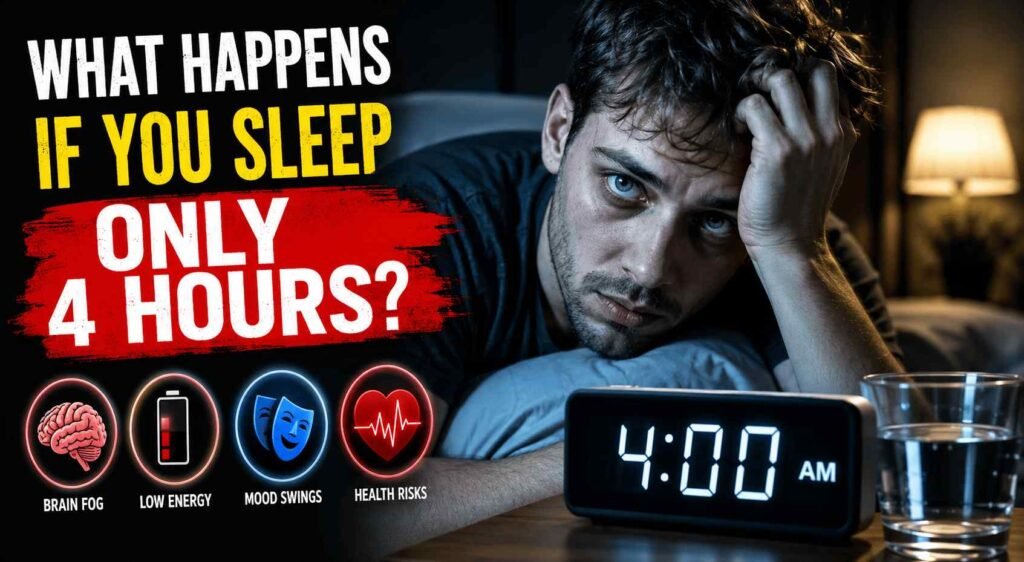
- The Real Effects of Sleep Deprivation on Your Body and Mind
- Why Sleep Is Important
- What Happens During Normal Sleep?
- Immediate Effects of Sleeping Only 4 Hours
- 1. Extreme Fatigue
- 2. Reduced Brain Function
- 3. Mood Changes and Irritability
- 4. Poor Reaction Time
- 5. Increased Hunger and Cravings
- What Happens to Your Brain?
- Memory Problems
- Brain Fog
- Reduced Emotional Control
- What Happens to Your Body?
- Weak Immune System
- Increased Risk of Heart Disease
- Hormonal Imbalance
- Weight Gain and Obesity
- Can You Adapt to Sleeping 4 Hours?
- Long-Term Effects of Chronic Sleep Deprivation
- Increased Risk of Chronic Diseases
- Mental Health Problems
- Reduced Life Expectancy
- Why Some People Think 4 Hours Is Enough
- How to Recover After Sleeping Only 4 Hours
- 1. Take a Short Nap
- 2. Stay Hydrated
- 3. Get Sunlight Exposure
- 4. Avoid Excessive Caffeine
- 5. Prioritize Recovery Sleep
- Tips for Better Sleep
- Final Thoughts
- Frequently Asked Questions (FAQs)
In today’s fast-paced world, many people sacrifice sleep to meet deadlines, scroll through social media, binge-watch shows, or work longer hours. Some even believe sleeping only four hours a night is enough to function properly. But what actually happens to your body and brain when you sleep only 4 hours consistently?
The truth is that sleep is not a luxury — it is a biological necessity. Sleeping only four hours can seriously affect your physical health, mental performance, emotional stability, and long-term well-being. While you may survive on minimal sleep for a short time, your body pays a heavy price.
In this article, we’ll explore the science behind sleep deprivation, what happens during a four-hour sleep cycle, and the short-term and long-term effects of not getting enough rest. Official guidance on recommended sleep duration, sleep health, and risks of insufficient sleep by CDC.
Why Sleep Is Important
Sleep is the body’s natural recovery system. During sleep, your brain and body perform essential maintenance tasks such as:
- Repairing muscles and tissues
- Strengthening the immune system
- Processing memories
- Regulating hormones
- Clearing toxins from the brain
- Restoring energy levels
What Happens During Normal Sleep?
Sleep occurs in cycles, with each cycle lasting about 90 minutes. These cycles include different stages:
- Light sleep
- Deep sleep
- REM (Rapid Eye Movement) sleep
Deep sleep helps with physical recovery, while REM sleep supports memory, learning, and emotional processing.
When you sleep only 4 hours, you complete only about 2 to 3 sleep cycles instead of the recommended 5 to 6 cycles. This significantly reduces the amount of restorative sleep your body receives.
Immediate Effects of Sleeping Only 4 Hours
Even one night of poor sleep can produce noticeable effects.
1. Extreme Fatigue
The most obvious symptom is exhaustion. Your body has not had enough time to recharge, making you feel tired, sluggish, and low on energy throughout the day.
Simple tasks may suddenly feel difficult, and your motivation decreases significantly.
2. Reduced Brain Function
Your brain depends heavily on sleep to function properly. After only four hours of sleep, cognitive performance drops sharply.
You may experience:
- Difficulty concentrating
- Slower thinking
- Poor memory
- Reduced creativity
- Trouble making decisions
Research shows that sleep deprivation can impair the brain similarly to alcohol intoxication.
3. Mood Changes and Irritability
Lack of sleep strongly affects emotions. People who sleep only four hours often become:
- Irritable
- Anxious
- Emotionally sensitive
- Easily frustrated
The brain’s emotional control centers become overactive, while rational thinking areas become less effective.
This is why even small problems can feel overwhelming after poor sleep.
4. Poor Reaction Time
Sleep deprivation slows reaction speed and coordination.
This can increase the risk of:
- Car accidents
- Workplace injuries
- Sports accidents
- Mistakes during important tasks
Studies have shown that drowsy driving can be as dangerous as drunk driving.
5. Increased Hunger and Cravings
Sleep affects hormones that control hunger.
When you sleep only four hours:
- Ghrelin (hunger hormone) increases
- Leptin (fullness hormone) decreases
As a result, you feel hungrier and crave high-calorie foods, especially sugary and fatty snacks.
This is one reason chronic sleep deprivation is linked to weight gain and obesity.
What Happens to Your Brain?
The brain is one of the organs most affected by sleep loss.
Memory Problems
During sleep, the brain organizes and stores memories. Without enough sleep, this process becomes disrupted.
You may:
- Forget information more easily
- Have trouble learning new skills
- Struggle with focus and retention
Students and professionals who sleep too little often experience lower performance despite working longer hours.
Brain Fog
“Brain fog” is a common symptom of sleep deprivation if you sleep 4 hours.
It includes:
- Mental confusion
- Lack of clarity
- Slow thinking
- Difficulty processing information
Even basic conversations or calculations may feel harder than usual.
Reduced Emotional Control
Sleep deprivation increases activity in the brain’s emotional centers while reducing activity in the prefrontal cortex, the area responsible for judgment and self-control.
This imbalance can lead to:
- Impulsive behavior
- Emotional outbursts
- Poor decision-making
What Happens to Your Body?
The effects of sleeping only four hours go beyond tiredness.
Weak Immune System
Sleep is essential for immune function.
When you consistently sleep too little:
- Your body produces fewer protective immune cells
- Inflammation increases
- You become more vulnerable to infections
People with chronic sleep deprivation tend to get sick more often.
Increased Risk of Heart Disease
Poor sleep affects:
- Blood pressure
- Heart rate
- Stress hormone levels
Over time, if you sleep only 4 hours regularly it may increase the risk of:
- High blood pressure
- Heart attacks
- Stroke
- Cardiovascular disease
Hormonal Imbalance
Sleep regulates many hormones in the body.
Lack of sleep can disturb:
- Cortisol (stress hormone)
- Insulin
- Growth hormone
- Testosterone
These hormonal disruptions can affect metabolism, muscle growth, mood, and overall health.
Weight Gain and Obesity
People who sleep too little are more likely to gain weight.
This occurs because sleep deprivation:
- Increases appetite
- Reduces energy levels
- Slows metabolism
- Encourages unhealthy eating habits
Sleep also influences how the body processes sugar, increasing the risk of insulin resistance and type 2 diabetes.
Can You Adapt to Sleeping 4 Hours?
Some people claim they “get used to” sleeping only four hours. However, scientific studies show that the body does not truly adapt to chronic sleep deprivation.
Instead, people simply become less aware of how impaired they are.
Even if you feel “fine,” your:
- Reaction time
- Memory
- focus
- emotional stability
may still be significantly reduced.
A very small percentage of people possess rare genetic traits allowing them to function well on minimal sleep, but this is extremely uncommon.
Long-Term Effects of Chronic Sleep Deprivation
Sleeping only four hours occasionally may not cause permanent damage, but doing so regularly can lead to serious health problems.
Increased Risk of Chronic Diseases
Long-term sleep deprivation is associated with:
- Obesity
- Diabetes
- Heart disease
- Depression
- Anxiety disorders
It may also contribute to weakened brain health as people age.
Mental Health Problems
Sleep and mental health are deeply connected.
Chronic lack of sleep increases the risk of:
- Depression
- Anxiety
- Mood disorders
- Burnout
At the same time, mental health conditions can also make sleep more difficult, creating a harmful cycle.
Reduced Life Expectancy
Studies suggest that consistently sleeping far below recommended levels may shorten lifespan.
The body requires proper sleep for long-term repair and recovery. Without it, physical wear and stress accumulate over time.
Why Some People Think 4 Hours Is Enough
Modern culture often glorifies hustle and overwork. Many successful individuals claim they sleep very little, leading others to believe minimal sleep is a sign of productivity.
However, research consistently shows that adequate sleep improves:
- Productivity
- Creativity
- Learning
- Physical performance
- Emotional resilience
In reality, sacrificing sleep often reduces overall efficiency.
How to Recover After Sleeping Only 4 Hours
If you occasionally sleep only four hours, there are ways to reduce the negative effects.
1. Take a Short Nap
A 20–30 minute nap can improve alertness and concentration temporarily.
Avoid long naps late in the day, as they may disrupt nighttime sleep.
2. Stay Hydrated
Dehydration can worsen fatigue and brain fog.
Drink enough water throughout the day to support energy levels.
3. Get Sunlight Exposure
Natural light helps regulate the body’s internal clock and improves alertness.
Morning sunlight is especially helpful.
4. Avoid Excessive Caffeine
While caffeine may provide temporary energy, relying on it heavily can disrupt future sleep and increase anxiety.
Moderation is important.
5. Prioritize Recovery Sleep
Try to return to a healthy sleep schedule as soon as possible.
Consistent sleep is more effective than trying to “catch up” occasionally.
Tips for Better Sleep
Improving sleep quality can dramatically improve health and daily performance.
Here are some practical tips:
- Maintain a consistent sleep schedule
- Reduce screen time before bed
- Keep the bedroom cool and dark
- Avoid heavy meals late at night
- Limit caffeine in the evening
- Exercise regularly
- Manage stress through relaxation techniques
Small lifestyle changes can make a major difference.
Final Thoughts
Sleeping only four hours may seem manageable for a day or two, but the effects on the brain and body are significant. From fatigue and brain fog to weakened immunity and increased disease risk, chronic sleep deprivation impacts nearly every system in the body.
Sleep is not wasted time — it is one of the most important foundations of physical and mental health.
Getting enough sleep improves:
- focus,
- emotional balance,
- productivity,
- immunity,
- and long-term well-being.
If you regularly sleep only four hours, your body is likely operating below its full potential. Prioritizing quality sleep may be one of the most powerful health decisions you can make.
Frequently Asked Questions (FAQs)
Is 4 hours of sleep enough for adults?
No. Most adults need 7–9 hours of sleep per night for optimal health and functioning.
Can you survive on 4 hours of sleep?
You can survive temporarily, but long-term sleep deprivation increases health risks significantly.
Does sleeping 4 hours affect the brain?
Yes. It impairs memory, concentration, emotional control, and decision-making.
Can naps replace lost sleep?
Short naps may help temporarily, but they cannot fully replace consistent healthy sleep.
What is the minimum amount of sleep needed?
Individual needs vary, but consistently sleeping below 6 hours is generally considered unhealthy for most adults.