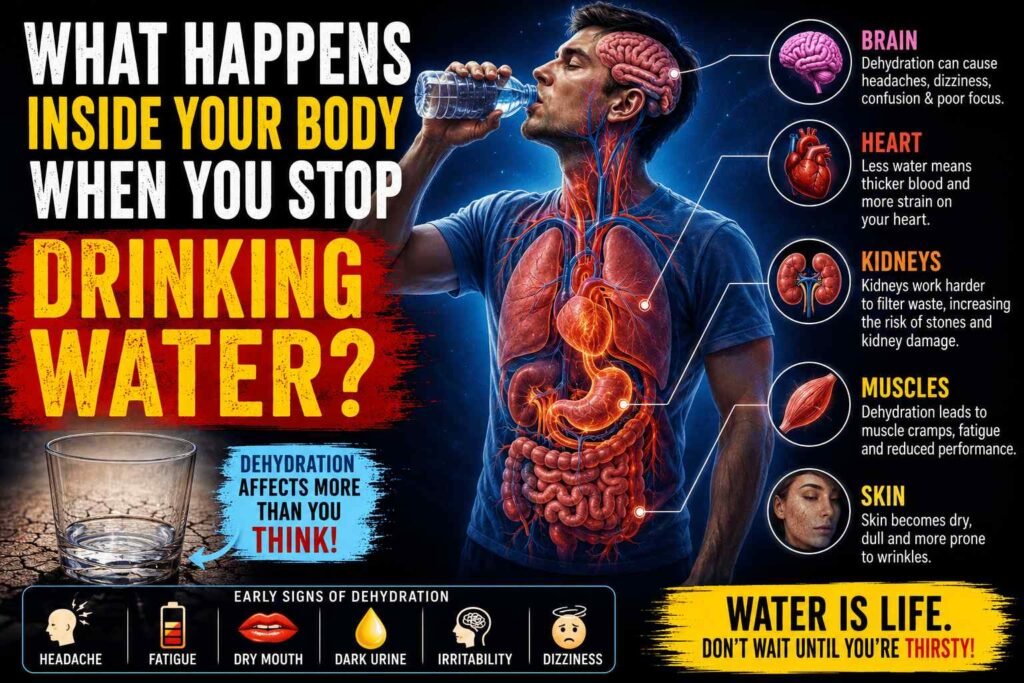
- Why Water Is Essential for the Human Body
- What Happens During the First Few Hours Without Water?
- Your Brain Detects Water Loss Immediately When You Decide to Stop Drinking Water
- What Happens to Your Blood?
- Why Dehydration Causes Headaches When You Stop Drinking Water
- What Happens to Your Energy Levels?
- The Effects on Your Digestive System
- What Happens to Your Skin?
- Why the Kidneys Become Vulnerable
- When You Stop Drinking Water What Happens to Body Temperature?
- The Dangerous Role of Electrolytes
- What Happens After 24 Hours Without Water?
- What Happens to the Brain During Dehydration?
- What Happens After Several Days Without Water?
- Why Thirst Is Not Always Reliable
- Common Causes of Dehydration
- How Much Water Do You Really Need?
- Best Ways to Stay Properly Hydrated
- Drink Water Consistently
- Eat Hydrating Foods
- Monitor Urine Color
- Increase Fluids During Heat or Exercise
- Limit Excessive Sugary Drinks
- Can You Drink Too Much Water?
- The Surprising Connection Between Hydration and Mood
- Final Thoughts
- Frequently Asked Questions (FAQs)
- How long can humans survive without water?
- What are early signs of dehydration?
- Can dehydration affect the brain?
- Is coffee dehydrating?
- What is the healthiest way to stay hydrated?
- Sam
Water is so common in daily life that most people rarely think about it — until they become thirsty. But inside your body, water is doing far more than simply quenching thirst. Every second, it helps regulate temperature, transport nutrients, lubricate joints, protect organs, and keep your brain functioning properly. In fact, the human body is made up of nearly 60% water. Without it, survival becomes impossible. But what actually happens inside your body when you stop drinking water?
The answer is both fascinating and alarming. From the very first hours of dehydration to the dangerous effects that occur after several days, your body begins entering survival mode almost immediately.
In this article, we’ll explore the science of dehydration, the stages your body goes through without water, and why staying hydrated is one of the most important things you can do for your health.
Why Water Is Essential for the Human Body
Every organ in your body depends on water.
Water helps:
- regulate body temperature,
- transport oxygen and nutrients,
- remove toxins,
- support digestion,
- lubricate joints,
- protect tissues,
- and maintain blood circulation.
Even your brain relies heavily on proper hydration to function correctly.
Without enough water, nearly every system in the body begins to struggle.
What Happens During the First Few Hours Without Water?
The effects of dehydration begin sooner than many people realize.
Within hours of the decision to stop drinking water, our:
- blood volume slightly decreases,
- the mouth becomes dry,
- thirst signals activate,
- and the body starts conserving fluids.
The brain quickly notices changes in fluid balance and releases hormones to reduce water loss.
At this stage, you may not feel severely dehydrated yet, but important changes are already occurring internally.
Your Brain Detects Water Loss Immediately When You Decide to Stop Drinking Water
The brain closely monitors hydration levels.
When water intake drops:
- the hypothalamus activates thirst signals,
- hormone levels change,
- and the kidneys begin conserving water.
One important hormone called antidiuretic hormone (ADH) increases to help the body retain fluids.
This causes urine production to decrease and urine to become darker in color.
Your body is essentially entering water-saving mode.
What Happens to Your Blood?
Water is a major component of blood.
As dehydration progresses:
- blood volume decreases,
- circulation becomes less efficient,
- and the heart works harder to pump blood.
This can lead to:
- fatigue,
- dizziness,
- headaches,
- and reduced physical performance.
The thicker the blood becomes, the harder the cardiovascular system must work.
Why Dehydration Causes Headaches When You Stop Drinking Water
One of the earliest symptoms of dehydration is headache.
This may happen because:
- reduced fluid levels affect blood flow,
- electrolyte balance changes,
- and the brain temporarily shrinks slightly due to fluid loss.
The surrounding tissues and nerves react to these changes, potentially triggering pain.
Even mild dehydration can reduce concentration and mental clarity.
What Happens to Your Energy Levels?
Without enough water, cells struggle to produce energy efficiently.
You may begin experiencing:
- tiredness,
- weakness,
- sluggishness,
- and brain fog.
Muscles also become less efficient because hydration is critical for muscle function and oxygen delivery.
Athletic performance declines rapidly during dehydration.
The Effects on Your Digestive System
Water plays a major role in digestion.
Without enough fluids:
- digestion slows down,
- constipation becomes more likely,
- and nutrient absorption may become less efficient.
Saliva production also decreases, making the mouth dry and uncomfortable.
The stomach and intestines depend on proper hydration to move food smoothly through the digestive tract.
What Happens to Your Skin?
When you stop drinking water, your skin can also reveal signs of dehydration.
Common effects include:
- dryness,
- dull appearance,
- tightness,
- reduced elasticity,
- and chapped lips.
Although drinking water alone will not magically create perfect skin, severe dehydration can make the skin appear tired and unhealthy.
Why the Kidneys Become Vulnerable
The kidneys are among the organs most affected by dehydration.
Their job is to:
- filter waste,
- regulate fluids,
- and maintain electrolyte balance.
When water intake drops, the kidneys work harder to conserve fluids.
Over time, severe dehydration can increase the risk of:
- kidney stones,
- urinary infections,
- and kidney damage.
Dark yellow urine is often one of the earliest warning signs.
When You Stop Drinking Water What Happens to Body Temperature?
Water helps cool the body through sweating.
Without enough water:
- sweating decreases,
- cooling becomes less effective,
- and body temperature may rise dangerously.
This is why dehydration significantly increases the risk of:
- heat exhaustion,
- heatstroke,
- and overheating.
Hot weather and intense exercise make dehydration even more dangerous.
The Dangerous Role of Electrolytes
Water alone is not the only concern.
The body also depends on electrolytes like:
- sodium,
- potassium,
- magnesium,
- and calcium.
These minerals help control:
- nerve signals,
- muscle contractions,
- heart rhythm,
- and fluid balance.
Severe dehydration can disrupt electrolyte levels, potentially causing:
- muscle cramps,
- confusion,
- irregular heartbeat,
- or seizures.
What Happens After 24 Hours Without Water?
After about one day without adequate water intake, dehydration becomes much more serious.
Symptoms may include:
- intense thirst,
- dizziness,
- dry mouth,
- weakness,
- irritability,
- rapid heartbeat,
- and reduced urination.
Mental performance also begins to decline more noticeably.
Simple tasks may feel difficult because the brain struggles to function efficiently without proper hydration.
What Happens to the Brain During Dehydration?
The brain is highly sensitive to fluid imbalance.
Dehydration may impair:
- concentration,
- memory,
- mood,
- reaction time,
- and decision-making.
Studies show that even mild dehydration can negatively affect cognitive performance.
People may become:
- more anxious,
- mentally fatigued,
- or emotionally irritable.
In severe cases, confusion and disorientation can occur.
What Happens After Several Days Without Water?
Humans can survive weeks without food, but only a few days without water.
As dehydration becomes extreme:
- blood pressure drops,
- organs begin failing,
- circulation weakens,
- and body temperature becomes unstable.
The kidneys may stop functioning properly, and the brain becomes severely impaired.
Eventually, severe dehydration becomes life-threatening.
Survival time varies depending on:
- temperature,
- activity level,
- health condition,
- and environmental factors.
Why Thirst Is Not Always Reliable
Many people wait until they feel thirsty before drinking water.
However, thirst is not always a perfect indicator of hydration.
Older adults especially may experience reduced thirst sensitivity.
Some signs of dehydration include:
- dark urine,
- dry mouth,
- fatigue,
- headaches,
- dizziness,
- and reduced focus.
By the time strong thirst appears, mild dehydration may already exist.
Common Causes of Dehydration
Dehydration can happen for many reasons, including:
- hot weather,
- excessive sweating,
- illness,
- diarrhea,
- vomiting,
- intense exercise,
- or simply forgetting to drink enough water.
Caffeine and alcohol may also contribute to fluid loss in some situations.
Children and older adults are particularly vulnerable to dehydration.
How Much Water Do You Really Need?
There is no universal amount that fits everyone.
Hydration needs depend on:
- age,
- body size,
- activity level,
- climate,
- and overall health.
Many health experts commonly recommend:
- around 2–3 liters per day for adults,
- with additional fluids during heat or exercise.
Foods like fruits and vegetables also contribute to hydration.
Best Ways to Stay Properly Hydrated
Simple habits can help maintain healthy hydration levels.
Drink Water Consistently
Sip water throughout the day rather than waiting until extreme thirst appears.
Eat Hydrating Foods
Foods rich in water include:
- watermelon,
- cucumber,
- oranges,
- strawberries,
- and lettuce.
Monitor Urine Color
Pale yellow urine generally indicates good hydration.
Dark yellow urine may suggest dehydration.
Increase Fluids During Heat or Exercise
Sweating increases water loss significantly.
Replace fluids during workouts or hot weather conditions.
Limit Excessive Sugary Drinks
Sugary beverages may not hydrate as effectively as plain water in large amounts.
Can You Drink Too Much Water?
Interestingly, excessive water intake can also become dangerous.
Drinking enormous amounts of water rapidly may dilute sodium levels in the blood, causing a condition called water intoxication.
Although rare, it can be serious.
Balance is important.
The Surprising Connection Between Hydration and Mood
Hydration affects more than physical health.
Research suggests dehydration may negatively influence:
- mood,
- stress levels,
- concentration,
- and mental performance.
Even mild dehydration may increase feelings of fatigue and irritability.
Proper hydration supports both body and mind.
Final Thoughts
Water is one of the most essential substances for human survival. The moment you stop drinking water, your body begins making adjustments to conserve fluids and protect vital organs. But as dehydration progresses, nearly every system in the body starts to suffer.
From headaches and fatigue to kidney stress and impaired brain function, dehydration affects far more than just thirst.
The good news is that staying hydrated is simple, affordable, and incredibly powerful for overall health.
Your body constantly depends on water to:
- think clearly,
- move properly,
- regulate temperature,
- and stay alive.
The next time you drink a glass of water, remember:
inside your body, it is performing life-sustaining work every second.
Frequently Asked Questions (FAQs)
How long can humans survive without water?
Most people survive only a few days without water, depending on environmental conditions and overall health.
What are early signs of dehydration?
Common early signs include thirst, dry mouth, headaches, fatigue, dizziness, and dark urine.
Can dehydration affect the brain?
Yes. Even mild dehydration may reduce concentration, memory, and mood stability.
Is coffee dehydrating?
Moderate coffee intake generally does not cause severe dehydration, though caffeine may slightly increase urination in some people.
What is the healthiest way to stay hydrated?
Drink water consistently throughout the day and increase fluid intake during exercise, illness, or hot weather.
You may also want to read about Tick Bite: Causes, Symptoms, Prevention, Treatment