- What Is a Tick Bite?
- Why Tick Bites Are Dangerous
- What Causes Tick Bites?
- Common Causes of Tick Exposure
- Signs and Symptoms of a Tick Bite
- Common Symptoms
- Serious Symptoms to Watch For
- What Does a Tick Bite Look Like?
- Immediate Actions After a Tick Bite
- Tick Bite Do’s and Don’ts
- How to Avoid Tick Bites Completely
- Tick Bite Risks for Children and Pets
- When Should You See a Doctor?
- Myths About Tick Bites
- Natural Ways to Reduce Tick Exposure at Home
- Tick Bite Prevention Checklist
- Final Thoughts
Ticks may be tiny, but the health risks associated with a tick bite can be surprisingly serious. From mild skin irritation to dangerous infections like Lyme Disease and Rocky Mountain Spotted Fever, understanding tick bites is essential for anyone who spends time outdoors.
Whether you enjoy hiking, gardening, camping, farming, or simply walking through grassy parks, this comprehensive guide will help you recognize tick bites, understand the causes, know what actions to take immediately, and most importantly — learn how to avoid them altogether.
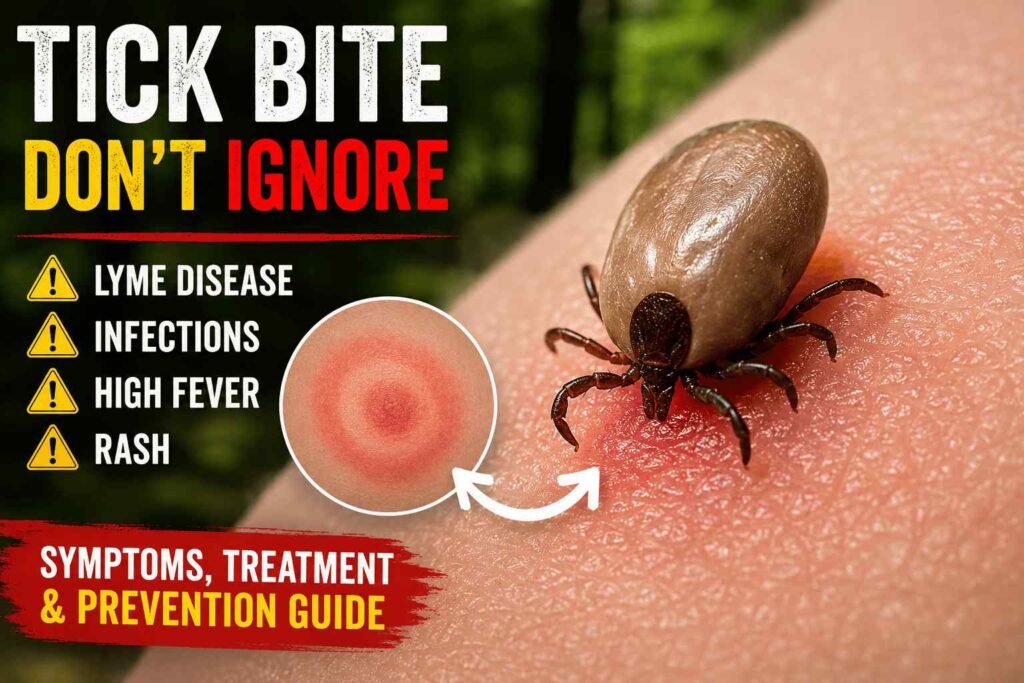
What Is a Tick Bite?
A tick bite occurs when a tick — a small blood-feeding parasite related to spiders and mites — attaches itself to human or animal skin and feeds on blood. Ticks are commonly found in wooded areas, tall grasses, bushes, farms, and humid outdoor environments.
Most tick bites are painless, which makes them dangerous because many people don’t realize they’ve been bitten until hours or even days later. Some ticks carry harmful bacteria, viruses, or parasites that can transmit diseases to humans.
Why Tick Bites Are Dangerous
Not every tick bite causes disease, but some can lead to serious infections if ignored. Certain ticks carry pathogens that enter the bloodstream during feeding.
Common illnesses spread by ticks include:
- Lyme Disease
- Rocky Mountain Spotted Fever
- Babesiosis
- Tick-borne Encephalitis
- Tularemia
Ticks often remain attached for several hours or days, increasing the chances of disease transmission.


What Causes Tick Bites?
Ticks don’t jump or fly. Instead, they wait on grass, shrubs, or leaves with their legs extended — a behavior called “questing” like some leeches. When humans or animals brush past vegetation, ticks latch onto clothing, skin, or fur.
Common Causes of Tick Exposure
1. Walking Through Tall Grass
Ticks thrive in moist grassy environments where they can easily attach to passing hosts.
2. Hiking in Forests
Wooded trails and leaf-covered ground are common tick habitats.
3. Gardening or Farming
Working in bushes, plants, and soil increases exposure risk.
4. Pets Bringing Ticks Indoors
Dogs and cats can carry ticks into homes without owners noticing.
5. Camping and Outdoor Sports
Sleeping outdoors or sitting on grass raises the chance of contact.
Signs and Symptoms of a Tick Bite
Tick bites are often difficult to detect initially because ticks release substances that numb the skin.
Common Symptoms
- Small red bump
- Mild swelling
- Itching or irritation
- Redness around the bite
- Attached visible tick
Serious Symptoms to Watch For
Seek medical attention if you experience:
- Fever
- Fatigue
- Headaches
- Muscle or joint pain
- Chills
- Rash spreading outward
- Bull’s-eye rash
- Difficulty breathing
- Facial paralysis
A bull’s-eye rash is strongly associated with Lyme Disease.
What Does a Tick Bite Look Like?
A typical tick bite may appear as:
- A tiny dark dot attached to skin
- Red inflamed skin around the bite
- A raised bump
- A circular rash
Some bites remain harmless, while others worsen over time.
Immediate Actions After a Tick Bite
Knowing what to do immediately after a tick bite can significantly reduce health risks.
Step 1: Remove the Tick Carefully
Use fine-tipped tweezers to grasp the tick as close to the skin as possible.
Pull upward slowly and steadily without twisting.
Do NOT crush the tick while removing it.
Step 2: Clean the Area
Wash the bite thoroughly with:
- Soap and water
- Rubbing alcohol
- Antiseptic solution
Step 3: Save or Photograph the Tick
If possible:
- Place the tick in a sealed container
- Or take a clear photo
This can help doctors identify species and disease risks later.
Step 4: Monitor Symptoms
Watch for symptoms for up to 30 days after the bite.
If you develop fever, rash, or flu-like symptoms, consult a doctor immediately.
Tick Bite Do’s and Don’ts
✅ DO’s
✔ Check Your Body After Outdoor Activities
Inspect:
- Behind knees
- Scalp
- Armpits
- Groin
- Waistline
- Behind ears
✔ Shower Quickly After Coming Indoors
A shower may help remove unattached ticks before they bite.
✔ Wear Protective Clothing
- Long sleeves
- Full pants
- Tucked-in socks
- Light-colored clothes to spot ticks easily
✔ Use Tick Repellents
Products containing:
- DEET
- Picaridin
- Permethrin-treated clothing
are highly effective.
✔ Keep Grass Short
Maintaining lawns and removing leaf litter reduces tick habitats.
❌ DON’Ts
✘ Don’t Burn the Tick
Using matches or heat can cause the tick to release more infectious material.
✘ Don’t Use Petroleum Jelly or Nail Polish
These old methods are ineffective and risky.
✘ Don’t Squeeze the Tick
Crushing the tick may increase infection risk.
✘ Don’t Ignore Symptoms
Early treatment is crucial for tick-borne illnesses.
✘ Don’t Assume Indoor Safety
Ticks can enter homes through pets and clothing.
How to Avoid Tick Bites Completely
While complete avoidance is difficult, the following precautions dramatically reduce risk.
1. Stay in the Center of Trails
Avoid brushing against tall grass or bushes.
2. Wear Tick-Resistant Clothing
Permethrin-treated clothing provides excellent protection.
3. Use Insect Repellents Properly
Apply repellents to:
- Shoes
- Socks
- Pants
- Exposed skin
4. Protect Pets
Use veterinarian-approved tick prevention products for dogs and cats.
5. Perform Daily Tick Checks
Especially during:
- Spring
- Summer
- Rainy seasons
- Forest trips
6. Wash Outdoor Clothes Immediately
High heat drying kills hidden ticks effectively.
Tick Bite Risks for Children and Pets
Children often play in grass and wooded areas, making them especially vulnerable.
Pets can:
- Carry ticks indoors
- Spread ticks into furniture and bedding
- Suffer tick-borne diseases themselves
Regular pet grooming and tick checks are essential.
When Should You See a Doctor?
Seek medical attention immediately if:
- The tick was attached for more than 24 hours
- You develop fever or rash
- You feel flu-like symptoms
- The bite area becomes severely swollen
- You experience breathing difficulty
- The tick could not be fully removed
Doctors may prescribe antibiotics if infection risk is high.
Myths About Tick Bites
Myth 1: Ticks Jump Onto People
False — ticks crawl and attach from vegetation.
Myth 2: Tick Bites Always Hurt
False — most bites are painless initially.
Myth 3: Every Tick Carries Lyme Disease
False — not all ticks are infected.
Myth 4: You Only Get Ticks in Forests
False — gardens, parks, and lawns can also contain ticks.
Natural Ways to Reduce Tick Exposure at Home
Consider these preventive landscaping methods:
- Remove leaf piles
- Trim bushes regularly
- Create gravel barriers between lawns and woods
- Keep wood piles dry
- Reduce rodent activity
These measures make yards less attractive to ticks.
Tick Bite Prevention Checklist
Before Going Outdoors:
✅ Apply repellent
✅ Wear long clothing
✅ Avoid dense vegetation
After Returning Home:
✅ Shower immediately
✅ Inspect entire body
✅ Check pets
✅ Wash clothes in hot water
Final Thoughts
Tick bites may appear minor, but ignoring them can lead to severe health complications. Awareness, prevention, and fast action are the keys to staying safe.
If you spend time outdoors, understanding tick bite symptoms and prevention strategies is no longer optional — it’s essential.
A simple body check after outdoor activities could prevent weeks or months of illness.
Stay alert, protect yourself, and don’t underestimate the danger of a tiny tick. You can also read the following article for more knowledge https://www.verywellhealth.com/tike-bite-8694151?utm_source=chatgpt.com
You may also like to know why we humans dream ? See post here