- What Is Herpes?
- Can You Catch Gym Herpes?
- Understanding Herpes Gladiatorum
- How Long Does Herpes Survive on Gym Equipment?
- Common Myths About Gym Herpes
- Signs You Should Never Ignore
- Best Ways to Protect Yourself at the Gym
- Gym Hygiene Habits That Matter Most
- What Should Gym Owners Do During an Outbreak?
- Can Antiviral Medications Help?
- Mental Health and Social Stigma
- When Should You See a Doctor?
- Final Thoughts
- Frequently Asked Questions (FAQs)
Walking into a gym should improve your health, confidence, and energy levels. However, many people now worry about infections spreading through shared equipment, locker rooms, and close physical contact. One concern that often sparks fear online is the possibility of a “gym herpes outbreak.”
Although the risk of catching herpes at the gym remains relatively low, you should still understand how the virus spreads and what steps can protect you. Furthermore, misinformation often creates unnecessary panic. Therefore, learning the facts helps you stay safe without avoiding your workouts.
In this guide, you will discover how herpes transmission works, whether gym equipment can spread the virus, warning signs to watch for, and the best hygiene practices to reduce your risk.
What Is Herpes?
Herpes is a common viral infection caused by the Herpes Simplex Virus (HSV). There are two primary types:
- HSV-1 – commonly linked to oral herpes or cold sores
- HSV-2 – commonly associated with genital herpes
However, both types can infect different body areas through skin-to-skin contact.
Many people carry herpes without showing symptoms. In fact, some individuals never realize they have the virus. As a result, transmission can happen unknowingly.
Can You Catch Gym Herpes?
Technically, yes — but the chances remain relatively low.
Herpes spreads mainly through:
- Direct skin-to-skin contact
- Contact with active sores or lesions
- Sharing contaminated personal items immediately after use
The virus does not survive well on surfaces for long periods. Consequently, catching herpes from gym equipment alone is uncommon. Nevertheless, certain situations may increase the risk.
For example:
- Sharing towels
- Using poorly cleaned wrestling mats
- Participating in contact sports
- Touching an active lesion and then touching broken skin
Athletes involved in wrestling, rugby, or martial arts face higher risks because frequent skin contact creates ideal conditions for transmission. In fact, a condition called herpes gladiatorum specifically affects athletes in close-contact sports.
Understanding Herpes Gladiatorum
Herpes gladiatorum refers to a skin infection caused by HSV-1. Wrestlers commonly experience it, although other athletes can also develop the condition.
The infection spreads quickly in environments where athletes:
- Sweat heavily
- Experience skin abrasions
- Share equipment
- Have repeated close contact
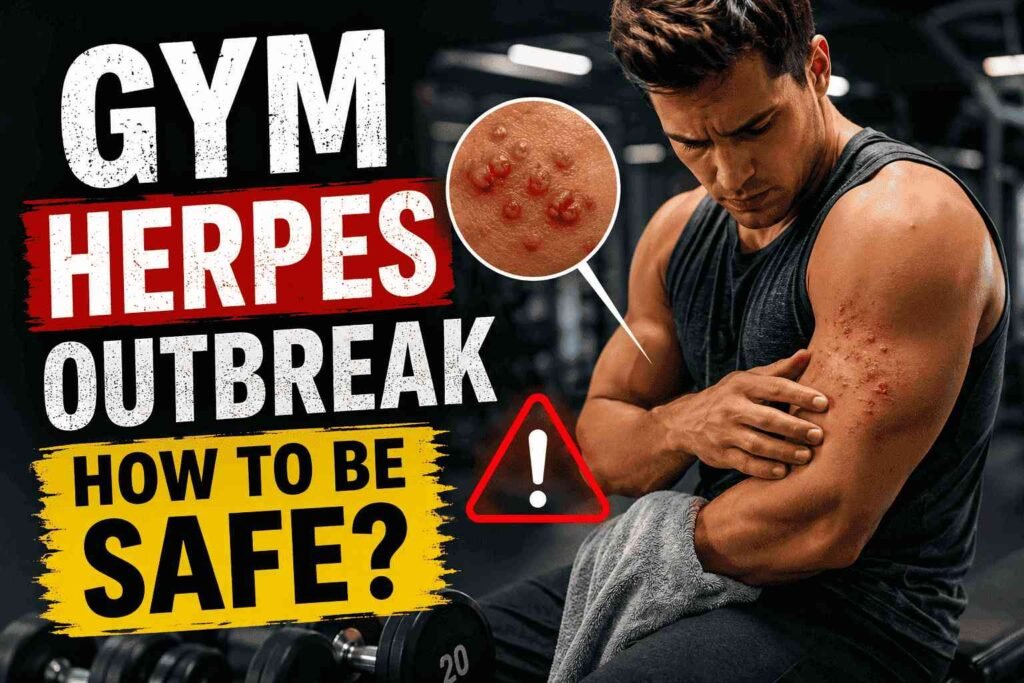
Symptoms often include:
- Clusters of painful blisters
- Fever
- Swollen lymph nodes
- Fatigue
- Burning or tingling skin
Because gyms and sports facilities involve frequent physical interaction, outbreaks can spread rapidly if people ignore symptoms.
Therefore, coaches, trainers, and athletes should take preventive hygiene seriously.
How Long Does Herpes Survive on Gym Equipment?
This question worries many gym-goers. Fortunately, HSV does not live very long outside the human body.
Most studies suggest the virus survives only briefly on surfaces like:
- Dumbbells
- Benches
- Yoga mats
- Treadmills
Environmental factors such as heat, dryness, and cleaning products quickly weaken the virus. Even so, moist environments may temporarily support viral survival.
That said, gyms can still spread other infections more easily, including:
- Ringworm
- Staph infections
- Athlete’s foot
- Molluscum contagiosum
Therefore, practicing proper gym hygiene protects you from multiple health risks, not just herpes.
Common Myths About Gym Herpes
Myth 1: You Will Catch Herpes from Every Gym Surface
This belief causes unnecessary fear. In reality, herpes usually requires direct contact with infected skin or bodily fluids.
A wiped-down bench alone rarely transmits HSV.
Myth 2: Sweat Spreads Herpes
Sweat itself does not spread herpes. However, skin-to-skin contact during sweaty activities can increase transmission risk if active sores are present.
Myth 3: Only “Unclean” Gyms Have Outbreaks
Even premium fitness centers can experience outbreaks if infected individuals participate in close-contact activities without proper precautions.
Therefore, personal hygiene matters more than gym pricing.
Signs You Should Never Ignore
Early detection reduces transmission risk and helps you seek treatment quickly.
Watch for symptoms such as:
- Small fluid-filled blisters
- Tingling or burning sensations
- Painful skin lesions
- Red patches
- Fever and body aches
- Swollen lymph nodes
If you notice suspicious symptoms after gym exposure, consult a healthcare professional immediately.
Moreover, avoid physical contact activities until you receive medical advice.
Best Ways to Protect Yourself at the Gym
1. Wipe Equipment Before and After Use
Always disinfect machines, mats, and benches before workouts.
Although many gyms provide sanitizing sprays, carrying your own alcohol-based wipes offers extra protection.
Furthermore, cleaning equipment shows respect for other gym members.
2. Never Share Towels or Personal Items
This rule matters greatly.
Avoid sharing:
- Towels
- Water bottles
- Razors
- Lip balm
- Clothing
Viruses and bacteria spread more easily through freshly contaminated personal items.
Therefore, bring your own clean gear every time.
3. Cover Cuts and Open Wounds
Broken skin increases infection risk significantly.
Before exercising:
- Cover scrapes with waterproof bandages
- Avoid touching sores
- Wash hands frequently
Even minor skin injuries create entry points for infections.
4. Shower Immediately After Workouts
Sweat and bacteria build up rapidly during exercise.
Consequently, showering soon after workouts helps remove germs before they spread or irritate your skin.
Use:
- Antibacterial soap
- Clean towels
- Flip-flops in communal showers
Additionally, avoid sitting around in sweaty clothes for long periods.
5. Avoid Contact Sports During Active Outbreaks
If you have visible sores or suspect an infection, stay away from:
- Wrestling
- MMA
- Rugby
- Jiu-jitsu
- Close-contact training
Responsible behavior protects teammates and training partners.
Similarly, gyms should enforce temporary restrictions for infected athletes.
6. Wash Gym Clothes Properly
Dirty gym wear can harbor bacteria, fungi, and viruses.
After each session:
- Wash clothes in hot water
- Dry thoroughly
- Avoid reusing sweaty garments
Clean clothing greatly reduces skin infection risks.
Gym Hygiene Habits That Matter Most
Many people focus only on workouts while ignoring hygiene basics. However, consistent habits make the biggest difference.
Healthy gym habits include:
- Using a clean towel barrier on benches
- Washing hands before touching your face
- Keeping fingernails short
- Sanitizing phones and earbuds
- Staying hydrated
- Avoiding overcrowded facilities during outbreaks
Small actions add up over time.
What Should Gym Owners Do During an Outbreak?
Gym management also plays a major role in preventing infections.
Responsible facilities should:
- Increase cleaning frequency
- Disinfect high-touch surfaces regularly
- Educate members about symptoms
- Encourage sick members to stay home
- Inspect contact sports programs carefully
Additionally, trainers should identify suspicious skin lesions early and recommend medical evaluation.
Transparent communication also prevents rumors and panic.
Can Antiviral Medications Help?
Yes. Antiviral medications often reduce symptoms and transmission risks.
Doctors commonly prescribe medications such as:
- Acyclovir
- Valacyclovir
- Famciclovir
These treatments help shorten outbreaks and reduce viral shedding.
However, medication does not completely eliminate the virus from the body.
Therefore, preventive hygiene still matters greatly.
Mental Health and Social Stigma
Unfortunately, herpes still carries significant social stigma. As a result, many infected individuals feel embarrassed or isolated.
However, herpes remains extremely common worldwide. Having the virus does not define someone’s cleanliness, character, or lifestyle.
Education helps reduce fear and misinformation.
Instead of spreading panic, gyms and communities should promote awareness, prevention, and respectful conversations.
When Should You See a Doctor?
You should seek medical advice if you experience:
- Painful blisters
- Recurrent unexplained skin rashes
- Fever with skin lesions
- Eye irritation after facial sores
- Persistent skin infections
Early treatment reduces complications and lowers transmission risk.
Furthermore, proper diagnosis matters because several skin conditions resemble herpes.
Final Thoughts
A gym herpes outbreak can sound alarming, yet the actual risk for most gym-goers remains relatively low. Nevertheless, poor hygiene, shared personal items, and close-contact sports can increase the chances of transmission.
Fortunately, simple preventive measures make a major difference.
By cleaning equipment, avoiding shared towels, covering wounds, and staying alert to symptoms, you can protect yourself and others effectively.
Most importantly, focus on facts instead of fear. A clean gym routine supports not only better fitness but also better overall health.
Frequently Asked Questions (FAQs)
Can herpes live on gym equipment?
Herpes viruses survive poorly on surfaces and usually die quickly outside the body. Therefore, transmission through gym equipment alone remains uncommon.
Can I get herpes from a gym towel?
Yes, shared towels may increase risk if used immediately after an infected person with active sores. Consequently, you should always use your own towel.
What is herpes gladiatorum?
Herpes gladiatorum is a skin infection caused by HSV-1 that commonly affects wrestlers and contact-sport athletes.
Should I avoid the gym during a herpes outbreak?
You do not necessarily need to avoid the gym entirely. However, you should avoid close-contact activities and maintain strict hygiene practices.
Can disinfectants kill the herpes virus?
Yes. Most standard gym disinfectants and alcohol-based cleaners effectively deactivate herpes viruses on surfaces.
Are locker rooms dangerous for herpes transmission?
Locker rooms pose a higher risk for fungal and bacterial infections than herpes. Even so, maintaining good hygiene remains essential.
How can gyms prevent outbreaks?
Gyms can reduce risks by improving cleaning protocols, educating members, encouraging symptom reporting, and enforcing hygiene standards.
Is herpes always visible?
No. Many infected individuals show no symptoms, yet they can still transmit the virus in some cases.
Can sweating spread herpes?
Sweat itself does not transmit herpes. However, close skin contact during sweaty activities may increase transmission risk if sores are present.
Should athletes get checked regularly?
Yes. Athletes involved in close-contact sports should monitor skin health regularly and seek medical evaluation for suspicious lesions.
This article has been made with the help of AI for better SEO but the research and inputs have been provided by me. Sources cited below.
- Centers for Disease Control and Prevention (CDC) – Herpes Simplex Virus (HSV)
- World Health Organization (WHO) – Herpes Simplex Virus Fact Sheet
- American Academy of Dermatology – Herpes Simplex Overview
- Cleveland Clinic – Herpes Gladiatorum Information
- Johns Hopkins Medicine – Herpes Simplex Virus (HSV)
You may also like to read other health related articles here also authored by me :
Symptoms of Diabetes and High Blood Pressure? Warning Signs
How Can I Lose Weight Fast Safely? Practical Guide That Actually Works