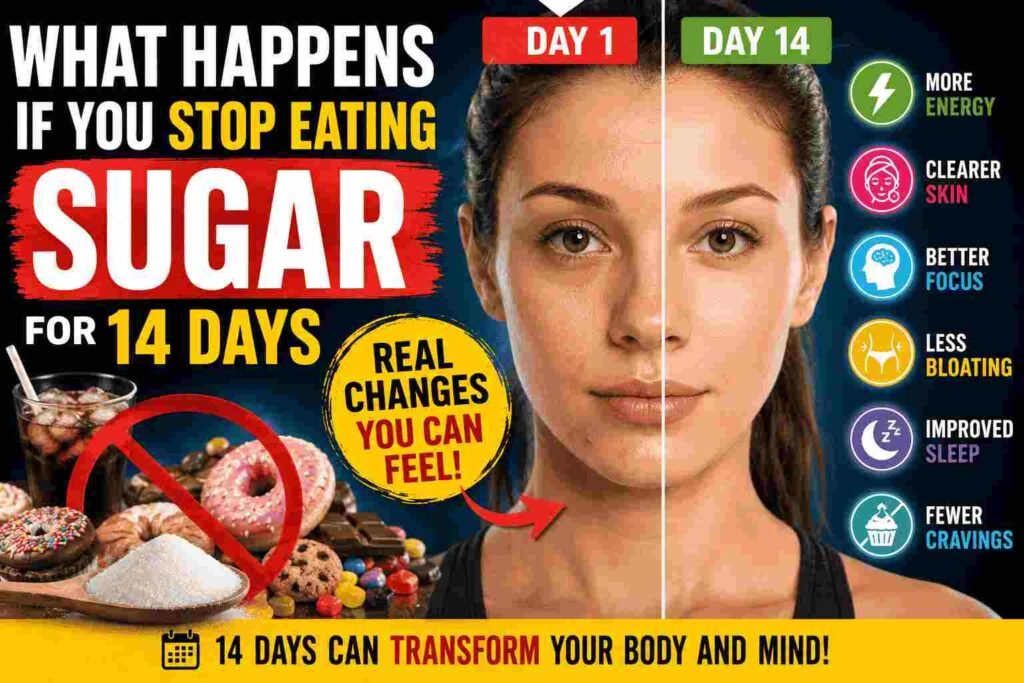
Sugar hides almost everywhere today. From breakfast cereals and flavored coffee to sauces, energy drinks, and even “healthy” snacks, added sugar has quietly become a major part of modern diets. Consequently, many people consume far more sugar than they realize every single day. However, what actually happens when you stop eating sugar for just 14 days?
Surprisingly, your body can begin changing faster than most people expect.
Many people report:
- Better energy
- Fewer cravings
- Clearer skin
- Improved mood
- Better sleep
- Reduced bloating
At the same time, the first few days can feel difficult because your body and brain adjust to lower sugar intake.
This detailed guide explains what may happen to your body, brain, metabolism, skin, energy levels, and cravings after quitting sugar for two weeks.
🍭 Why Sugar Affects the Body So Strongly
Sugar directly impacts several systems inside the body.
When you eat large amounts of added sugar:
- Blood sugar spikes rapidly
- Insulin levels rise
- Energy fluctuates
- Cravings increase
- Inflammation may worsen
Additionally, sugary foods stimulate dopamine release in the brain, which creates feelings of pleasure and reward.
Consequently, many people develop habitual sugar cravings similar to addictive behaviors.
According to Harvard T.H. Chan School of Public Health, excessive added sugar intake links to obesity, type 2 diabetes, heart disease, and fatty liver disease.
📅 What Happens During the First 14 Days Without Sugar
Day 1–3: Sugar Withdrawal Begins
For many people, the first few days feel the hardest.
🍩 Your body suddenly loses its constant sugar supply when you stop eating sugar. As a result, withdrawal-like symptoms may appear.
Common early symptoms include:
- Headaches
- Irritability
- Fatigue
- Mood swings
- Brain fog
- Intense cravings
Although these symptoms feel unpleasant, they usually improve within several days.
Moreover, hydration and balanced meals can help reduce discomfort significantly.
⚡ Blood Sugar Levels Become More Stable
When you constantly consume sugary foods, blood glucose rises and crashes repeatedly.
However, after removing added sugar, your blood sugar often becomes more stable.
Consequently, many people experience:
- More consistent energy
- Fewer afternoon crashes
- Reduced hunger spikes
- Better concentration
Instead of relying on quick sugar highs, the body begins using energy more steadily.
🍔 Cravings May Intensify Before Improving
Many people feel shocked by how strong sugar cravings become initially when you stop eating sugar.
That happens because the brain has adapted to frequent dopamine stimulation from sugary foods.
🚨 During the first week, you may crave:
- Chocolate
- Soda
- Pastries
- Ice cream
- Sweet coffee drinks
Nevertheless, cravings usually decrease gradually after several days.
By the second week, many people notice significantly less obsession with sweets.
🧠 Your Brain May Function Better
Improved Mental Clarity
Large sugar swings can affect focus and concentration.
After reducing sugar intake, some people report:
- Better mental clarity
- Improved productivity
- Sharper focus
- More stable mood
Additionally, stable blood sugar helps the brain receive more consistent energy throughout the day.
Consequently, many individuals feel mentally calmer and less “foggy.”
😊 Mood Swings May Decrease
Although quitting sugar may temporarily worsen irritability, many people eventually experience improved emotional stability.
High sugar intake often contributes to:
- Energy crashes
- Irritability
- Anxiety fluctuations
Therefore, reducing sugar may help stabilize mood over time.
However, results vary depending on:
- Sleep quality
- Stress levels
- Overall diet
- Caffeine intake
⚖️ You May Lose Water Weight
One of the fastest changes people notice involves reduced bloating.
🍟 Sugary and processed foods often cause water retention.
Therefore, cutting sugar may lead to:
- Less puffiness
- Reduced bloating
- Slight weight loss
- Flatter stomach appearance
Importantly, much of the early weight loss comes from water rather than body fat.
Still, many people feel noticeably lighter within the first two weeks.
🔥 Your Skin May Start Improving
Many people notice visible skin improvements after they stop eating sugar.
Excess sugar may contribute to:
- Inflammation
- Acne
- Puffiness
- Premature aging
Additionally, sugar can damage collagen through a process called glycation.
Consequently, reducing sugar may help the skin appear:
- Clearer
- Brighter
- Less inflamed
Although dramatic changes usually take longer than 14 days, some individuals still notice early improvements surprisingly quickly.
😴 Sleep Quality May Improve
High sugar intake can disrupt sleep patterns, especially when consumed late at night.
After reducing sugar, some people experience:
- More restful sleep
- Easier sleep onset
- Fewer nighttime awakenings
Moreover, stable blood sugar may help reduce nighttime energy spikes and crashes.
Better sleep then creates a positive cycle because well-rested people often crave less sugar the next day.
❤️ Your Heart Health May Benefit
Excess sugar intake links strongly to cardiovascular problems.
According to American Heart Association, too much added sugar may increase:
- Blood pressure
- Triglycerides
- Inflammation
- Risk of heart disease
Therefore, even short-term sugar reduction may help improve metabolic health markers over time.
Although 14 days will not completely transform heart health, the process can begin surprisingly quickly.
🩺 Insulin Sensitivity May Improve
When people regularly consume large amounts of sugar, the body may struggle to regulate blood glucose efficiently.
Over time, this can contribute to insulin resistance.
However, reducing sugar intake may help improve insulin sensitivity.
Consequently, the body often manages blood sugar more effectively after several days of healthier eating.
This change becomes especially important for people at risk of:
- Prediabetes
- Type 2 diabetes
- Metabolic syndrome
🍎 Your Taste Buds May Reset
One fascinating effect involves changes in taste perception.
After avoiding sugary foods for two weeks:
- Fruits may taste sweeter
- Soda may taste overpowering
- Processed desserts may feel too intense
Because the brain adapts to lower sweetness levels, natural foods often become more satisfying.
As a result, many people stop craving ultra-processed sugary snacks as strongly.
💪 Energy Levels Often Become More Consistent
Sugar frequently creates an exhausting cycle:
- Quick energy spike
- Sudden crash
- More cravings
- Repeat
After removing added sugar, many people notice steadier energy throughout the day.
Instead of relying on sugar highs, the body begins functioning more efficiently using:
- Protein
- Healthy fats
- Complex carbohydrates
Therefore, energy often feels more stable and sustainable.
🚫 What Counts as “Quitting Sugar”?
Many people misunderstand sugar detoxes.
Completely eliminating all sugar is neither realistic nor necessary because natural sugars exist in:
- Fruits
- Dairy products
- Vegetables
Most health experts focus on reducing:
- Added sugars
- Sugary drinks
- Candy
- Processed desserts
- Sweetened snacks
Consequently, healthy whole foods usually remain part of balanced sugar-reduction plans.
🥗 Foods That Help During a Sugar Detox
Certain foods can help reduce cravings naturally.
Helpful options include:
- Eggs
- Greek yogurt
- Nuts
- Avocados
- Vegetables
- Lean proteins
- Whole grains
Additionally, drinking enough water helps reduce false hunger signals.
Meanwhile, fiber-rich foods improve fullness and stabilize blood sugar.
⚠️ Common Mistakes People Make
Replacing Sugar With Artificial Sweeteners
Some people replace sugar with excessive artificial sweeteners.
However, extremely sweet substitutes may:
- Maintain cravings
- Increase appetite in some individuals
- Prevent taste adaptation
Moderation still matters greatly.
🚨 Restricting Too Aggressively
Extreme diets often fail because they feel impossible to maintain.
Instead of aiming for perfection:
- Reduce sugary drinks first
- Choose whole foods more often
- Read nutrition labels carefully
Gradual improvements usually create more sustainable results.
🌎 Why Sugar Reduction Became So Popular
Interest in sugar reduction exploded because modern diets contain enormous amounts of hidden sugar.
Today, many health-conscious individuals focus on:
- Blood sugar stability
- Weight management
- Energy optimization
- Inflammation reduction
Additionally, social media trends like “14-day no sugar challenges” increased awareness dramatically.
However, sustainable long-term habits matter far more than short-term detox trends alone.
❤️ Final Thoughts
Stopping sugar for 14 days may create noticeable physical and mental changes surprisingly quickly.
Although the first few days often feel challenging, many people eventually experience:
- Better energy
- Reduced cravings
- Improved focus
- Better sleep
- Less bloating
- More stable mood
At the same time, results vary depending on overall lifestyle, activity level, sleep quality, and existing health conditions.
Most importantly, reducing added sugar does not require perfection.
Even small improvements can positively affect long-term health over time.
Therefore, rather than viewing sugar reduction as punishment, many people benefit from treating it as a way to better understand how food affects their body.
FAQs About Quitting Sugar for 14 Days
Will I lose weight if I stop eating sugar for 14 days?
Many people lose some water weight and experience reduced bloating. However, long-term fat loss depends on overall diet and calorie balance.
Are fruit sugars bad during a sugar detox?
Natural sugars in whole fruits usually remain healthy because fruits also contain fiber, vitamins, and antioxidants.
Why do sugar cravings feel so intense?
Sugar activates reward pathways in the brain, which can increase cravings and habitual eating behaviors.
Can quitting sugar improve skin?
Some people notice clearer skin and reduced inflammation after lowering sugar intake.
Is it normal to get headaches after quitting sugar?
Yes. Temporary headaches and fatigue commonly occur during the first few days of sugar reduction.
Does quitting sugar improve sleep?
Many people report more stable sleep patterns after reducing added sugar intake.
Can I still eat carbohydrates?
Yes. Healthy carbohydrates such as vegetables, fruits, legumes, and whole grains remain important parts of balanced nutrition.
How much added sugar is considered too much?
According to health experts, many adults consume far more added sugar than recommended daily limits.
This article has been made with the help of AI for better SEO but the research and inputs have been provided by me. Sources cited below.
- Harvard T.H. Chan School of Public Health – Added Sugar in the Diet
- American Heart Association – Sugar and Heart Health
- Centers for Disease Control and Prevention – Added Sugars
- Mayo Clinic – Healthy Diet and Sugar Intake
- World Health Organization – Sugar Intake Guidelines
- National Institutes of Health
You may also like to read other health related articles here also authored by me :
How to Reduce Sugar Addiction Naturally: Proven Ways to Stop Sugar Cravings
Royal Jelly: Nature’s Most Potent “Wonder Food”
Breast Cancer Symptoms Women Ignore: Early Warning Signs
CMS Hospice Enrolment Moratorium USA: What It Means
Botox: The Good, Bad, and Ugly — What You Really Need to Know