
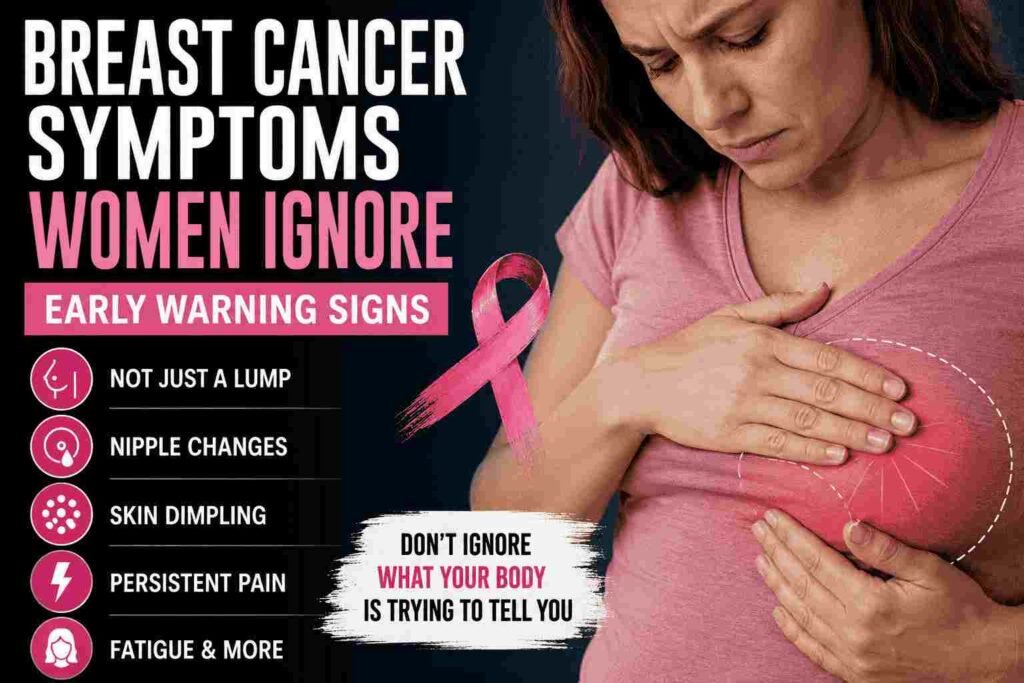
- 🎗️ Why Early Breast Cancer Detection Matters
- 🔍 Breast Cancer Symptoms Women Commonly Ignore
- 🌸 Nipple Changes Women Often Dismiss
- 💡 Swelling Outside the Breast Area
- 🔥 Redness or Warmth in the Breast
- 📅 Symptoms Women Mistake for Hormonal Changes
- 🧪 How Doctors Diagnose It
- 🏃 Lifestyle Habits That May Lower Breast Cancer Risk
- ❤️ Why Breast Self-Awareness Matters
- 👩⚕️ When Should You See a Doctor?
- 🌸 Final Thoughts
- FAQs About Breast Cancer Symptoms
Breast cancer affects millions of women worldwide every year. However, many women still overlook the early warning signs because the symptoms often appear subtle, painless, or easy to dismiss. While some symptoms may seem harmless at first, early detection can dramatically improve treatment outcomes and survival rates.
Therefore, understanding the symptoms women commonly ignore could potentially save lives.
Although many people associate breast cancer with a lump, the disease can actually begin in several different ways. In fact, some women never notice a lump at all. Instead, they experience skin changes, nipple abnormalities, swelling, or persistent discomfort that gradually worsens over time.
This guide explains the most commonly ignored breast cancer symptoms, why they matter, and when you should seek medical attention.
🎗️ Why Early Breast Cancer Detection Matters
Breast cancer often responds better to treatment when doctors detect it early. Consequently, women who recognize suspicious symptoms quickly usually have more treatment options and better recovery outcomes.
According to experts from Mayo Clinic and American Cancer Society, regular screenings and awareness of body changes play a major role in early diagnosis.
Moreover, some aggressive forms of breast cancer spread rapidly. Therefore, even mild symptoms should never be ignored if they persist.
🔍 Breast Cancer Symptoms Women Commonly Ignore
Changes in Breast Size or Shape
Many women experience natural breast changes during menstruation, pregnancy, breastfeeding, or menopause. However, sudden changes in one breast may signal something more serious.
⚠️ Warning signs include:
- One breast becoming noticeably larger
- Swelling without injury
- Distorted breast shape
- Uneven appearance
- Sudden heaviness
Although hormonal fluctuations often cause temporary changes, persistent asymmetry deserves medical attention.
Persistent Breast Pain
Breast pain usually occurs because of hormonal changes. Nevertheless, ongoing pain in one specific area should not be ignored.
🚨 Breast cancer-related pain may:
- Remain in one location
- Feel sharp or burning
- Continue for several weeks
- Occur alongside skin changes
Importantly, most breast pain does not indicate cancer. Still, doctors recommend evaluating unexplained pain that does not improve.
🧬 Skin Dimpling or Thickened Skin
One of the most overlooked warning signs involves changes in the skin texture of the breast.
Some women notice:
- Tiny dents
- Thickened skin
- A texture similar to orange peel
- Tightness
- Swelling
These symptoms may develop because cancer blocks lymphatic vessels beneath the skin.
Additionally, inflammatory breast cancer often causes skin-related symptoms before a lump appears.
🌸 Nipple Changes Women Often Dismiss
Sudden Nipple Retraction
Some women naturally have inverted nipples. However, a nipple that suddenly turns inward requires attention.
⚠️ You should consult a doctor if:
- One nipple suddenly changes direction
- Retraction affects only one breast
- The area becomes painful or irritated
- Discharge develops
Because underlying tissue changes can pull the nipple inward, this symptom should never be ignored.
Unusual Nipple Discharge
Many women assume nipple discharge results from hormonal imbalance or previous breastfeeding. While that may happen sometimes, spontaneous discharge can occasionally signal breast cancer.
🚩 Concerning discharge may:
- Appear bloody
- Look clear or watery
- Occur without squeezing
- Affect only one breast
Therefore, unexpected discharge deserves medical evaluation even if no lump exists.
🩺 Itchy or Flaky Nipples
Persistent itching around the nipple area may seem harmless at first. However, certain rare breast cancers can begin with skin irritation.
Women sometimes mistake these symptoms for eczema or dry skin.
Watch for:
- Crusting
- Flaking
- Burning
- Persistent itching
- Redness around the nipple
If symptoms do not improve with normal skincare products, you should seek medical advice.
💡 Swelling Outside the Breast Area
Underarm Lumps or Swelling
Breast cancer can spread to nearby lymph nodes before a breast lump becomes noticeable. Consequently, some women first detect changes under the arm.
🚨 Symptoms may include:
- Hard underarm lumps
- Swollen lymph nodes
- Tenderness
- Persistent swelling
Because lymph node involvement may occur early, doctors recommend immediate evaluation.
Collarbone Swelling
Although less common, swelling near the collarbone may also indicate enlarged lymph nodes.
Women frequently mistake this symptom for muscle strain or inflammation. Nevertheless, persistent swelling should never be ignored.
🔥 Redness or Warmth in the Breast
Breast infections commonly cause redness and warmth. However, inflammatory breast cancer can create similar symptoms.
Unlike typical breast cancer, inflammatory breast cancer often develops quickly and may not produce a distinct lump.
⚠️ Symptoms include:
- Red or purple skin
- Warmth
- Rapid swelling
- Burning sensation
- Thickened skin
Because this cancer type progresses aggressively, early diagnosis becomes extremely important.
📅 Symptoms Women Mistake for Hormonal Changes
Thickened Breast Tissue
Hormonal cycles naturally affect breast tissue texture. However, one-sided thickening that persists beyond a menstrual cycle may require investigation.
⚠️ Pay attention if:
- One area feels harder
- Tissue feels unusually dense
- Thickening does not disappear
- The change affects one breast only
Persistent tissue changes deserve professional evaluation even when no lump exists.
Ongoing Breast Swelling
Some women experience temporary swelling before menstruation. However, persistent swelling in one breast may indicate underlying disease.
You should monitor:
- Continuous swelling
- Sudden heaviness
- Visible enlargement
- Tight skin
Additionally, swelling combined with redness or pain requires urgent medical attention.
🧪 How Doctors Diagnose It
If symptoms raise concern, doctors may recommend several diagnostic tests.
Clinical Breast Examination
During this exam, a healthcare provider checks the breasts and nearby lymph nodes for abnormalities.
Mammogram
A mammogram uses low-dose X-rays to identify suspicious tissue changes.
Doctors often detect tumors through mammograms before symptoms even appear.
Women over 40 commonly receive routine screenings. However, younger women with symptoms may also require imaging.
Ultrasound
Ultrasound helps doctors determine whether a lump contains solid tissue or fluid.
Additionally, ultrasound works well for examining dense breast tissue.
Biopsy
If imaging reveals suspicious tissue, doctors may remove a small sample for laboratory testing.
Although biopsies sound intimidating, they provide the most accurate diagnosis.
🏃 Lifestyle Habits That May Lower Breast Cancer Risk
While no strategy completely prevents breast cancer, healthy habits may lower risk substantially.
🌿 Maintain a Healthy Weight
Excess body fat can increase estrogen levels, especially after menopause.
Therefore, maintaining a healthy weight may reduce breast cancer risk.
🥗 Eat a Balanced Diet
A nutrient-rich diet supports overall health and immune function.
Focus on:
- Vegetables
- Fruits
- Whole grains
- Lean proteins
- Healthy fats
Additionally, reducing processed foods may support long-term wellness.
🍷 Limit Alcohol Consumption
Research consistently links alcohol intake to higher breast cancer risk.
Consequently, reducing alcohol consumption may help lower overall risk.
🚶 Stay Physically Active
Regular exercise helps regulate hormones and maintain healthy body weight.
Experts generally recommend:
- 150 minutes of moderate exercise weekly
- Strength training at least twice weekly
Even daily walking can provide meaningful benefits.
❤️ Why Breast Self-Awareness Matters
Breast self-awareness simply means understanding what feels normal for your body.
You do not need to perform complicated self-exams every day. However, noticing changes early can help you seek care sooner.
Consequently, women who stay aware of their normal breast appearance often identify suspicious symptoms more quickly.
👩⚕️ When Should You See a Doctor?
You should schedule a medical appointment if symptoms persist longer than two weeks.
🚨 Seek prompt evaluation if you notice:
- A new lump
- Bloody nipple discharge
- Skin dimpling
- Sudden nipple inversion
- Persistent swelling
- Redness or warmth
- Ongoing pain in one area
Remember, most breast changes are not cancer. Nevertheless, doctors recommend investigating persistent abnormalities as early as possible.
🌸 Final Thoughts
Many women ignore breast cancer symptoms because the warning signs often appear subtle or painless. However, breast cancer does not always begin with a lump.
Skin changes, nipple abnormalities, swelling, persistent pain, and unusual breast texture can all signal underlying disease.
Therefore, paying attention to your body matters greatly.
Early detection not only improves treatment success but also increases survival rates significantly. If something feels unusual or persistent, trust your instincts and consult a healthcare professional promptly.
FAQs About Breast Cancer Symptoms
Can breast cancer develop without a lump?
Yes. Some women experience skin changes, nipple abnormalities, swelling, or pain without detecting a lump.
Is breast pain usually a sign of cancer?
Most breast pain does not result from cancer. However, persistent pain in one area should still be evaluated.
What does breast cancer skin dimpling look like?
Skin dimpling often resembles tiny dents or an orange peel texture on the breast surface.
Can young women get breast cancer?
Yes. Although breast cancer becomes more common with age, younger women can still develop the disease.
Is nipple discharge always dangerous?
No. Hormonal changes and benign conditions may cause discharge. However, bloody or spontaneous discharge requires medical attention.
What are the first warning signs of inflammatory breast cancer?
Common symptoms include redness, swelling, warmth, thickened skin, and rapid breast enlargement.
How often should women get mammograms?
Many organizations recommend screening mammograms beginning around age 40. However, women with higher risk factors may need earlier screening.
Does family history always determine breast cancer risk?
No. Many women diagnosed with breast cancer have no family history of the disease.
This article has been made with the help of AI for better SEO but the research and inputs have been provided by me. Sources cited below.
- National Cancer Institute
- BreastCancer.org
- NHS UK
- World Health Organization
- American Cancer Society – Breast Cancer Signs and Symptoms
- Mayo Clinic – Breast Cancer Overview
You may also like to read other health related articles here also authored by me :
GLP-1 Lifestyle and Longevity Hub: 2026 Guide
Pancreatic Cancer: Early Signs, Causes, Treatment, & Prevention
PCOS (Polycystic Ovary Syndrome): Symptoms, Causes, Treatment

Pingback: CMS Hospice Enrolment Moratorium USA: What It Means - hospscout.com