
🩺 Medically reviewed by Dr Duane Sheppard, MD 

- 🩺 What Is Pancreatic Cancer?
- 📍 Why Is Pancreatic Cancer So Dangerous?
- ⚠️ Early Signs and Symptoms of Pancreatic Cancer
- 🔬 Causes and Risk Factors of Pancreatic Cancer
- 🧪 How Doctors Diagnose Pancreatic Cancer
- 🏥 Stages of Pancreatic Cancer
- 💉 Treatment Options for Pancreatic Cancer
- 🔪 Surgery
- ☢️ Radiation Therapy
- 💊 Chemotherapy
- 🧬 Targeted Therapy and Immunotherapy
- 🍎 Can Pancreatic Cancer Be Prevented?
- 🧠 Living With Pancreatic Cancer
- 🌍 Latest Research and Future Hope
- ❓ Frequently Asked Questions (FAQs)
- 📝 Final Thoughts
Pancreatic cancer is one of the most aggressive and misunderstood cancers in the world. Although it often develops silently, it can spread rapidly once symptoms appear. Therefore, understanding the warning signs, risk factors, treatment options, and prevention strategies can make a life-changing difference.
Many people ignore early symptoms because they seem harmless at first. However, timely diagnosis greatly improves treatment outcomes. In this detailed guide, you will learn everything important about pancreatic cancer in simple and practical language.
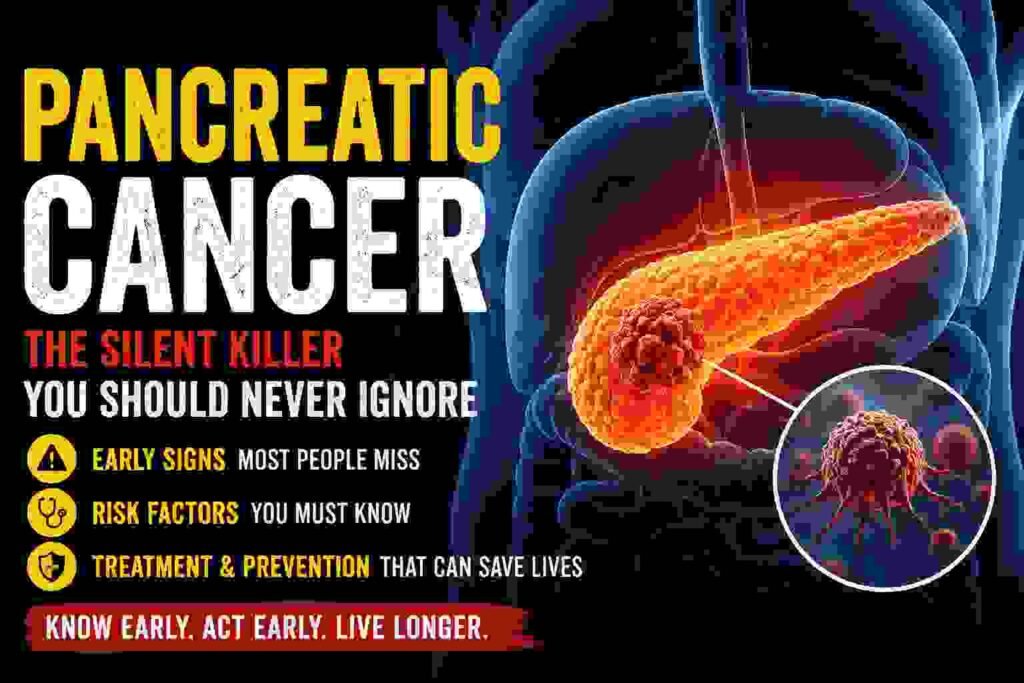
🩺 What Is Pancreatic Cancer?
Pancreatic cancer occurs when abnormal cells in the pancreas begin to grow uncontrollably. The pancreas is a small organ located behind the stomach. It helps digest food and regulates blood sugar through insulin production.
In most cases, pancreatic cancer starts in the ducts that carry digestive enzymes. This type is called pancreatic ductal adenocarcinoma, and it accounts for the majority of cases.
Unfortunately, the disease usually remains hidden during its early stages. As a result, many patients receive a diagnosis only after the cancer has already spread.
📍 Why Is Pancreatic Cancer So Dangerous?
Pancreatic cancer is particularly dangerous because symptoms often appear very late. Moreover, the pancreas lies deep inside the body, making tumors difficult to detect during routine examinations.
Several factors make this cancer challenging:
- Early symptoms are vague
- Tumors spread quickly
- Diagnosis often happens late
- Treatment becomes harder in advanced stages
Even so, medical advancements are steadily improving survival rates. Consequently, awareness and early action are becoming more important than ever.
⚠️ Early Signs and Symptoms of Pancreatic Cancer
Symptoms vary depending on the tumor’s size and location. Nevertheless, some warning signs appear more commonly than others.
1. Unexplained Weight Loss
Sudden weight loss without dieting or exercise is one of the earliest red flags. Since the pancreas helps digestion, cancer may interfere with nutrient absorption.
2. Yellowing of the Skin (Jaundice)
Jaundice causes the skin and eyes to turn yellow. This happens when a tumor blocks the bile duct. Additionally, urine may become dark while stools turn pale.
3. Persistent Abdominal Pain
Many patients experience pain in the upper abdomen that radiates toward the back. The discomfort often worsens after eating or while lying down.
4. Loss of Appetite
People with pancreatic cancer frequently lose interest in food. Consequently, weakness and fatigue may increase over time.
5. Digestive Problems
Common digestive symptoms include:
- Nausea
- Bloating
- Indigestion
- Fatty stools
These symptoms occur because digestive enzymes are not functioning properly.
6. New-Onset Diabetes
Interestingly, pancreatic cancer sometimes triggers sudden diabetes, especially in older adults with no previous history of the condition.
7. Extreme Fatigue
Persistent tiredness that does not improve with rest can also signal an underlying issue.
🔬 Causes and Risk Factors of Pancreatic Cancer
Doctors still do not know the exact cause of pancreatic cancer. However, several risk factors significantly increase the chances of developing it.
🚬 Smoking
Smoking remains one of the biggest contributors. In fact, smokers are much more likely to develop pancreatic cancer compared to non-smokers.
🍔 Obesity
Excess body weight increases inflammation and hormonal imbalance, both of which may promote cancer growth.
🧬 Family History
A family history of pancreatic cancer raises risk considerably. Certain inherited genetic mutations can also contribute.
🍺 Heavy Alcohol Consumption
Long-term alcohol abuse may cause chronic pancreatitis, which can eventually increase cancer risk.
🍭 Diabetes
People with long-standing diabetes appear to face a higher risk. At the same time, pancreatic cancer itself may also cause diabetes.
🏭 Exposure to Harmful Chemicals
Workers exposed to pesticides, dyes, or industrial chemicals may face elevated risk over time.
🧪 How Doctors Diagnose Pancreatic Cancer
Early diagnosis can save lives. Therefore, doctors use several advanced tests to confirm pancreatic cancer.
🖥️ Imaging Tests
Doctors often begin with imaging scans such as:
- CT scan
- MRI
- PET scan
- Ultrasound
These tests help locate tumors and determine whether the cancer has spread.
🔍 Endoscopic Ultrasound
During this procedure, a thin tube with an ultrasound device enters the digestive tract to obtain detailed images of the pancreas.
🧫 Biopsy
A biopsy involves removing a small tissue sample for laboratory testing. This test confirms whether cancer cells are present.
🩸 Blood Tests
Certain blood markers, including CA 19-9, may help doctors monitor pancreatic cancer progression.
🏥 Stages of Pancreatic Cancer
Doctors classify pancreatic cancer into stages based on how far it has spread.
Stage 1
Cancer remains confined to the pancreas.
Stage 2
Cancer spreads to nearby tissues or lymph nodes.
Stage 3
The tumor involves major blood vessels nearby.
Stage 4
Cancer spreads to distant organs such as the liver or lungs.
Naturally, earlier stages offer better treatment outcomes.
💉 Treatment Options for Pancreatic Cancer
Treatment depends on the cancer stage, overall health, and tumor location. In many cases, doctors combine multiple treatments for better results.
🔪 Surgery
Surgery offers the best chance for cure when doctors detect the cancer early.
Whipple Procedure
This complex surgery removes:
- Part of the pancreas
- Small intestine
- Gallbladder
- Bile duct
Although recovery takes time, the procedure can significantly improve survival in selected patients.
Distal Pancreatectomy
Doctors remove the tail of the pancreas during this surgery.
Total Pancreatectomy
Sometimes the entire pancreas must be removed.
☢️ Radiation Therapy
Radiation uses high-energy beams to destroy cancer cells. Doctors often combine it with chemotherapy to shrink tumors before surgery.
💊 Chemotherapy
Chemotherapy drugs kill rapidly growing cancer cells. Additionally, chemotherapy may:
- Slow cancer growth
- Reduce symptoms
- Improve survival
Some patients receive chemotherapy before surgery, while others receive it afterward.
🧬 Targeted Therapy and Immunotherapy
Modern medicine now offers targeted drugs that attack specific cancer mutations. Meanwhile, immunotherapy helps the immune system recognize cancer cells more effectively.
Although these treatments do not work for everyone, they provide hope for certain patients.
🍎 Can Pancreatic Cancer Be Prevented?
No strategy guarantees complete prevention. Nevertheless, healthy lifestyle choices can significantly lower risk.
🚭 Quit Smoking
Stopping smoking remains one of the most effective preventive measures.
🥗 Eat a Healthy Diet
Focus on:
- Fruits
- Vegetables
- Whole grains
- Lean proteins
At the same time, reduce processed foods and sugary drinks.
🏃 Stay Physically Active
Regular exercise supports healthy body weight and reduces inflammation.
🍷 Limit Alcohol Intake
Moderate alcohol consumption lowers the risk of chronic pancreatitis and liver disease.
🩺 Get Regular Medical Checkups
People with family history or chronic pancreatitis should undergo regular screenings.
🧠 Living With Pancreatic Cancer
A pancreatic cancer diagnosis can feel overwhelming. However, emotional support and proper medical care can improve quality of life considerably.
Many patients benefit from:
- Counseling
- Support groups
- Nutritional therapy
- Pain management
- Palliative care
Family involvement also plays a major role during treatment and recovery.
🌍 Latest Research and Future Hope
Researchers worldwide continue searching for better diagnostic tools and treatments. Fortunately, newer therapies are showing promising results.
Current research focuses on:
- Earlier detection methods
- Personalized medicine
- Genetic testing
- Advanced immunotherapy
- AI-assisted diagnosis
Because of these innovations, survival rates may continue improving in the coming years.
❓ Frequently Asked Questions (FAQs)
1. What are the first warning signs of pancreatic cancer?
Common early signs include unexplained weight loss, jaundice, abdominal pain, digestive issues, and fatigue.
2. Is pancreatic cancer curable?
Pancreatic cancer can sometimes be cured if doctors detect it early and remove the tumor surgically. However, advanced stages are harder to treat.
3. Who is most at risk for pancreatic cancer?
Smokers, older adults, obese individuals, people with diabetes, and those with family history face higher risk.
4. Does pancreatic cancer spread quickly?
Yes. Unfortunately, pancreatic cancer often spreads rapidly because symptoms usually appear late.
5. Can young people get pancreatic cancer?
Although it mostly affects older adults, younger people can also develop pancreatic cancer, especially if genetic factors are involved.
6. Is pancreatic cancer painful?
Many patients experience abdominal or back pain, particularly during later stages.
7. Can diet help prevent pancreatic cancer?
A healthy diet rich in fruits, vegetables, and whole foods may help reduce risk.
8. What is the survival rate for pancreatic cancer?
Survival rates depend heavily on how early doctors detect the disease. Early-stage cases have much better outcomes.
📝 Final Thoughts
Pancreatic cancer remains one of the most serious forms of cancer. Nevertheless, awareness, early detection, and healthier lifestyle choices can improve outcomes significantly. Since symptoms often appear late, paying attention to unusual bodily changes becomes extremely important.
Moreover, ongoing medical research continues to provide hope through better treatments and improved diagnostic tools. Therefore, never ignore persistent symptoms such as unexplained weight loss, jaundice, or abdominal pain.
Early action truly saves lives.
Reviewer Bio:
Dr Duane Sheppard is a Gastroenterologist at Dartmouth General Hospital and Colchester Regional Hospital.
This article has been made with the help of AI for better SEO but the research and inputs have been provided by me. Sources cited below.
- American Cancer Society – Pancreatic Cancer Overview
- Mayo Clinic – Pancreatic Cancer Symptoms and Causes
- National Cancer Institute – Pancreatic Cancer Treatment
- World Health Organization (WHO) – Cancer Facts
- Johns Hopkins Medicine – Pancreatic Cancer Information
- Cleveland Clinic – Pancreatic Cancer Guide
You may also like to read other health related articles here also authored by me :
PCOS (Polycystic Ovary Syndrome): Symptoms, Causes, Treatment
Gym Herpes Outbreak? How to Stay Safe While Working Out



Pingback: Warm Lemon Water: First Thing You Should Take After Waking Up? - hospscout.com