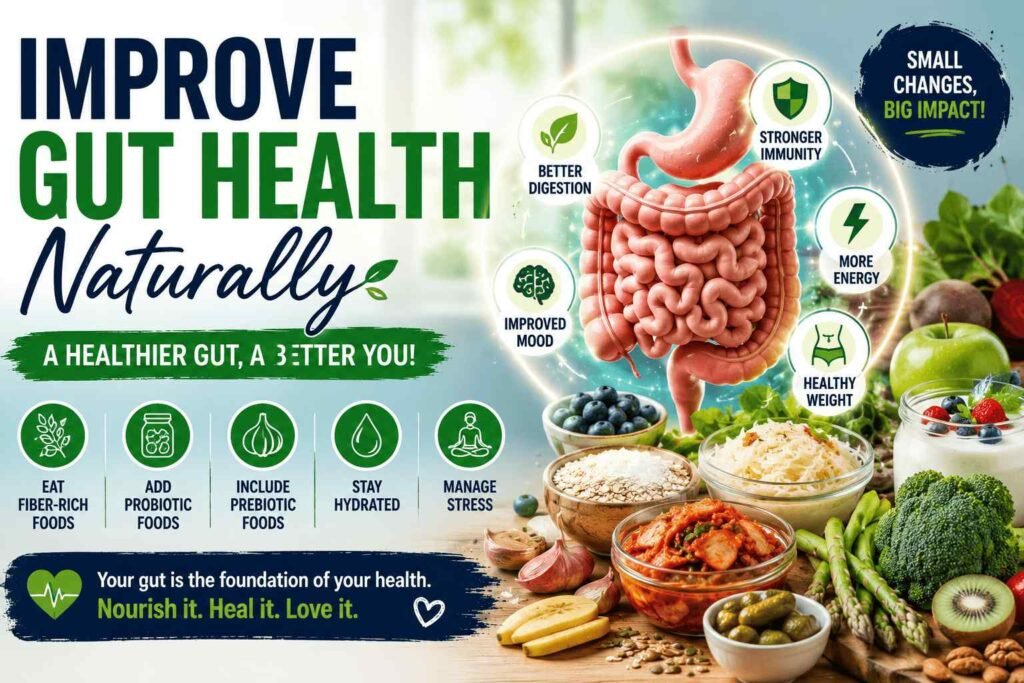
- What Is Gut Health?
- Why Gut Health Matters
- Signs of Poor Gut Health
- 1. Eat More Fiber-Rich Foods
- 2. Add Probiotic Foods to Your Diet
- 3. Feed Your Good Bacteria With Prebiotics
- 4. Reduce Excess Sugar and Processed Foods to boost gut microbiome
- 5. Stay Properly Hydrated
- 6. Manage Stress Levels
- 7. Improve Sleep Quality
- 8. Exercise Regularly
- 9. Avoid Unnecessary Antibiotic Use
- 10. Eat a Diverse Diet
- The Gut-Brain Connection
- How Gut Health Affects Immunity
- Can Gut Health Affect Weight?
- Foods That Support Gut Health Naturally
- Foods That May Harm Gut Health
- Can Probiotic Supplements Helpi improve Gut Microbiome?
- The Importance of Consistency
- Common Myths About Gut Health
- Final Thoughts
- Frequently Asked Questions (FAQs)
- What is the best food for gut health?
- How long does it take to improve gut health?
- Can stress affect digestion?
- Are probiotics necessary?
- Does gut health affect mental health?
Your gut does far more than digest food. Inside your digestive system lives a vast ecosystem of trillions of microorganisms (Gut Microbiome) that influence nearly every part of your health — from immunity and metabolism to mood, energy levels, skin health, and even brain function.
This hidden world is known as the gut microbiome, and scientists now believe it plays one of the most important roles in overall wellness.
When gut health becomes imbalanced, the body may start showing signs such as:
- bloating,
- fatigue,
- poor digestion,
- skin problems,
- low immunity,
- sugar cravings,
- and mood changes.
The good news is that you can improve gut health naturally through simple lifestyle and nutrition changes.
In this article, you’ll discover how the gut works, why it matters so much, and the best science-backed ways to improve gut health naturally.
What Is Gut Health?
Gut health refers to the balance and function of microorganisms living in the digestive tract.
Your gut contains:
- bacteria,
- fungi,
- viruses,
- and other microbes.
Some are beneficial, while others can become harmful if they grow excessively.
A healthy gut microbiome supports:
- digestion,
- nutrient absorption,
- immune defense,
- hormone regulation,
- and inflammation control.
Scientists often call the gut the “second brain” because of its powerful connection to mental and physical health.
Why Gut Health Matters
The digestive system affects far more than the stomach.
Research suggests gut health influences:
- immune function,
- mental health,
- heart health,
- metabolism,
- sleep quality,
- and skin appearance.
In fact, nearly 70% of the immune system is connected to the gut.
An unhealthy gut may contribute to:
- digestive problems,
- inflammation,
- obesity,
- anxiety,
- weakened immunity,
- and chronic disease risk.
Signs of Poor Gut Health
Many people experience gut imbalance without realizing it.
Common signs include:
- bloating,
- gas,
- constipation,
- diarrhea,
- acid reflux,
- food sensitivities,
- fatigue,
- brain fog,
- acne,
- sugar cravings,
- and frequent illness.
Persistent digestive symptoms should always be evaluated by a healthcare professional.
1. Eat More Fiber-Rich Foods
Fiber is one of the most important nutrients for gut health.
Beneficial gut bacteria feed on fiber and produce compounds called short-chain fatty acids, which support the gut lining and reduce inflammation.
High-fiber foods include:
- fruits,
- vegetables,
- oats,
- beans,
- lentils,
- chia seeds,
- and whole grains.
A diverse fiber intake helps support a more balanced gut microbiome.
2. Add Probiotic Foods to Your Diet
Probiotics are beneficial bacteria that may help improve gut balance.
Natural probiotic-rich foods include:
- yogurt,
- kefir,
- kimchi,
- sauerkraut,
- miso,
- and fermented vegetables.
These foods introduce healthy bacteria into the digestive system and may support better digestion and immunity.
However, not all probiotic foods affect people the same way.
3. Feed Your Good Bacteria With Prebiotics
Prebiotics are special types of fiber that nourish beneficial gut bacteria.
Foods rich in prebiotics include:
- garlic,
- onions,
- bananas,
- asparagus,
- oats,
- and apples.
Think of probiotics as the beneficial bacteria and prebiotics as the food that helps them grow.
Both are important for a healthy microbiome.
4. Reduce Excess Sugar and Processed Foods to boost gut microbiome
Highly processed foods and excess sugar may negatively affect gut bacteria balance.
Diets high in processed foods may:
- reduce beneficial bacteria,
- increase inflammation,
- and contribute to digestive issues.
Reducing:
- sugary drinks,
- processed snacks,
- fast food,
- and artificial additives
can help support a healthier gut environment.
Whole foods are generally better for gut diversity and long-term health.
5. Stay Properly Hydrated
Water plays a crucial role in digestion and gut function.
Proper hydration helps:
- move food through the digestive tract,
- support nutrient absorption,
- and maintain the gut lining.
Dehydration may worsen:
- constipation,
- bloating,
- and digestive discomfort.
Drinking enough water daily supports overall digestive health naturally.
6. Manage Stress Levels
Stress strongly affects the gut.
The gut and brain communicate through the gut-brain axis, a powerful connection between the digestive system and nervous system.
Chronic stress may:
- alter gut bacteria,
- worsen digestion,
- increase inflammation,
- and trigger symptoms like bloating or stomach pain.
Stress-management techniques include:
- meditation,
- deep breathing,
- yoga,
- walking,
- and proper sleep.
Mental health and gut health are deeply connected.
7. Improve Sleep Quality
Poor sleep may negatively affect gut bacteria balance.
Sleep deprivation can:
- increase inflammation,
- affect digestion,
- and disrupt hormone regulation.
Most adults benefit from:
Healthy sleep habits support both the brain and digestive system.
8. Exercise Regularly
Regular physical activity may improve gut microbiome diversity.
Exercise supports:
- digestion,
- circulation,
- stress reduction,
- and metabolic health.
Helpful activities include:
- walking,
- cycling,
- swimming,
- yoga,
- and strength training.
Even moderate daily movement may benefit gut health significantly.
9. Avoid Unnecessary Antibiotic Use
Antibiotics can save lives, but they may also disrupt healthy gut bacteria.
Overuse of antibiotics may reduce beneficial microbes and alter microbiome balance.
Only use antibiotics when medically necessary and prescribed by a healthcare professional.
After antibiotic use, focusing on gut-friendly nutrition may help support recovery.
10. Eat a Diverse Diet
Gut bacteria thrive on variety.
Eating many different plant-based foods helps support microbiome diversity.
Try including:
- colorful vegetables,
- fruits,
- legumes,
- nuts,
- seeds,
- and whole grains.
The more diverse your diet, the more diverse your gut bacteria may become.
Diversity is considered a major marker of good gut health.
The Gut-Brain Connection
Scientists now understand that the gut and brain constantly communicate.
The gut produces many neurotransmitters involved in mood regulation, including serotonin.
This may explain why digestive issues are often linked with:
- anxiety,
- stress,
- and mood changes.
A healthier gut may positively influence emotional well-being and mental clarity.
How Gut Health Affects Immunity
A large portion of the immune system is connected to the digestive tract.
Healthy gut bacteria help:
- defend against harmful microbes,
- regulate immune responses,
- and reduce inflammation.
Poor gut health may weaken immune function and increase susceptibility to illness.
Supporting gut health may help strengthen overall immune resilience.
Can Gut Health Affect Weight?
Research suggests the gut microbiome may influence:
- appetite,
- metabolism,
- fat storage,
- and blood sugar regulation.
Certain gut bacteria patterns have been associated with obesity and metabolic disorders.
While gut health is only one factor in weight management, improving digestion and nutrition may support healthier metabolism.
Foods That Support Gut Health Naturally
Some of the best foods for gut health include:
- yogurt,
- kefir,
- oats,
- berries,
- leafy greens,
- bananas,
- garlic,
- onions,
- beans,
- and fermented foods.
These foods provide:
- fiber,
- prebiotics,
- antioxidants,
- and beneficial nutrients.
Whole foods are generally more supportive of gut health than ultra-processed products.
Foods That May Harm Gut Health
Certain foods may negatively affect gut balance when consumed excessively.
These include:
- highly processed foods,
- excessive sugar,
- excessive alcohol,
- artificial sweeteners,
- and deep-fried foods.
Occasional treats are normal, but moderation is important.
Can Probiotic Supplements Helpi improve Gut Microbiome?
Probiotic supplements may help some people, especially after antibiotics or digestive disturbances.
However:
- not all probiotics are the same,
- and results vary between individuals.
Whole-food approaches are often recommended first.
Anyone considering supplements for medical digestive conditions should consult a healthcare professional.
The Importance of Consistency
Improving gut health does not happen overnight.
The microbiome responds gradually to:
- diet,
- sleep,
- stress,
- hydration,
- and lifestyle habits.
Small consistent improvements often produce the best long-term results.
Sustainable habits are more important than extreme diets or short-term detoxes.
Common Myths About Gut Health
Myth 1: Detox Teas Clean the Gut
Most “gut detox” products lack strong scientific support.
The body already has natural detoxification systems through the:
- liver,
- kidneys,
- and digestive system.
Myth 2: All Bacteria Are Bad
Many bacteria are essential for human survival and health.
Myth 3: Gut Health Only Affects Digestion
The gut influences immunity, mood, metabolism, and overall health far beyond digestion.
Final Thoughts
Gut health plays a powerful role in nearly every aspect of wellness. The trillions of microorganisms living inside the digestive system influence digestion, immunity, mood, energy, and even brain function.
The good news is that improving gut health naturally is possible through simple everyday habits.
By focusing on:
- fiber-rich foods,
- probiotics,
- hydration,
- sleep,
- exercise,
- stress management,
- and whole-food nutrition,
you can help support a healthier and more balanced gut microbiome.
Small daily choices can have a major long-term impact on how your body feels and functions.
A healthier gut may not only improve digestion — it may improve your overall quality of life.
Frequently Asked Questions (FAQs)
What is the best food for gut health?
Fiber-rich foods, fermented foods, fruits, vegetables, and whole grains are excellent for gut health.
How long does it take to improve gut health?
Some people notice improvements within a few weeks, though long-term consistency matters most.
Can stress affect digestion?
Yes. Stress strongly affects the gut-brain connection and may worsen digestive symptoms.
Are probiotics necessary?
Not always. Many people can support gut health naturally through diet and lifestyle changes.
Does gut health affect mental health?
Research suggests gut bacteria may influence mood, stress responses, and brain function through the gut-brain axis. A highly authoritative article is listed below for further research
Experts at the Cleveland Clinic explain that improving gut health may positively affect digestion, immunity, and mental well-being.