Reflects genuine frustration with healthcare affordability in the United States. Possible Solutions included..
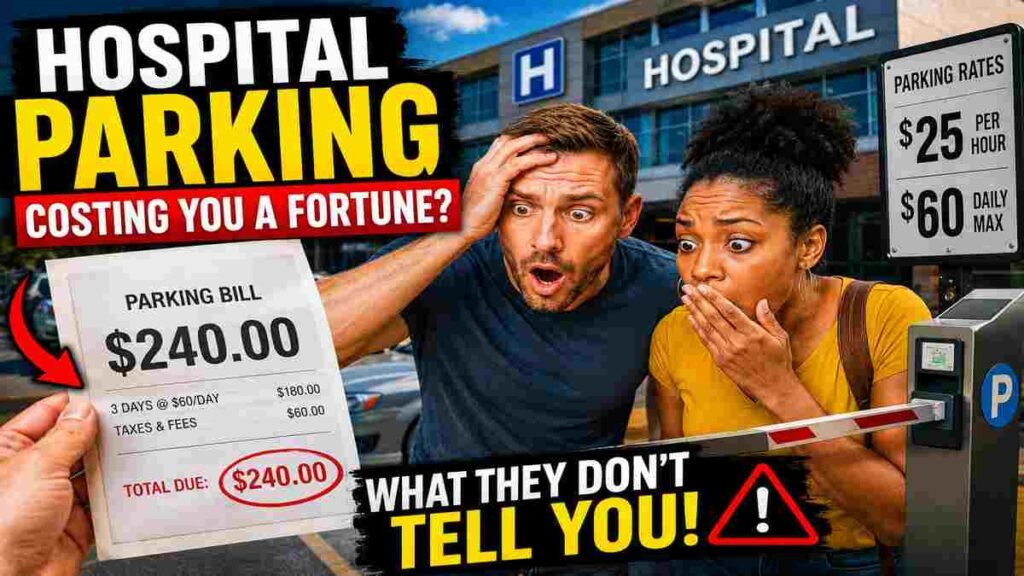
- 🚗 Why Hospital Parking in America Makes People Angry
- 💰 Hospital Parking Can Become Shockingly Expensive
- 🏥 Even Doctors & Nurses Sometimes Pay Huge Fees!
- 😡 People See It as Morally Wrong
- 🚗 Smart Workarounds to Save Money on Hospital Parking in the USA
- ⚠️ Avoid These Costly Mistakes
- 💡 The Biggest Money-Saving Trick
- 🚗 Final Thoughts
Hospital parking in the USA has become a surprisingly huge and emotional issue. For many Americans, it symbolizes everything frustrating about the healthcare system: high costs, stress, confusing rules, and feeling financially squeezed during medical emergencies.
Here’s why there’s so much buzz around it:
🚗 Why Hospital Parking in America Makes People Angry
Imagine this situation:
Your family member is in the ICU.
You rush to the hospital daily.
Then you discover parking costs:
- $15
- $25
- sometimes even $40+ per day
And that’s before the medical bills arrive.
Many Americans feel hospitals effectively charge people simply for being sick or visiting loved ones.
That emotional aspect is what drives the outrage.
💰 Hospital Parking Can Become Shockingly Expensive
In large cities like:
- New York
- Boston
- Los Angeles
- Chicago
- Houston
hospital parking garages often operate like airport parking systems.
Some cancer patients and long-term visitors reportedly spend hundreds or even thousands of dollars over months of treatment.
Urban hospitals argue that:
- land is expensive,
- parking space is limited,
- maintenance/security costs money,
- and pricing helps prevent abuse of parking lots.
However, critics say hospitals exploit a “captive audience” — people who have little choice but to pay.
🏥 Even Doctors & Nurses Sometimes Pay Huge Fees!
This surprises many people.
At some American hospitals, even hospital staff pay for parking permits.
In crowded urban medical centers, staff parking can cost hundreds of dollars annually. Some workers even park far away and take shuttles to work.
That has created tensions between:
- doctors,
- nurses,
- administrators,
- and nearby residents.
Some neighborhoods complain hospital workers overflow into residential streets to avoid parking fees.
😡 People See It as Morally Wrong
The strongest criticism is emotional rather than economic.
People say:
“Nobody goes to a hospital for fun.”
That exact sentiment appears constantly online.
Critics argue hospitals should not behave like shopping malls or stadiums when dealing with sick people, grieving families, or emergency situations.
Cancer treatment especially comes up often because patients must return repeatedly for chemotherapy, scans, radiation, and appointments. Parking fees pile up fast.
🧠 But Hospitals Defend the Charges
Hospitals argue the issue is more complicated than people think.
Their reasoning includes:
- Parking garages cost millions to build
- Security and maintenance are expensive
- Free parking fills lots instantly
- Non-patients may abuse free parking
- Urban land is extremely valuable
Some experts even say free parking can worsen availability problems.
So hospitals often claim parking fees help:
- manage demand,
- reduce overcrowding,
- and fund operations.
📱 Technology Made It Even More Frustrating
Recently, many hospitals switched to:
- QR-code payments
- app-based systems
- license-plate tracking
- automated ticketing
Patients already under stress often struggle with these systems.
Some people reported getting huge fines because apps malfunctioned or license plates scanned incorrectly.
Consequently, hospital parking has become one of those everyday frustrations that people passionately vent about online.
🌎 Why Americans Talk About It So Much Online
Hospital parking combines several emotionally explosive topics:
- healthcare costs,
- urban congestion,
- corporate behavior,
- stress,
- inequality,
- and family emergencies.
Therefore, even a small parking fee can feel symbolic of a much bigger problem:
“Everything in healthcare costs money.”
That’s why hospital parking discussions frequently go viral on:
- TikTok
- X/Twitter
- local news channels
Especially when someone posts:
- a giant parking bill,
- a confusing parking ticket,
- or a story about paying to visit a dying relative.
🚑 The Irony People Often Point Out
Many Americans joke about this contradiction:
“The ambulance ride bankrupted me… and then the parking garage finished the job.”
Dark humor aside, it reflects genuine frustration with healthcare affordability in the United States.
🚗 Smart Workarounds to Save Money on Hospital Parking in the USA
Many Americans quietly use these strategies because hospital parking fees can become brutal during long treatments or frequent visits.
🅿️ Ask for Patient Parking Validation First
Many hospitals actually offer:
- discounted parking,
- validated tickets,
- weekly passes,
- or hardship waivers.
However, they often do not advertise them clearly.
Ask:
- reception desks,
- social workers,
- oncology departments,
- or billing offices.
Cancer centers especially sometimes provide parking assistance programs.
🏥 Use Long-Term Patient Passes
If treatment lasts weeks or months:
- ask for monthly parking permits,
- family passes,
- or “frequent visitor” programs.
Daily rates destroy budgets fast, whereas long-term permits can cut costs dramatically.
🚶 Park Slightly Away From the Hospital
This is one of the most common hacks.
Hospital garages usually charge premium prices because of convenience. However, parking:
- 10–20 minutes away,
- near residential zones,
- or near public parking garages
can save huge amounts.
Many people use:
- Google Maps satellite view,
- parking apps,
- or street parking zones nearby.
Just check local parking restrictions carefully.
🚇 Use Public Transportation Whenever Possible
In major cities like:
- New York,
- Chicago,
- Boston,
- Washington DC,
public transit often costs far less than parking.
Some hospitals even partner with local transit systems and offer:
- discounted train tickets,
- shuttle buses,
- or transit reimbursements.
🚕 Use Ride-Sharing Strategically
Sometimes Uber or Lyft actually costs less than parking all day.
Especially if:
- multiple family members split the fare,
- parking exceeds $30/day,
- or visits are short.
For long ICU visits, though, rideshare may become expensive over time.
👨👩👧 Rotate Family Visitors
Families often unintentionally multiply parking costs.
Instead:
- coordinate visits,
- carpool together,
- or rotate visitors.
One car instead of three can save hundreds over long hospital stays.
🚌 Ask About Hospital Shuttle Services
Large medical campuses frequently run:
- free shuttles,
- satellite parking lots,
- remote garages,
- or hotel transport systems.
These options often exist for employees and visitors, but many people never ask.
🏨 Stay at Nearby Medical Hospitality Houses
For long-term treatment:
- Ronald McDonald Houses,
- medical hospitality centers,
- charity lodges,
- or discounted patient hotels
sometimes include:
- free parking,
- shuttle access,
- or transportation support.
Cancer patients especially use these programs.
📱 Use Parking Apps Carefully
Apps like:
- SpotHero
- ParkWhiz
- BestParking
sometimes offer cheaper nearby garages than official hospital parking.
However:
- compare walking distance,
- check nighttime safety,
- and verify operating hours.
🧾 Ask if Parking Can Be Reimbursed
Some:
- insurance plans,
- veteran programs,
- Medicaid transport services,
- nonprofits,
- or employer health programs
may reimburse transportation or parking expenses.
This is surprisingly underused.
⚠️ Avoid These Costly Mistakes
❌ Valet parking every day
Convenient, but extremely expensive long-term.
❌ Ignoring validation options
Many people pay full price unnecessarily.
❌ Parking illegally nearby
Towing near hospitals is aggressive in many cities.
❌ Forgetting time limits
Garage “grace periods” can suddenly jump from $12 to $40.
💡 The Biggest Money-Saving Trick
The smartest move is simple:
Speak with hospital social workers.
Seriously.
They often know:
- hidden discounts,
- nonprofit support,
- patient assistance funds,
- transportation charities,
- and local parking loopholes.
Most stressed families never realize these resources exist.
🚗 Final Thoughts
Hospital parking may seem like a small issue at first. However, for many American families, it becomes an exhausting financial burden during already stressful medical situations. Between daily fees, long-term treatments, emergency visits, and confusing parking systems, these costs quickly add up.
Fortunately, patients and visitors can reduce hospital parking expenses by using smart strategies like parking validations, shuttle services, public transportation, family coordination, nearby parking apps, and hospital assistance programs. Moreover, many hospitals quietly offer discounted parking options that people simply never hear about.
Most importantly, nobody should feel financially punished for visiting a loved one or seeking medical care. Therefore, understanding these hidden costs — and learning practical ways to avoid them — can save families hundreds or even thousands of dollars over time.
As healthcare discussions continue across the United States, hospital parking remains one of the clearest examples of how everyday medical expenses affect ordinary people far beyond the hospital bill itself.
Authoritative Source Links
Healthcare & Hospital Parking Research
- CDC Healthcare Facilities Information
- American Hospital Association
- PBS Report on Hospital Parking Costs
Transportation & Parking Insights
Healthcare Cost & Patient Support Resources
- American Cancer Society Transportation Programs
- Ronald McDonald House Charities
- Medicaid Transportation Assistance Information
You may also like to read other health related articles here also authored by me :
What Is Prostate Cancer: Causes, Early Signs & Prevention
Why US Healthcare Feels Broken
No 1 Factor in Hair Loss That Nobody Talks About