- What Is Sugar Addiction?
- Why Do People Crave Sugar So Much?
- How Sugar Affects the Brain
- Signs You May Have a Sugar Addiction
- Why Excess Sugar Can Be Harmful
- 1. Reduce Sugar Gradually
- 2. Eat More Protein
- 3. Avoid Skipping Meals
- 4. Improve Sleep Quality
- 5. Manage Stress Naturally
- 6. Drink More Water
- 7. Identify Hidden Sugars
- 8. Choose Healthier Sweet Alternatives
- 9. Increase Fiber Intake
- 10. Remove Temptation From Your Environment
- Why Exercise Helps Reduce Sugar Cravings
- The Emotional Side of Sugar Addiction
- What Happens When You Reduce Sugar?
- Sugar Withdrawal Symptoms
- How Long Does It Take to Reduce Sugar Cravings?
- Can Artificial Sweeteners Help?
- Healthy Habits for Long-Term Success
- Final Thoughts
- Frequently Asked Questions (FAQs)
- Is sugar addiction real?
- What causes sugar cravings?
- How can I stop craving sugar?
- Are fruits bad because they contain sugar?
- How long does it take to break sugar addiction?
- Sam
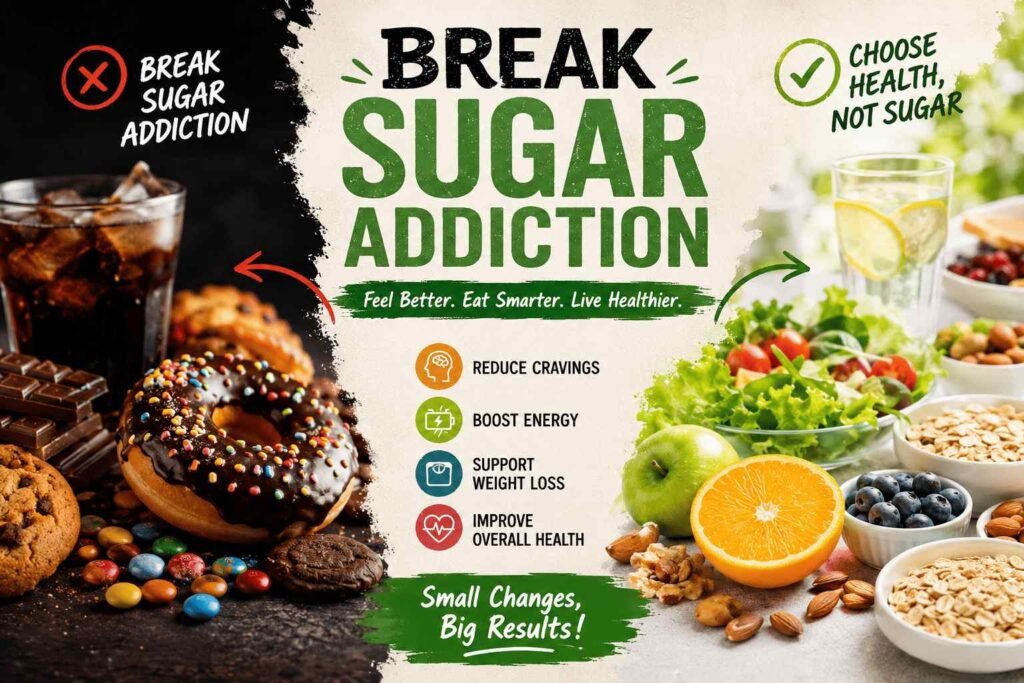
Sugar is everywhere. So is Sugar addiction. From soft drinks and desserts to packaged snacks, cereals, sauces, and even “healthy” foods, sugar has become a major part of the modern diet. While an occasional sweet treat is normal, many people find themselves constantly craving sugar throughout the day.
You may promise yourself to avoid sweets — only to suddenly crave chocolate, ice cream, soda, or sugary snacks a few hours later. This cycle can feel frustrating and difficult to control.
The reason is simple: sugar can strongly affect the brain’s reward system, making people crave more and more over time.
The good news is that sugar addiction can be reduced naturally. With the right habits, nutrition, and lifestyle changes, it is possible to regain control over cravings and build a healthier relationship with food.
In this article, we’ll explore why sugar cravings happen, how sugar affects the brain and body, and practical ways to reduce sugar addiction naturally.
What Is Sugar Addiction?
Sugar addiction refers to intense cravings and compulsive consumption of sugary foods despite knowing their negative health effects.
While sugar addiction is not officially classified as a substance addiction in the same way as drugs or alcohol, research suggests sugar can activate reward pathways in the brain similar to addictive substances.
When you eat sugar:
- dopamine levels rise,
- pleasure centers activate,
- and the brain remembers the rewarding experience.
Over time, frequent sugar consumption may increase cravings and make sugary foods harder to resist.
Why Do People Crave Sugar So Much?
Sugar cravings are influenced by both biology and lifestyle.
Common causes include:
- stress,
- poor sleep,
- emotional eating,
- hormonal changes,
- dehydration,
- skipping meals,
- and highly processed foods.
Modern processed foods are often designed to be extremely appealing, combining:
- sugar,
- fat,
- and salt
in ways that strongly stimulate the brain’s reward system.
How Sugar Affects the Brain
Sugar rapidly increases blood glucose levels, providing quick energy and temporary pleasure.
The brain releases dopamine, a neurotransmitter associated with:
- pleasure,
- motivation,
- and reward.
This creates a short-term “feel-good” effect.
However, repeated spikes and crashes in blood sugar may lead to:
- stronger cravings,
- mood swings,
- irritability,
- and low energy.
Over time, the brain may begin seeking sugar more frequently for emotional or mental stimulation.
Signs You May Have a Sugar Addiction
Many people consume excess sugar without realizing how dependent they have become.
Common signs include:
- strong cravings for sweets,
- eating sugary foods daily,
- difficulty controlling portions,
- emotional eating,
- energy crashes,
- headaches when reducing sugar,
- or constantly thinking about sweet foods.
Some people also feel guilty after overeating sugar but still struggle to stop.
Why Excess Sugar Can Be Harmful
Too much added sugar may negatively affect overall health.
Excessive sugar consumption has been linked to:
- weight gain,
- obesity,
- type 2 diabetes,
- fatty liver disease,
- heart disease,
- tooth decay,
- and inflammation.
High sugar intake may also contribute to:
- poor energy levels,
- acne,
- sleep problems,
- and mood instability.
Reducing sugar can improve both physical and mental well-being.
1. Reduce Sugar Gradually
One of the biggest mistakes people make is trying to eliminate all sugar overnight.
Sudden restriction may:
- increase cravings,
- trigger frustration,
- and make relapse more likely.
Instead, reduce sugar gradually.
Start by:
- drinking less soda,
- reducing sugar in tea or coffee,
- choosing healthier snacks,
- and cutting back on desserts slowly.
Small sustainable changes are often more effective long-term.
2. Eat More Protein
Protein helps stabilize blood sugar and reduce cravings.
Protein-rich foods may help you feel fuller for longer and reduce the urge to snack on sugary foods.
Healthy protein sources include:
- eggs,
- yogurt,
- chicken,
- fish,
- lentils,
- nuts,
- and beans.
Balanced meals help prevent rapid energy crashes that trigger sugar cravings.
3. Avoid Skipping Meals
Skipping meals can cause blood sugar levels to drop, increasing cravings for quick energy sources like sugar.
Try to eat regular balanced meals containing:
- protein,
- healthy fats,
- fiber,
- and complex carbohydrates.
Stable blood sugar often leads to fewer cravings throughout the day.
4. Improve Sleep Quality
Poor sleep significantly increases sugar cravings.
Sleep deprivation affects hormones that regulate:
- hunger,
- appetite,
- and fullness.
People who sleep poorly often crave:
- sugary foods,
- high-calorie snacks,
- and processed carbohydrates.
Aim for 7–9 hours of quality sleep each night to support healthier eating habits.
5. Manage Stress Naturally
Stress is a major trigger for emotional eating and sugar cravings.
When stressed, the body releases cortisol, which may increase appetite and cravings for comfort foods.
Healthy stress-management techniques include:
- exercise,
- meditation,
- deep breathing,
- journaling,
- and spending time outdoors.
Reducing stress often helps reduce emotional dependence on sugar.
6. Drink More Water
Sometimes dehydration can mimic hunger or cravings.
Before reaching for sugary snacks, try drinking a glass of water first.
Proper hydration supports:
- metabolism,
- digestion,
- energy levels,
- and appetite control.
Replacing sugary drinks with water is one of the most effective ways to reduce sugar intake.
7. Identify Hidden Sugars
Many processed foods contain surprisingly high amounts of added sugar.
Hidden sugars are common in:
- sauces,
- flavored yogurt,
- breakfast cereals,
- packaged snacks,
- sports drinks,
- and “low-fat” products.
Read ingredient labels carefully.
Sugar may appear under names like:
- sucrose,
- corn syrup,
- fructose,
- dextrose,
- maltose,
- or cane sugar.
Awareness is an important first step.
8. Choose Healthier Sweet Alternatives
Reducing sugar does not mean you can never enjoy sweet flavors again.
Healthier alternatives include:
- fresh fruits,
- dark chocolate,
- yogurt with berries,
- smoothies,
- or naturally sweet snacks.
Fruit provides fiber and nutrients along with natural sweetness, making it more satisfying than processed sugar.
9. Increase Fiber Intake
Fiber slows digestion and helps stabilize blood sugar levels.
High-fiber foods may reduce cravings and improve fullness.
Good sources include:
- vegetables,
- fruits,
- oats,
- chia seeds,
- legumes,
- and whole grains.
A diet rich in fiber supports healthier eating patterns overall.
10. Remove Temptation From Your Environment
Environment strongly influences eating behavior.
If sugary snacks are constantly visible, resisting cravings becomes harder.
Try:
- keeping unhealthy snacks out of sight,
- avoiding bulk junk food purchases,
- and stocking healthier options instead.
Making healthy choices easier often improves success.
Why Exercise Helps Reduce Sugar Cravings
Physical activity can naturally reduce cravings and improve mood.
Exercise helps:
- regulate blood sugar,
- reduce stress,
- increase dopamine naturally,
- and improve energy levels.
Even simple activities like:
- walking,
- cycling,
- yoga,
- or strength training
may help reduce emotional dependence on sugary foods.
The Emotional Side of Sugar Addiction
For many people, sugar is deeply connected to emotions.
People often crave sweets when feeling:
- stressed,
- lonely,
- bored,
- anxious,
- or sad.
Understanding emotional triggers is important for long-term success.
Instead of automatically reaching for sugar, try alternative coping strategies such as:
- calling a friend,
- exercising,
- listening to music,
- or practicing relaxation techniques.
What Happens When You Reduce Sugar?
Reducing sugar intake can produce noticeable improvements over time.
Many people report:
- more stable energy,
- fewer cravings,
- improved mood,
- better sleep,
- clearer skin,
- and weight loss.
Blood sugar stability often improves significantly after reducing processed sugar intake.
Sugar Withdrawal Symptoms
Some people experience temporary symptoms when reducing sugar, especially if they previously consumed large amounts.
Possible symptoms include:
- headaches,
- irritability,
- fatigue,
- mood swings,
- or cravings.
These symptoms are usually temporary and improve as the body adjusts.
How Long Does It Take to Reduce Sugar Cravings?
This varies from person to person.
Some people notice improvement within:
- several days,
- while others may take weeks.
Consistency is key.
Over time, taste preferences often change, and overly sweet foods may become less appealing naturally.
Can Artificial Sweeteners Help?
Artificial sweeteners may help some people reduce sugar intake temporarily, but they are not always the perfect solution.
Some research suggests artificial sweeteners may:
- maintain cravings for sweetness,
- affect appetite,
- or encourage continued dependence on sweet flavors.
Moderation is important.
Focusing on whole, minimally processed foods is generally more beneficial long-term.
Healthy Habits for Long-Term Success
Reducing sugar addiction is not about perfection.
It’s about building sustainable habits.
Helpful long-term habits include:
- meal planning,
- mindful eating,
- stress management,
- regular exercise,
- proper sleep,
- and balanced nutrition.
Occasional treats are normal. The goal is moderation and control rather than extreme restriction.
Final Thoughts
Sugar cravings are extremely common, especially in today’s world filled with processed foods and constant stress. While sugar can strongly influence the brain’s reward system, it is possible to reduce sugar addiction naturally with healthier habits and gradual changes.
By improving:
- nutrition,
- sleep,
- hydration,
- stress management,
- and lifestyle habits,
you can reduce cravings and regain control over your eating patterns.
The journey may take time, but small consistent changes can lead to major improvements in energy, mood, health, and overall well-being.
Your body and brain can adapt — and over time, healthier choices often become easier and more natural. According to Harvard Health, excessive added sugar intake may contribute to obesity, diabetes, inflammation, and heart disease.
Frequently Asked Questions (FAQs)
Is sugar addiction real?
While not officially classified like drug addiction, sugar can strongly affect reward pathways in the brain and trigger intense cravings.
What causes sugar cravings?
Common causes include stress, poor sleep, emotional eating, blood sugar fluctuations, and processed foods.
How can I stop craving sugar?
Balanced meals, proper sleep, hydration, stress management, and gradual reduction of added sugar can help reduce cravings.
Are fruits bad because they contain sugar?
No. Whole fruits contain fiber, vitamins, and nutrients that make them healthier than processed sugary foods.
How long does it take to break sugar addiction?
Many people notice reduced cravings within a few weeks of consistent healthier habits. You may also like to read about 5 Exercises for Knee Pain That Can Help You Move Without Discomfort.
You may also like to read about Gut Microbiome: How to Improve Gut Health Naturally.