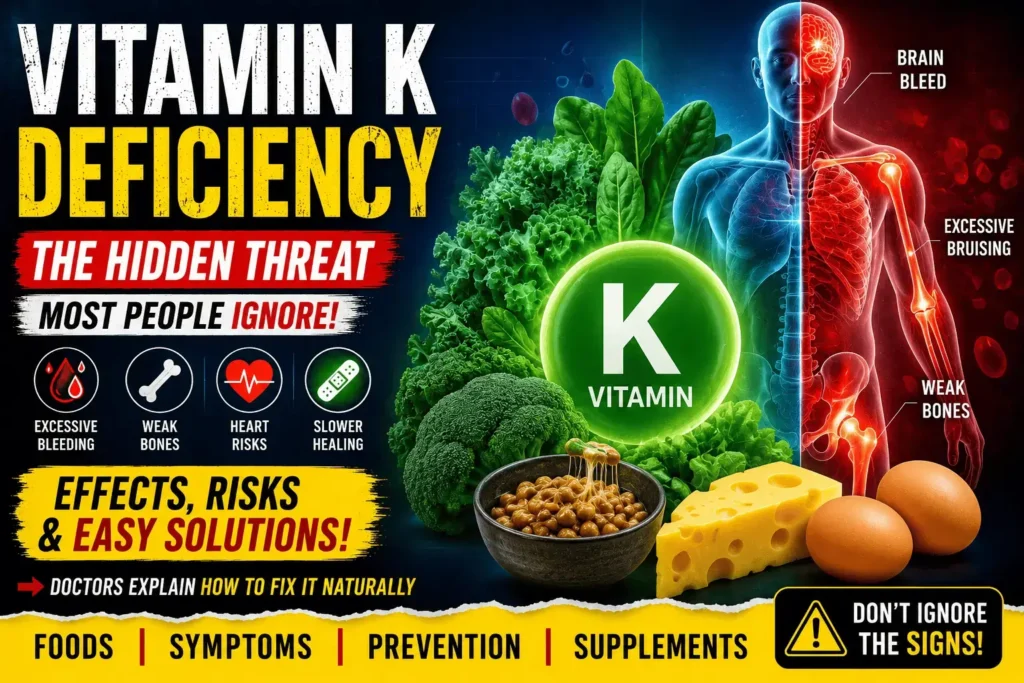
Vitamin K is one of the most underrated nutrients in modern healthcare. Although people often discuss vitamins such as Vitamin C, Vitamin D, and Vitamin B12, Vitamin K rarely receives the attention it deserves. Nevertheless, this essential vitamin plays a critical role in blood clotting, bone strength, heart health, and overall body function.
Unfortunately, Vitamin K deficiency can silently affect the body for months before obvious symptoms appear. Consequently, many individuals remain unaware of the problem until they begin experiencing unusual bruising, excessive bleeding, weak bones, or slow wound healing.
Moreover, lifestyle changes, poor nutrition, digestive disorders, medications, and chronic illnesses continue increasing the risk of it’s deficiency worldwide. Therefore, understanding the causes, symptoms, effects, and prevention strategies has become increasingly important.
This detailed guide explores the science behind deficiency, its side effects, medical concerns, treatment methods, and mitigation strategies supported by expert medical sources and doctor recommendations.
What Is Vitamin K?
Vitamin K is a fat-soluble vitamin that helps the body produce proteins necessary for blood clotting and bone metabolism. Without sufficient amount, the body cannot properly control bleeding or maintain strong bones.
There are two main forms:
Vitamin K1 (Phylloquinone)
Vitamin K1 comes mainly from green leafy vegetables such as:
- Spinach
- Kale
- Broccoli
- Lettuce
- Cabbage
This form primarily supports blood clotting.
Vitamin K2 (Menaquinone)
Vitamin K2 is found in:
- Fermented foods
- Dairy products
- Eggs
- Meat
- Gut bacteria
Additionally, Vitamin K2 plays an important role in calcium regulation, bone strength, and cardiovascular health.
According to the National Institutes of Health Office of Dietary Supplements, Vitamin K is essential for activating proteins involved in blood coagulation and bone metabolism.
Why Vitamin K Is Essential for the Body
It supports multiple critical functions throughout the body. Most importantly, it helps blood clot after injuries. However, Vitamin K also:
- Maintains bone density
- Regulates calcium movement
- Supports heart health
- Promotes wound healing
- Protects blood vessels
Therefore, deficiency can affect several body systems simultaneously.
Causes of Deficiency
Although severe deficiency is less common in healthy adults, many conditions and habits increase the risk significantly.
1. Poor Dietary Intake
People who consume very few vegetables or highly processed foods may not get enough.
For example, diets high in:
- Fast food
- Sugary snacks
- Processed meals
often lack essential nutrients, including Vitamin K. Consequently, long-term poor nutrition may gradually reduce it’s levels.
2. Digestive Disorders
Since it is fat-soluble, the body requires proper fat absorption to use it effectively.
Therefore, digestive diseases such as:
- Crohn’s disease
- Celiac disease
- Ulcerative colitis
- Chronic pancreatitis
can interfere with its absorption.
As a result, deficiency becomes more likely.
3. Long-Term Antibiotic Use
Gut bacteria naturally produce some Vitamin K2.
However, prolonged antibiotic use may destroy beneficial gut bacteria. Consequently, production inside the intestines decreases.
Therefore, long-term antibiotic treatment sometimes contributes to deficiency.
4. Liver Disease
The liver plays a major role in storing and processing Vitamin K.
Thus, liver conditions such as:
- Cirrhosis
- Hepatitis
- Fatty liver disease
may impair it’s utilization and blood clotting.
5. Certain Medications
Some medications interfere directly with Vitamin K function.
These include:
- Blood thinners like Warfarin
- Some antibiotics
- Cholesterol-lowering drugs
- Anti-seizure medications
Therefore, patients taking these medicines often require medical monitoring.
6. Newborn Infants
Newborn babies naturally possess low levels at birth.
Additionally:
- Their intestines contain little bacteria initially
- Breast milk contains relatively low Vitamin K
As a result, newborns face increased bleeding risks.
Consequently, doctors routinely administer Vitamin K injections after birth in many countries.
According to the American Academy of Pediatrics, Vitamin K shots significantly reduce dangerous bleeding disorders in infants.
Symptoms of Vitamin K Deficiency
Vitamin K deficiency may develop slowly. Initially, symptoms can appear mild or unnoticed.
However, as deficiency worsens, symptoms become more serious.
Common symptoms include:
- Easy bruising
- Frequent nosebleeds
- Excessive bleeding from cuts
- Bleeding gums
- Heavy menstrual bleeding
- Blood in urine or stool
- Slow wound healing
- Weak bones
- Fatigue
In severe cases, internal bleeding may occur.
Therefore, early detection remains extremely important.
Effects of Vitamin K Deficiency
Deficiency can affect both short-term and long-term health significantly.
1. Excessive Bleeding
The most well-known effect involves impaired blood clotting.
Without sufficient amount, the body cannot produce clotting proteins properly.
Consequently, even small injuries may cause prolonged bleeding.
Additionally, severe deficiency increases the risk of:
- Internal bleeding
- Gastrointestinal bleeding
- Brain hemorrhage
This risk becomes particularly dangerous for newborns and elderly individuals.
2. Weak Bones and Osteoporosis
Vitamin K supports bone mineralization by activating proteins that bind calcium to bones.
However, low levels reduce this process.
As a result:
- Bone density decreases
- Fracture risk increases
- Osteoporosis becomes more likely
According to research published in the National Library of Medicine, it contributes significantly to maintaining bone health and reducing fracture risk.
3. Cardiovascular Problems
Vitamin K also helps regulate calcium movement inside the body.
Without enough amount:
- Calcium may accumulate inside arteries
- Blood vessels may harden
- Cardiovascular disease risk may rise
Therefore, researchers increasingly study Vitamin K’s role in heart health.
4. Increased Bruising
People with deficiency often bruise easily because weakened clotting mechanisms allow blood vessels to leak more easily under the skin.
Consequently, unexplained bruises may appear frequently.
5. Poor Wound Healing
Since Vitamin K contributes to blood clot formation, deficiency may delay healing after cuts, injuries, or surgery.
Therefore, recovery times may increase significantly.
Doctor Insights on Vitamin K Deficiency
Doctors consistently emphasize the importance of balanced nutrition for preventing deficiency.
According to the Cleveland Clinic, deficiency can cause dangerous bleeding problems if left untreated.
Similarly, experts from the Mayo Clinic explain that Vitamin K supports healthy blood clotting and bone metabolism.
Moreover, healthcare providers recommend medical evaluation if symptoms such as unexplained bruising or prolonged bleeding appear regularly.
Who Is Most at Risk?
Certain groups face higher deficiency risk than others.
These include:
- Elderly adults
- Newborn infants
- People with digestive diseases
- Individuals on long-term antibiotics
- Patients with liver disorders
- People with poor diets
Therefore, preventive nutrition becomes especially important for these populations.
Best Foods Rich inVitamin K
Fortunately, many healthy foods naturally contain high levels of it.
Top Foods
| Food | Vitamin K Content |
|---|---|
| Kale | Very High |
| Spinach | Very High |
| Broccoli | High |
| Cabbage | High |
| Brussels sprouts | High |
| Parsley | High |
| Eggs | Moderate |
| Cheese | Moderate |
| Fermented soybeans (Natto) | Extremely High |
Therefore, consuming a balanced diet greatly reduces deficiency risk.
How to Mitigate Vitamin K Deficiency
Preventing deficiency usually involves simple lifestyle improvements.
1. Eat More Green Vegetables
Leafy greens remain one of the best sources.
Therefore, regularly include:
- Spinach
- Kale
- Lettuce
- Broccoli
in daily meals.
2. Improve Gut Health
Healthy gut bacteria help produce it naturally.
Consequently, probiotics and fermented foods may support better Vitamin K status.
Examples include:
- Yogurt
- Kefir
- Sauerkraut
- Kimchi
3. Avoid Unnecessary Antibiotic Use
Antibiotics should only be used when medically necessary because excessive use may disrupt beneficial gut bacteria.
Therefore, responsible antibiotic use helps protect Vitamin K production.
4. Manage Digestive Disorders
People with absorption disorders should work closely with healthcare providers.
Proper treatment improves nutrient absorption significantly.
5. Consider Supplements Carefully
Doctors may recommend supplements for certain individuals.
However, supplementation requires caution, especially for people taking blood thinners like Warfarin.
Therefore, medical supervision remains essential.
Can Too Much Vitamin K Be Dangerous?
Excessive supplement use may interfere with certain medications.
Additionally, people taking anticoagulants must maintain stable Vitamin K intake because sudden changes affect medication effectiveness.
Consequently, medical guidance remains important.
Vitamin K and Bone Health Research
Researchers continue studying it’s role in preventing osteoporosis and fractures.
Several studies suggest Vitamin K2 may help:
- Improve bone mineral density
- Reduce fracture risk
- Support calcium balance
Although more research continues, current findings remain promising.
The Future of Vitamin K Research
Scientists increasingly investigate Vitamin K’s possible role in:
- Heart disease prevention
- Brain health
- Immune support
- Diabetes management
Therefore, it may become even more important in preventive healthcare in the future.
Conclusion
Vitamin K deficiency may seem uncommon, yet its health effects can become serious if ignored. From excessive bleeding and weak bones to cardiovascular concerns and poor wound healing, insufficient Vitamin K can affect multiple body systems simultaneously.
Fortunately, prevention remains relatively simple. A balanced diet rich in leafy vegetables, proper gut health, responsible medication use, and regular medical care can dramatically reduce deficiency risk.
Moreover, early recognition of symptoms such as unusual bruising, bleeding, or bone weakness allows faster treatment and better outcomes.
Ultimately, it plays a vital role in long-term health, strength, and wellness. Therefore, maintaining healthy levels should become an essential part of every person’s nutrition and preventive healthcare strategy.
This article has been made with the help of AI for better SEO but the research and inputs have been provided by me, source 1, source 2, source 3.
You may also like to read other health related articles here also authored by me :
Wired Headphones vs Wireless: Which Is Best for Your Health?
Current Situation of Hantavirus Incident on MV Hondius