
🩺 Medically reviewed by Dr Duane Sheppard, MD 

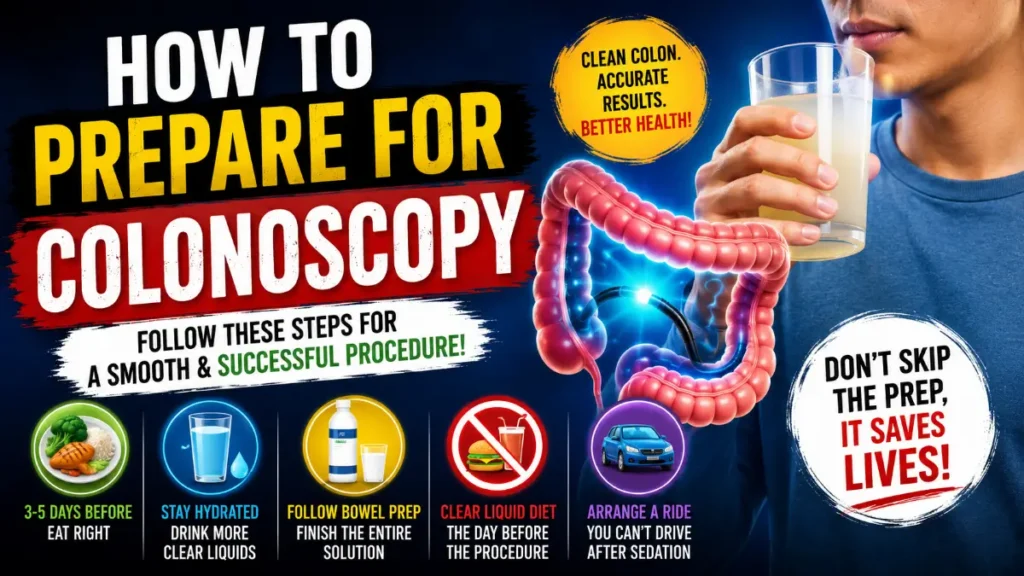
- 🩺 Why Colonoscopy Preparation Matters So Much
- 📅 When Should You Start Preparing?
- 🍞 Foods to Avoid Before Colonoscopy
- 🧃 What Can You Drink the Day Before Colonoscopy?
- 🚽 Understanding the Bowel Prep Process
- 🧂 What Does the Colonoscopy Prep Drink Taste Like?
- 🚨 What Happens During Bowel Cleansing?
- 🛑 Common Mistakes During Colonoscopy Preparation
- 💊 Medications You May Need to Discuss
- 😴 What Happens During the Colonoscopy?
- 🚗 Arrange Transportation Beforehand
- 🧘 How to Reduce Anxiety Before Colonoscopy
- 🛏️ What to Expect After the Procedure
- 🍲 Best Foods After Colonoscopy
- 🩺 Why Colonoscopy Can Save Lives
- 👨⚕️ Who Should Get a Colonoscopy?
- 🌱 Mental Preparation Matters Too
- ⚡ Practical Colonoscopy Preparation Tips
- 🌟 Final Thoughts
- ❓ FAQs
A colonoscopy can sound intimidating initially. In fact, many people feel nervous the moment their doctor recommends one. However, the actual procedure usually causes far less discomfort than the anxiety leading up to it and the process to prepare for colonoscopy.
A colonoscopy can literally save your life.
Doctors use colonoscopy procedures to:
- Detect colon cancer early
- Remove polyps
- Diagnose digestive issues
- Investigate bleeding
- Examine chronic abdominal symptoms
Consequently, to properly prepare for colonoscopy becomes extremely important.
⚠️ Here’s the truth many people don’t realize:
The preparation matters more than the procedure itself.
If your colon is not properly cleaned, the doctor may miss important findings. Additionally, poor preparation can force you to repeat the procedure entirely.
You must have heard about the botched colonoscopy procedure on Amy Schumer? If not, read it here.
Therefore, understanding exactly how to prepare for colonoscopy can make the entire experience smoother, safer, and far less stressful.
This complete guide will walk you through:
- What to expect
- What to eat
- What to avoid
- Bowel prep instructions
- Medication precautions
- Recovery tips
- Common mistakes
Let’s simplify everything step by step.
🩺 Why Colonoscopy Preparation Matters So Much
During a colonoscopy, your doctor inserts a flexible tube with a tiny camera into the colon.
The camera must clearly see the colon lining.
However, leftover stool, food particles, or cloudy liquid can block visibility.
Consequently:
- Small polyps may remain hidden
- Inflammation may become difficult to detect
- The procedure may take longer
- Accuracy decreases significantly
Therefore, colonoscopy preparation focuses entirely on cleaning the colon thoroughly.
Think of it like cleaning a dirty windshield before driving in heavy rain.
Without clear visibility, even the best doctor cannot properly examine your colon.
📅 When Should You Start Preparing?
Most doctors recommend beginning preparation several days before the procedure.
However, the exact timeline depends on:
- Your age
- Medical history
- Constipation severity
- Current medications
- Specific prep instructions
Generally, preparation begins:
- 3–5 days before colonoscopy for diet adjustments
- 1 day before colonoscopy for bowel cleansing
⚡ Always follow your doctor’s specific instructions carefully because preparation methods sometimes vary slightly.
🍞 Foods to Avoid Before Colonoscopy
Several foods stay inside the colon longer or leave residue behind.
Therefore, doctors usually recommend avoiding certain foods about 3–5 days beforehand.
🚫 Avoid High-Fiber Foods
High-fiber foods can remain partially undigested.
Avoid:
- Nuts
- Seeds
- Popcorn
- Corn
- Whole grains
- Raw vegetables
- Beans
- Dried fruits
Additionally, seeded fruits may interfere with visibility during the procedure.
🥗 Switch to Low-Residue Foods
Instead, eat foods that digest easily.
Recommended options include:
- White rice
- White bread
- Plain pasta
- Eggs
- Yogurt
- Chicken
- Fish
- Potatoes without skin
These foods create less residue inside the colon.
Consequently, bowel cleansing becomes much easier later.
💧 Hydration Is Extremely Important
Many people underestimate hydration when someone is about to prepare for colonoscopy.
However, hydration plays a massive role in:
- Preventing dizziness
- Supporting bowel cleansing
- Reducing weakness
- Preventing headaches
Therefore, increase clear fluid intake several days beforehand.
Good hydration options include:
- Water
- Coconut water
- Clear broth
- Electrolyte drinks
- Apple juice
- White grape juice
⚠️ Avoid red, purple, or blue liquids because they can resemble blood during the procedure.
🧃 What Can You Drink the Day Before Colonoscopy?
Usually, doctors recommend a clear liquid diet the day before the procedure.
This means avoiding solid food entirely.
Allowed liquids generally include:
- Clear broth
- Tea without milk
- Black coffee without cream
- Lemon-lime soda
- Sports drinks
- Clear gelatin
- Popsicles without red coloring
Although this part feels challenging initially, it helps ensure accurate results.
🚽 Understanding the Bowel Prep Process
This is the part most people fear.
However, knowing what to expect reduces anxiety dramatically.
Your doctor will prescribe a bowel-cleansing solution.
The goal is simple:
- Completely empty the colon
Usually, you drink the solution in split doses:
- One portion the evening before
- Another portion several hours before the procedure
⚡ This split-dose method improves colon cleansing significantly.
🧂 What Does the Colonoscopy Prep Drink Taste Like?
Honestly?
Not great.
Many prep solutions taste salty or medicinal.
However, you can make it easier by:
- Chilling the liquid
- Drinking through a straw
- Taking small breaks
- Sucking lemon slices afterward
Additionally, some newer prep options taste better than older formulations.
Ask your doctor if alternatives exist.
🚨 What Happens During Bowel Cleansing?
Once the prep begins, bowel movements increase rapidly.
Eventually, stool becomes:
- Loose
- Watery
- Frequent
- Clear or yellowish
This means the prep is working correctly.
⚠️ Stay near a bathroom because urgency can become intense.
Most people experience:
- Cramping
- Bloating
- Frequent bathroom trips
- Mild fatigue
Fortunately, these symptoms usually remain temporary only during the process to prepare for colonoscopy.
🛑 Common Mistakes During Colonoscopy Preparation
Many people accidentally reduce the effectiveness of preparation.
Avoid these common mistakes carefully.
❌ Eating Solid Food Too Late
Even small snacks can interfere with visibility.
Follow timing instructions precisely.
❌ Not Finishing the Prep Drink
Some people stop early because they feel uncomfortable.
However, incomplete prep may force procedure cancellation.
❌ Drinking Red or Purple Liquids
These colors may mimic blood during examination.
❌ Ignoring Medication Instructions
Some medications require temporary adjustment before colonoscopy.
Always discuss medications with your doctor beforehand.
💊 Medications You May Need to Discuss
Certain medications affect bleeding risk or bowel preparation.
Talk to your doctor about:
- Blood thinners
- Diabetes medications
- Iron supplements
- Blood pressure medications
- Anti-inflammatory drugs
⚡ Never stop prescription medications without medical guidance.
🩸 Why Iron Supplements Often Need Stopping
Iron supplements can darken stool and interfere with visibility.
Consequently, doctors often recommend temporarily stopping them several days beforehand.
Again, always confirm instructions directly with your healthcare provider.
😴 What Happens During the Colonoscopy?
Many people fear pain during the procedure.
Fortunately, most colonoscopies involve sedation.
Therefore, patients usually feel:
- Relaxed
- Drowsy
- Comfortable
Some people barely remember the procedure afterward.
Typically, the colonoscopy itself lasts:
- 20–45 minutes
Meanwhile, the entire visit may take several hours including preparation and recovery.
🚗 Arrange Transportation Beforehand
Sedation affects coordination and alertness temporarily.
Therefore:
- You cannot safely drive afterward
- You should not operate machinery
- Decision-making may feel slower temporarily
Arrange:
- A family member
- Friend
- Taxi service
- Ride-sharing option
before the appointment day.
🧘 How to Reduce Anxiety Before Colonoscopy
Fear often comes from uncertainty.
Fortunately, preparation becomes easier once you understand the process clearly.
Helpful strategies include:
- Asking questions beforehand
- Reading preparation instructions early
- Scheduling time off work
- Preparing comfortable bathroom supplies
- Staying hydrated
🧠 Remember:
The anticipation often feels worse than the actual procedure.
🛏️ What to Expect After the Procedure
Recovery usually happens quickly.
However, mild symptoms may occur temporarily:
- Gas
- Bloating
- Mild cramping
- Drowsiness
Most people resume normal eating later the same day unless their doctor advises otherwise.
Additionally, rest helps recovery significantly.
🍲 Best Foods After Colonoscopy
Start gently afterward.
Recommended foods include:
- Soup
- Rice
- Toast
- Bananas
- Yogurt
- Eggs
Meanwhile, avoid heavy greasy meals immediately afterward because digestion may still feel sensitive.
🩺 Why Colonoscopy Can Save Lives
Many people delay colonoscopy due to embarrassment or fear.
However, colon cancer often develops slowly and silently.
Importantly:
Early detection dramatically improves survival rates.
A colonoscopy allows doctors to:
- Detect precancerous polyps
- Remove abnormalities early
- Prevent cancer progression
⚡ This makes colonoscopy one of the most effective preventive screening tools in modern medicine.
👨⚕️ Who Should Get a Colonoscopy?
Guidelines vary slightly depending on health history.
However, many adults begin routine screening around age 45.
Earlier screening may become necessary if you have:
- Family history of colon cancer
- Chronic digestive symptoms
- Rectal bleeding
- Inflammatory bowel disease
- Unexplained weight loss
Always consult your healthcare provider regarding personal risk factors.
🌱 Mental Preparation Matters Too
Many people focus only on physical preparation.
However, mental preparation matters equally.
Instead of viewing colonoscopy as something frightening, try reframing it as:
- Preventive care
- Self-protection
- Long-term health investment
That mindset shift reduces anxiety considerably.
⚡ Practical Colonoscopy Preparation Tips
Here are simple strategies that genuinely help.
🧻 Use Soft Toilet Paper or Wipes
Frequent bowel movements may irritate skin.
Gentler products help significantly.
🧴 Apply Barrier Cream
Petroleum jelly or diaper rash cream helps prevent irritation.
⏰ Stay Near a Bathroom
Once prep starts, urgency may become unpredictable.
Plan accordingly.
🥤 Drink Prep Slowly But Consistently
Pacing yourself makes the process easier.
However, finish the full prescribed amount.
🎧 Keep Yourself Distracted
Watch movies, listen to music, or read during prep time.
Distraction reduces stress substantially.
🌟 Final Thoughts
To prepare for colonoscopy may feel unpleasant temporarily.
However, the benefits far outweigh the inconvenience.
A properly prepared colonoscopy helps doctors:
- Detect disease early
- Prevent serious complications
- Improve long-term health outcomes
Most importantly, preparation directly affects accuracy.
Therefore:
- Follow instructions carefully
- Stay hydrated
- Complete the prep fully
- Ask questions when unsure
And remember:
Millions of people successfully undergo colonoscopy procedures every year.
Although preparation feels inconvenient for one day, the peace of mind and preventive health benefits can last for years.
Your future health is worth the temporary discomfort.
❓ FAQs
❓ How painful is colonoscopy preparation?
Most people find the actual process to prepare for colonoscopy inconvenient rather than painful. Frequent bathroom trips, bloating, and mild cramping commonly occur temporarily.
❓ Can I eat anything the day before colonoscopy?
Usually, doctors recommend only clear liquids the day before the procedure. Solid foods typically remain restricted.
❓ Why is bowel prep so important?
A clean colon allows doctors to clearly examine the colon lining and detect abnormalities accurately.
❓ How long does colonoscopy preparation take?
Diet adjustments often begin several days beforehand, while bowel cleansing usually starts the day before the procedure.
❓ Will I be awake during colonoscopy?
Most people receive sedation, which helps them remain relaxed and comfortable throughout the procedure.
❓ What if I cannot finish the prep drink?
Contact your doctor immediately. Incomplete bowel preparation may reduce visibility and sometimes require rescheduling.
❓ Can I drink water before colonoscopy?
Usually yes, although doctors often require stopping all liquids several hours before the procedure. Follow your exact medical instructions carefully.
❓ How soon can I eat after colonoscopy?
Most people resume eating later the same day unless their doctor advises otherwise.
This article has been made with the help of AI for better SEO but the research and inputs have been provided by me. Authoritative Source Links for the blog cited below.
Reviewer Bio:
Dr Duane Sheppard is a Gastroenterologist at Dartmouth General Hospital and Colchester Regional Hospital.
Sources:
- Mayo Clinic – Colonoscopy Preparation Guide
- Cleveland Clinic – Colonoscopy: Procedure and Preparation
- American Cancer Society – Colonoscopy Screening Information
- National Institute of Diabetes and Digestive and Kidney Diseases – Colonoscopy Overview
- Johns Hopkins Medicine – Preparing for Colonoscopy
- MedlinePlus – Colonoscopy Information
You may also like to read other health related articles here also authored by me :
Happiness Is the Best Medicine and Longevity Factor