- Why Food Culture Matters More Than Ever
- The Rise of Processed Foods in North America
- European Food Culture Remains More Traditional
- Portion Sizes: One of the Biggest Differences
- Fast Food Culture in North America
- The Mediterranean Diet Advantage
- Sugar Consumption: A Major North American Problem
- Food Regulations: Europe vs North America
- Eating Speed and Lifestyle Differences
- Obesity Rates: A Visible Outcome
- The Mental Health Connection
- Why Processed Foods Became So Dominant in North America
- Europe Is Changing Too
- What North America Can Learn From Europe
- What Europe Can Learn From North America
- Practical Lessons for Everyday People
- FAQs
- Is the Mediterranean diet really healthy?
- Final Thoughts
Food shapes culture, lifestyle, family traditions, and even public health. However, diet also shapes something much deeper: how societies age, think, work, sleep, and survive disease. We will compare how North American vs European food fare head to head.
When people compare anything North American vs European, they often focus on economics, politics, or lifestyle differences. Nevertheless, one of the most important — and increasingly controversial — differences involves food.
In recent decades, dietary habits across North America and Europe have evolved very differently. Consequently, researchers, doctors, nutritionists, and ordinary citizens increasingly debate why obesity, diabetes, heart disease, and metabolic disorders continue rising more aggressively in North America compared to many parts of Europe.
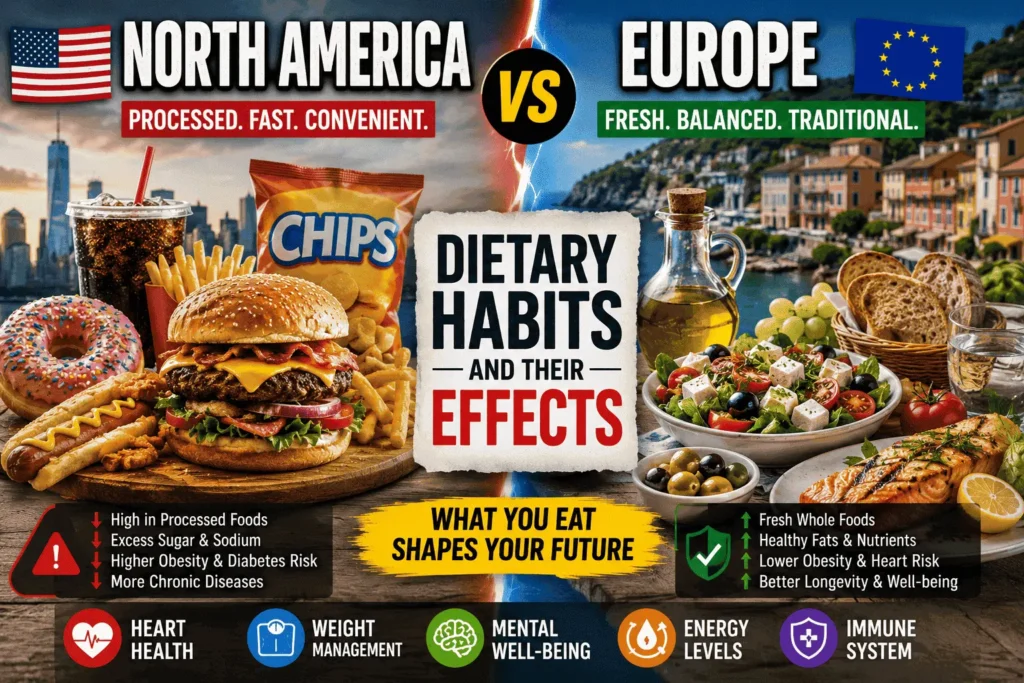
Although both continents consume modern convenience foods, North America has experienced a much larger proliferation of ultra-processed foods, sugary beverages, oversized portions, and industrialized eating habits. Meanwhile, many European countries still maintain stronger traditions around fresh meals, moderation, social eating, and stricter food regulations.
Therefore, understanding these dietary differences helps people make better personal health choices in an increasingly processed-food-driven world.
Why Food Culture Matters More Than Ever
Modern food systems influence:
- Physical health
- Mental health
- Energy levels
- Obesity rates
- Chronic disease
- Longevity
- Children’s development
Unfortunately, convenience now dominates many eating habits globally.
People increasingly choose:
- Fast food
- Frozen meals
- Sugary snacks
- Processed meats
- Artificial ingredients
because modern life feels rushed, stressful, and time-starved.
However, while convenience saves time temporarily, poor dietary habits often create long-term health consequences.
Therefore, comparing North American and European eating patterns reveals important lessons about modern nutrition.
The Rise of Processed Foods in North America
One of the most striking differences between North American vs European involves ultra-processed food consumption.
In both the United States and Canada, processed foods dominate supermarket shelves, restaurant menus, school lunches, and even household eating habits.
These foods often include:
- Packaged snacks
- Frozen dinners
- Fast food
- Sugary cereals
- Processed meats
- Soda
- Artificial desserts
Many products contain:
- Excessive sugar
- High sodium
- Artificial preservatives
- Refined oils
- Additives
- Artificial flavor enhancers
Consequently, people consume enormous amounts of calories while receiving relatively low nutritional value.
Studies increasingly link ultra-processed food consumption with:
- Obesity
- Type 2 diabetes
- Cardiovascular disease
- Fatty liver disease
- Depression
- Gut health problems
Additionally, processed foods often trigger overeating because manufacturers design them for hyper-palatability.
As a result, portion control becomes extremely difficult.
European Food Culture Remains More Traditional
Although Europe certainly consumes processed foods too, many European countries still preserve stronger traditional eating habits.
For example, countries such as:
- Italy
- France
- Spain
- Greece
continue emphasizing:
- Fresh ingredients
- Smaller portions
- Family meals
- Home cooking
- Local produce
- Balanced eating
Additionally, many Europeans spend more time eating meals slowly and socially rather than eating rapidly during stressful workdays.
Consequently, digestion, satiety, and portion awareness often improve naturally.
Moreover, European grocery stores frequently contain fewer artificial additives due to stricter food regulations.
Portion Sizes: One of the Biggest Differences
Portion size differences between North American vs European food shock many travelers immediately.
In much of North America:
- Soft drinks appear enormous
- Restaurant meals often contain excessive calories
- Free refills remain common
- Fast-food combinations encourage overeating
Meanwhile, European portions generally remain smaller and more balanced.
Therefore, calorie intake often becomes lower naturally without requiring extreme dieting.
Additionally, smaller portions help:
- Prevent overeating
- Reduce blood sugar spikes
- Improve digestion
- Support weight management
Consequently, daily calorie accumulation differs significantly over time.
Fast Food Culture in North America
Fast food has become deeply embedded in North American culture.
People often eat:
- In cars
- During work
- While multitasking
- Under stress
Unfortunately, this eating style disconnects people from hunger awareness and mindful consumption.
Moreover, fast-food meals often contain:
- High trans fats
- Excess sodium
- Refined carbohydrates
- Excess sugar
As a result, metabolic disorders continue rising.
Children especially face increased exposure to:
- Sugary drinks
- Processed snacks
- Highly marketed junk food
Therefore, childhood obesity rates have become a major public health concern.
The Mediterranean Diet Advantage
One major reason Europe often receives praise for healthier eating involves the Mediterranean diet.
Common Mediterranean foods include:
- Olive oil
- Fish
- Vegetables
- Fruits
- Whole grains
- Nuts
- Legumes
These foods provide:
- Healthy fats
- Fiber
- Antioxidants
- Anti-inflammatory nutrients
Consequently, Mediterranean populations often experience lower rates of:
- Heart disease
- Obesity
- Metabolic syndrome
Additionally, Mediterranean eating encourages balance rather than extreme dieting.
Therefore, many nutrition experts consider it one of the healthiest dietary patterns globally.
Sugar Consumption: A Major North American Problem
North America consumes extremely high amounts of added sugar.
Sugary products appear everywhere:
- Breakfast cereals
- Energy drinks
- Coffee beverages
- Sauces
- Snacks
- Desserts
Unfortunately, excessive sugar consumption contributes heavily to:
- Insulin resistance
- Obesity
- Diabetes
- Chronic inflammation
Meanwhile, many European countries regulate food marketing and ingredient standards more aggressively.
Although sugar remains common globally, some European diets still involve less processed sweetness overall.
Consequently, average sugar intake often differs significantly. Read here how to reduce sugar addiction naturally.
Food Regulations: Europe vs North America
Food regulations create another major difference.
The European Union bans or restricts several additives and food chemicals that still appear in parts of North America.
For example, Europe regulates:
- Artificial dyes
- Certain preservatives
- Some pesticides
- Growth hormones
more strictly.
Additionally, food labeling often appears clearer and more standardized.
Therefore, many consumers believe European food systems prioritize public health more aggressively.
However, critics argue regulations alone cannot fully solve unhealthy eating patterns.
Personal habits still matter enormously.
Eating Speed and Lifestyle Differences
North American lifestyles often feel extremely fast-paced.
People frequently:
- Skip breakfast
- Eat while working
- Snack constantly
- Consume food late at night
Consequently, digestion and appetite regulation suffer.
Meanwhile, many Europeans maintain stronger meal structure and slower eating habits.
Research increasingly shows that slower eating may:
- Improve satiety
- Reduce overeating
- Improve digestion
- Help weight management
Therefore, how people eat matters almost as much as what they eat.
Obesity Rates: A Visible Outcome
One of the clearest outcomes of dietary differences appears in obesity statistics. And this is only going to get worse. USA has approximately 45% obesity rate among adults! Compare that with the only 10% of Italy. North American vs European obesity rate comparison is not surprising.
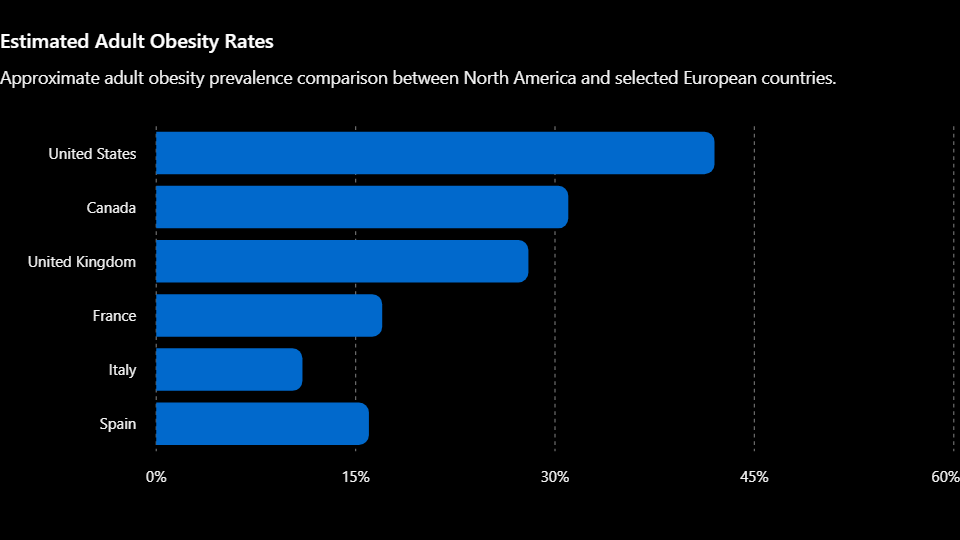
Although many factors influence obesity, dietary habits clearly play a major role.
Importantly, obesity increases risks involving:
- Heart disease
- Diabetes
- Joint problems
- Sleep apnea
- Stroke
- Mental health struggles
Consequently, healthcare systems increasingly face enormous pressure.
The Mental Health Connection
Diet affects mental health more than many people realize.
Ultra-processed foods may negatively influence:
- Mood
- Energy
- Gut bacteria
- Inflammation
- Cognitive function
Meanwhile, nutrient-rich diets often support:
- Emotional stability
- Brain health
- Better sleep
- Energy regulation
Additionally, social eating traditions common in parts of Europe may improve emotional well-being through stronger human connection.
Therefore, food culture affects both body and mind.
Why Processed Foods Became So Dominant in North America
Several factors accelerated processed-food growth in North America:
- Busy work schedules
- Aggressive food marketing
- Cheap mass production
- Convenience culture
- Car-centered lifestyles
- Long working hours
Consequently, quick meals replaced traditional cooking for many households.
Additionally, processed foods often cost less initially than healthier fresh foods.
Therefore, economic pressure also influences dietary choices significantly.
Europe Is Changing Too
Importantly, Europe does not represent a perfect dietary paradise.
Processed foods continue growing there too.
Fast-food chains, sugary drinks, and convenience foods increasingly influence younger generations across Europe.
Consequently, obesity and metabolic disorders also continue rising in several European countries.
Therefore, the gap between continents may narrow over time if unhealthy trends continue globally.
What North America Can Learn From Europe
North America could potentially benefit from:
- Stronger food regulations
- Better school nutrition
- Smaller portions
- More walkable lifestyles
- Stronger cooking culture
- Reduced sugar consumption
Additionally, encouraging slower and more mindful eating may improve both physical and mental health.
Importantly, change does not require perfection.
Small improvements matter greatly over time.
What Europe Can Learn From North America
Meanwhile, North America also contributes positive dietary innovations involving:
- Nutritional science
- Plant-based alternatives
- Health awareness movements
- Fitness culture
- Functional foods
Therefore, both continents can learn from each other.
Healthy nutrition should evolve through balance rather than cultural superiority.
Practical Lessons for Everyday People
Regardless of location, healthier eating habits often include:
- More whole foods
- Less processed sugar
- Better hydration
- More vegetables
- Mindful portions
- Slower eating
- Home cooking
Importantly, sustainable habits work better than extreme diets.
Therefore, focusing on consistency usually produces better long-term results.
FAQs
Why are processed foods more common in North America?
Busy lifestyles, aggressive food marketing, convenience culture, industrial food production, and fast-paced work environments contributed heavily to processed food dominance in North America.
Is European food healthier than North American food?
In many cases, traditional European diets emphasize fresher ingredients, smaller portions, and fewer additives. However, unhealthy eating patterns also exist in Europe and continue increasing.
What are ultra-processed foods?
Ultra-processed foods usually contain industrial ingredients such as artificial additives, preservatives, refined sugars, and highly processed oils. Examples include packaged snacks, sugary cereals, fast food, and soda.
Why do Europeans generally eat smaller portions?
Many European cultures prioritize moderation, slower meals, and social eating traditions. Consequently, portion sizes often remain naturally smaller.
How do processed foods affect health?
Excessive processed-food consumption may increase risks involving:
- Obesity
- Diabetes
- Heart disease
- Chronic inflammation
- Depression
- Gut health problems
Is the Mediterranean diet really healthy?
Yes. Many studies associate Mediterranean eating patterns with lower risks of heart disease, obesity, and metabolic disorders due to high intake of vegetables, healthy fats, fish, and whole foods.
Final Thoughts
The dietary differences between North America and Europe reveal much more than food preferences. They reveal how culture, economics, regulation, stress, lifestyle, and convenience shape public health outcomes over time.
North America’s heavy dependence on ultra-processed foods has contributed significantly to rising obesity, diabetes, and metabolic disease rates. Meanwhile, many European countries still preserve healthier traditional eating habits centered around fresh ingredients, moderation, and slower meals.
However, both continents now face increasing pressure from modern convenience culture.
Therefore, the real lesson is not about choosing one continent over another. Instead, it involves recognizing how food systems shape human health — and how everyday dietary choices quietly determine long-term well-being.
Sources
- World Health Organization – Healthy Diet Facts
- Harvard T.H. Chan School of Public Health – Processed Foods and Health
- Cleveland Clinic – Effects of Processed Foods on Health
- European Food Information Council (EUFIC) – Mediterranean Diet Overview
- National Institutes of Health – Ultra-Processed Foods and Obesity Research
- Centers for Disease Control and Prevention – Adult Obesity Facts
- British Heart Foundation – How Diet Affects Heart Health
- Mayo Clinic – Healthy Lifestyle and Nutrition Basics
You may also like to read other health related articles here also authored by me :
Layoff Fears? 10 Powerful Ways to Manage It
David Morrissey: A Powerful Reflection on Addiction, Recovery
10 Perfect Morning Routine Habits: Scientifically Proven