Dr. James McKendry of University of British Columbia chips in..
- 🧬 What Is Protein and Why Does It Matter?
- 🍗 Plant Protein vs Animal Protein: The Main Difference
- 💪 Which Protein Builds Muscle Better?
- 🥗 Examples of Complete Plant Protein Meals
- 📊 Protein Quantity vs Protein Quality
- 📌 Recommended Daily Protein Intake
- ❤️ Which Protein Source Is Better for Long-Term Health?
- 🥩 Not All Animal Proteins Are Equal
- 🌱 Are Plant-Based Meat Alternatives Healthy?
- 🧠 Digestibility: Does It Really Matter?
- 🧓 Older Adults Need More Protein Attention
- ⚖️ So… Which Protein Source Is Actually Best?
- 🥗 A Practical Protein Strategy for Most People
- 🩺 Final Verdict
- FAQs
Protein dominates modern nutrition conversations. Scroll through social media, fitness forums, or health blogs and you will quickly see heated debates about whether plant protein or animal protein is healthier, stronger, cleaner, or more “natural.” The truth, however, is far more complex than what the internet arguments suggest.
For most people, both plant and animal proteins can support good health. Nevertheless, the best choice depends on your goals, lifestyle, activity level, digestive tolerance, ethics, and overall diet quality.
If you want the short answer first:
✅ Animal proteins generally provide more complete amino acid profiles and support muscle growth efficiently.
✅ Plant proteins often support long-term heart and metabolic health while also improving dietary fiber intake.
✅ Neither protein source is automatically “good” or “bad.”
✅ Total protein intake and overall food quality matter more than internet nutrition trends.
Therefore, instead of asking:
“Which protein source is superior?”
a better question becomes:
“Which protein approach works best for your body and long-term health?”
Let’s break it down carefully.
🧬 What Is Protein and Why Does It Matter?
Protein helps your body:
- build muscle
- repair tissues
- produce hormones
- support immune function
- maintain healthy skin and hair
- regulate enzymes and metabolism
Every protein contains amino acids, which act as the building blocks of human tissue. Your body can make some amino acids on its own. However, it cannot produce nine essential amino acids naturally, so you must get them from food.
This is where the plant-versus-animal protein discussion begins.
🍗 Plant Protein vs Animal Protein: The Main Difference
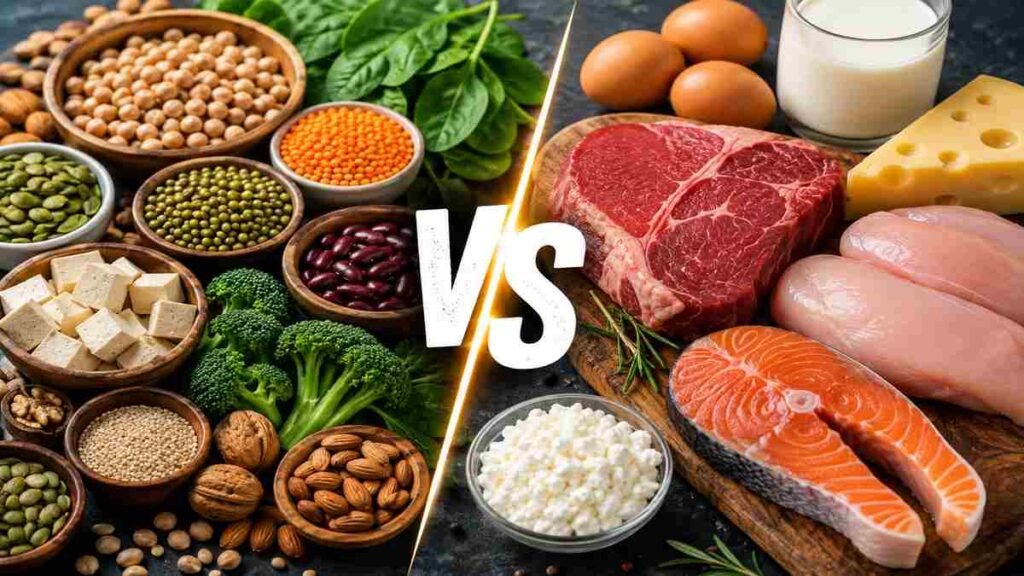
Dr. James McKendry of University of British Columbia argues animal proteins usually contain all nine essential amino acids in optimal amounts. Consequently, nutrition experts often call them “complete proteins.”
Common animal protein sources include:
- eggs
- chicken
- fish
- turkey
- dairy
- beef
- yogurt
- whey protein
Plant proteins, on the other hand, sometimes contain lower amounts of one or more essential amino acids.
Common plant protein sources include:
- lentils
- beans
- tofu
- chickpeas
- quinoa
- nuts
- seeds
- peas
However, this does NOT mean plant proteins are “bad” or ineffective.
In reality, most people eat mixed meals throughout the day. Therefore, combining different plant foods can easily provide all essential amino acids.
💪 Which Protein Builds Muscle Better?
If your primary goal involves:
- muscle growth
- athletic recovery
- strength training
- bodybuilding
then animal protein generally performs slightly better gram-for-gram.
Why?
Animal proteins usually contain:
- more leucine
- higher digestibility
- stronger muscle protein synthesis signals
For example, whey protein stimulates muscle building very efficiently because it digests rapidly and contains high leucine concentrations.
Nevertheless, plant proteins can still build muscle effectively when:
- total protein intake stays high enough
- calorie intake remains sufficient
- meals contain diverse protein sources
Several studies now show that well-planned plant-based diets can support strong athletic performance and muscle growth.
Therefore, the difference often becomes smaller in real-world diets than internet influencers claim.
🥗 Examples of Complete Plant Protein Meals
Many people wrongly assume plant proteins always lack essential amino acids. However, combining foods strategically solves most of these concerns.
Here are examples of complete plant protein meals:
🌱 Rice and Beans
Rice contains lower lysine, while beans contain higher lysine. Together, they form a complete amino acid profile.
🥙 Hummus With Whole Wheat Pita
Chickpeas and whole grains complement each other well nutritionally.
🍛 Lentil Curry With Brown Rice
This combination provides protein, fiber, iron, and sustained energy.
🥜 Peanut Butter on Whole Grain Bread
Simple, affordable, and surprisingly effective nutritionally.
🥗 Tofu Stir Fry With Quinoa
Quinoa itself already contains all essential amino acids, while tofu further boosts protein quality.
📊 Protein Quantity vs Protein Quality
Modern nutrition discussions often overemphasize “protein quality” while ignoring total intake.
In reality:
- someone eating too little protein overall may struggle regardless of protein source
- someone meeting total protein needs usually performs much better
For most healthy adults, adequate daily protein intake matters more than obsessing over perfect amino acid scores.
📌 Recommended Daily Protein Intake
Protein needs vary significantly depending on:
- age
- activity level
- muscle mass
- illness
- pregnancy
- fitness goals
Here are practical evidence-based recommendations:
| Person Type | Recommended Protein Intake |
|---|---|
| Sedentary adults | 0.8 g/kg body weight |
| Active adults | 1.2–1.6 g/kg |
| Strength athletes | 1.6–2.2 g/kg |
| Elderly adults | 1.0–1.4 g/kg |
| Weight loss diets | 1.6–2.4 g/kg |
For example:
A 70 kg adult may need:
- 56 g daily minimum for basic health
- 110–140 g daily for serious muscle-building goals
❤️ Which Protein Source Is Better for Long-Term Health?
This question becomes more complicated.
Research consistently shows that diets rich in:
- legumes
- nuts
- seeds
- whole grains
- vegetables
often associate with:
- lower cardiovascular disease risk
- improved blood sugar control
- lower obesity rates
- better gut health
However, many benefits likely come from the overall dietary pattern rather than protein source alone.
People who eat more plant foods also often:
- consume more fiber
- exercise more
- smoke less
- eat fewer ultra-processed foods
Therefore, nutrition science cannot fully isolate protein source from broader lifestyle habits.
🥩 Not All Animal Proteins Are Equal
One major problem in online nutrition debates is oversimplification.
People often group all animal protein together even though different foods produce very different health outcomes.
🚫 Processed Red Meat
Processed meats include:
- bacon
- hot dogs
- sausages
- salami
- deli meats
Research consistently links high processed meat intake with:
- higher cardiovascular risk
- increased colorectal cancer risk
- higher sodium intake
- inflammatory dietary patterns
Therefore, most experts recommend limiting processed meats.
🍖 Lean Meat
Lean meats include:
- skinless chicken
- turkey
- lean beef cuts
These foods provide:
- high-quality protein
- iron
- vitamin B12
- zinc
Moreover, lean meats can fit comfortably into balanced healthy diets when consumed moderately.
🐟 Fish
Fish often receives the strongest scientific support among animal proteins.
Fatty fish like:
- salmon
- sardines
- mackerel
contain:
- omega-3 fatty acids
- anti-inflammatory nutrients
- heart-supportive fats
Consequently, many nutrition experts encourage regular fish consumption.
🥛 Dairy
Dairy products provide:
- calcium
- protein
- probiotics
- vitamin D
However, dairy tolerance varies significantly among individuals. Some people digest dairy comfortably, while others experience:
- bloating
- lactose intolerance
- digestive discomfort
Therefore, dairy recommendations should remain individualized.
🌱 Are Plant-Based Meat Alternatives Healthy?
This area deserves much more discussion than most blogs provide.
Many modern “fake meats” contain:
- isolated proteins
- additives
- stabilizers
- flavor chemicals
- sodium
- refined oils
While these products may help people transition away from heavy processed meat intake, they are not automatically health foods.
For example:
- a homemade lentil bowl differs enormously from ultra-processed vegan nuggets
- tofu differs substantially from heavily engineered meat substitutes
Therefore, consumers should distinguish between:
✅ whole-food plant proteins
and
⚠️ ultra-processed plant products
This distinction matters greatly for long-term health.
🧠 Digestibility: Does It Really Matter?
Yes — but often less dramatically than internet discussions suggest.
Animal proteins generally digest more efficiently. However:
- cooking improves plant digestibility
- soaking legumes helps digestion
- fermentation improves nutrient absorption
Additionally, modern plant protein isolates such as:
- soy protein
- pea protein
perform surprisingly well for muscle support.
Therefore, digestibility differences exist, but they rarely determine overall health alone.
🧓 Older Adults Need More Protein Attention
As people age, muscle loss accelerates naturally.
Older adults often benefit from:
- higher protein intake
- easier-to-digest proteins
- leucine-rich foods
Therefore, elderly adults sometimes respond especially well to:
- eggs
- dairy
- fish
- whey protein
However, carefully planned plant-based diets can still work effectively with sufficient total intake.
⚖️ So… Which Protein Source Is Actually Best?
There is no universal winner but our research leans towards Animal Protein.
Nevertheless, the healthiest long-term approach for most people probably looks like:
balanced, minimally processed, protein-diverse eating.
That may include:
- legumes
- fish
- dairy
- nuts
- eggs
- seeds
- lean poultry
- whole grains
rather than extreme dietary ideology.
🥗 A Practical Protein Strategy for Most People
For balanced long-term health:
✅ Prioritize whole foods
✅ Eat sufficient total protein
✅ Include fiber-rich plant foods
✅ Limit heavily processed meats
✅ Avoid relying heavily on ultra-processed fake meats
✅ Choose leaner protein sources more often
✅ Include healthy fats and vegetables
This approach remains realistic, sustainable, and scientifically supported.
🩺 Final Verdict
Animal protein generally offers superior amino acid density and muscle-building efficiency. Meanwhile, plant proteins often support heart health, fiber intake, and environmental sustainability.
However, overall dietary quality matters far more than internet tribalism.
A diet filled with:
- vegetables
- legumes
- whole grains
- lean proteins
- healthy fats
will almost always outperform extreme nutrition ideology over the long term.
Ultimately, the best protein source is the one that:
- supports your health goals
- fits your lifestyle
- remains sustainable
- provides sufficient nutrition consistently
because consistency matters much more than perfection.
FAQs
Is plant protein healthier than animal protein?
Plant proteins often support heart health and fiber intake, while animal proteins provide highly complete amino acid profiles. Both can support healthy diets depending on food quality and overall eating patterns.
Can you build muscle with plant protein?
Yes. Plant protein can absolutely support muscle growth when total protein intake remains sufficient and meals include diverse amino acid sources.
Which animal protein is healthiest?
Fish and lean poultry generally receive stronger health support than processed meats. Fatty fish also provide beneficial omega-3 fatty acids.
Are fake meats healthy (natty🤣)?
Some plant-based meat alternatives can help reduce processed meat intake. However, many ultra-processed fake meats still contain high sodium, additives, and refined ingredients.
How much protein do adults need daily?
Most sedentary adults need around 0.8 grams of protein per kilogram of body weight daily. Active adults and athletes usually require significantly more.
Is whey protein better than plant protein powder?
Whey protein usually digests faster and stimulates muscle protein synthesis more efficiently. However, high-quality plant protein blends can still perform very well.
Can you get complete protein from plants?
Yes. Combining foods like beans, rice, lentils, quinoa, tofu, nuts, and grains can easily provide all essential amino acids.
Should you completely avoid red meat?
No, but moderate intake of lean red meat can fit into balanced diets. Experts generally recommend limiting heavily processed red meats.
Authoritative Source Links
- Harvard T.H. Chan School of Public Health – Protein
- Cleveland Clinic – Plant vs Animal Protein
- Mayo Clinic – Protein Intake Basics
- National Institutes of Health (NIH)
- Academy of Nutrition and Dietetics
- Healthline – Plant vs Animal Protein
- University of British Columbia – Plant vs Animal Protein
You would may also like to read
- Americans, what is your worst healthcare story?
- Why US Healthcare Feels Broken
- How Does US Health Insurance Work? Complete Guide
- Deductible vs Out-of-Pocket Maximum: How Much Will You Actually Pay Hospital?
- Surprise Billing in USA: No Surprises Act Explained
- What Is a Hospital Facility Fee in USA, Can You Negotiate It?