
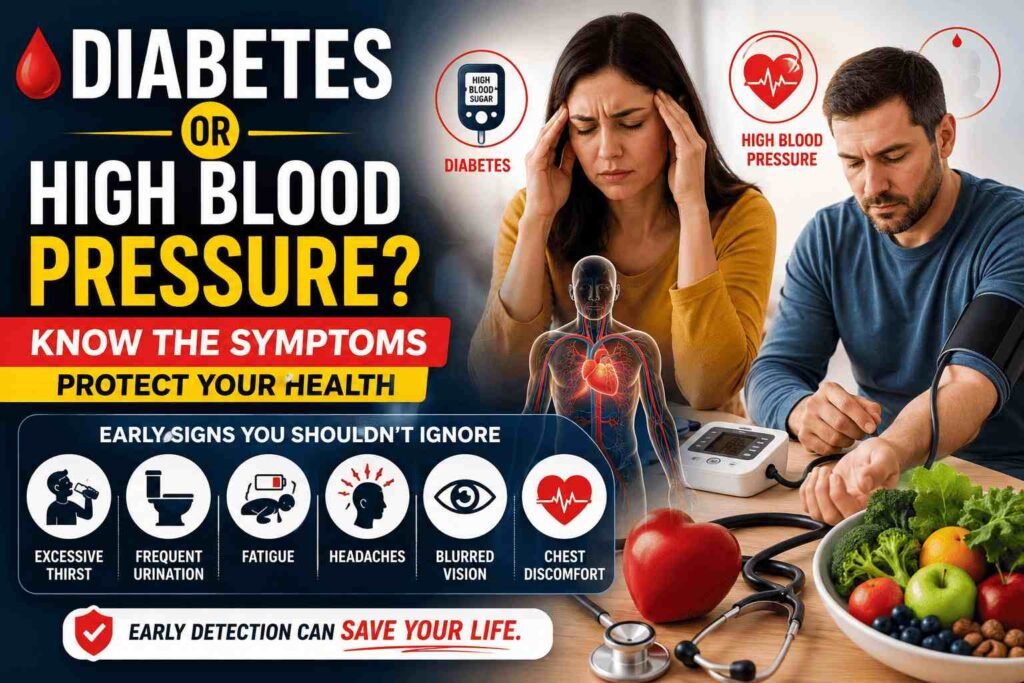
- 🍭 What Is Diabetes?
- ⚠️ Common Symptoms of Diabetes
- ❤️ What Is High Blood Pressure?
- 📈 Common Symptoms of High Blood Pressure
- 🔄 How Diabetes and High Blood Pressure Are Connected
- 🧬 Risk Factors You Should Know
- 🥗 Lifestyle Habits That May Help Prevent Both Conditions
- 🩺 When Should You See a Doctor?
- 🚨 Why Early Diagnosis Matters
- ✅ Final Thoughts
- ❓ Frequently Asked Questions (FAQs)
Millions of people live with diabetes and high blood pressure without even realizing it. In fact, both conditions often develop slowly and quietly. Consequently, many people ignore early symptoms of diabetes until serious health problems appear.
Although diabetes and high blood pressure are different medical conditions, they frequently occur together. Moreover, both can damage your heart, kidneys, eyes, brain, and blood vessels over time.
The good news is that your body often sends warning signals before complications become severe. Therefore, recognizing the symptoms early can help you seek treatment sooner and protect your long-term health.
In this guide, you will learn the most common symptoms of diabetes and high blood pressure, the key differences between them, risk factors to watch for, and when you should see a doctor.
🍭 What Is Diabetes?
Diabetes is a chronic condition that affects how your body uses blood sugar, also called glucose. Normally, insulin helps move glucose into your cells for energy. However, people with diabetes either do not produce enough insulin or cannot use it properly.
As a result, sugar builds up in the bloodstream.
There are several types of diabetes, including:
- Type 1 diabetes
- Type 2 diabetes
- Prediabetes
- Gestational diabetes
Type 2 diabetes remains the most common form worldwide. Additionally, lifestyle habits often play a major role in its development.
⚠️ Common Symptoms of Diabetes
Diabetes symptoms can appear gradually. Sometimes, people ignore them for months because they seem harmless initially. Nevertheless, early detection matters greatly.
💧 Excessive Thirst
One of the earliest signs of diabetes involves feeling unusually thirsty all the time.
When blood sugar levels rise, your kidneys work harder to remove excess glucose through urine. Consequently, your body loses more fluids, which increases thirst.
If you constantly crave water even after drinking enough, you should pay attention.
🚽 Frequent Urination
People with diabetes often urinate more frequently, especially at night.
Since the body tries to remove excess sugar through urine, bathroom visits increase significantly. Moreover, dehydration from fluid loss can worsen fatigue and headaches.
🍽️ Increased Hunger
Even after eating meals, many people with diabetes still feel hungry.
This happens because glucose cannot enter cells properly. Therefore, your body struggles to access energy efficiently.
As a result, your brain continues sending hunger signals.
😴 Constant Fatigue
Fatigue remains one of the most overlooked diabetes symptoms.
When cells cannot absorb glucose effectively, your body lacks the energy it needs. Consequently, everyday activities may suddenly feel exhausting.
Additionally, poor sleep caused by nighttime urination can worsen tiredness.
👀 Blurred Vision
High blood sugar levels can affect the tiny blood vessels in your eyes.
Therefore, some people notice blurry vision, difficulty focusing, or temporary eyesight changes.
Although vision may improve after blood sugar stabilizes, ignoring this symptom can eventually lead to serious eye damage.
⚖️ Unexplained Weight Loss
Some people lose weight unexpectedly before receiving a diabetes diagnosis.
Since the body cannot use glucose properly, it begins burning muscle and fat for energy instead.
Consequently, rapid weight loss may occur even without dieting.
🩹 Slow-Healing Wounds
Cuts, bruises, and infections may heal more slowly in people with diabetes.
High blood sugar affects circulation and weakens the immune system. As a result, the body struggles to repair tissues efficiently.
This symptom commonly appears in the feet and legs.
🦶 Tingling or Numbness in Hands and Feet
Over time, high blood sugar can damage nerves.
Therefore, many people experience:
- Tingling
- Burning sensations
- Numbness
- Sharp pain in hands or feet
Doctors often call this diabetic neuropathy.
🦠 Frequent Infections
People with diabetes may develop infections more often than usual.
Common infections include:
- Gum infections
- Skin infections
- Urinary tract infections
- Yeast infections
Elevated blood sugar creates an environment where bacteria and fungi grow more easily.
❤️ What Is High Blood Pressure?
High blood pressure, also known as hypertension, occurs when blood pushes too forcefully against artery walls.
Over time, this extra pressure damages blood vessels and increases the risk of:
- Heart attack
- Stroke
- Kidney disease
- Vision loss
Unfortunately, high blood pressure often develops without noticeable symptoms. Therefore, many experts call it the “silent killer.”
📈 Common Symptoms of High Blood Pressure
Many people with hypertension feel completely normal. However, some warning signs may appear when blood pressure becomes dangerously high.
🤕 Frequent Headaches
Persistent headaches, especially in the morning, may indicate elevated blood pressure.
Although headaches do not always mean hypertension, recurring unexplained headaches deserve medical attention.
😵 Dizziness or Lightheadedness
Some people experience dizziness when blood pressure rises significantly.
Additionally, sudden dizziness combined with chest pain or weakness may signal a medical emergency.
❤️ Chest Pain
Chest pain should never be ignored.
High blood pressure forces the heart to work harder. Consequently, some people develop chest discomfort, pressure, or tightness.
Seek immediate medical care if chest pain occurs suddenly or severely.
😮💨 Shortness of Breath
Difficulty breathing can occur when hypertension strains the heart and lungs.
For example, climbing stairs or walking short distances may suddenly feel more difficult than usual.
👃 Nosebleeds
Although occasional nosebleeds are common, frequent unexplained nosebleeds may sometimes occur alongside extremely high blood pressure.
However, this symptom usually appears only when blood pressure reaches dangerous levels.
👁️ Vision Problems
Just like diabetes, high blood pressure can damage eye blood vessels.
As a result, some people experience:
- Blurred vision
- Double vision
- Vision loss
- Eye pressure
💓 Irregular Heartbeat
Some individuals notice heart palpitations or irregular heartbeats.
This symptom may feel like:
- Fluttering
- Racing heartbeat
- Skipped beats
- Pounding sensations
Therefore, persistent palpitations should always receive medical evaluation.
🔄 How Diabetes and High Blood Pressure Are Connected
Diabetes and high blood pressure frequently appear together because they share many risk factors.
For example:
- Obesity
- Poor diet
- Lack of exercise
- Smoking
- Stress
- Aging
Additionally, diabetes can damage blood vessels, which may increase blood pressure over time.
Meanwhile, hypertension can worsen complications related to diabetes.
Consequently, managing both conditions becomes extremely important for long-term health.
🧬 Risk Factors You Should Know
Certain factors increase your chances of developing diabetes or hypertension.
Common Risk Factors Include:
- Family history
- Obesity
- Sedentary lifestyle
- Smoking
- Excessive alcohol use
- Poor diet
- Chronic stress
- Sleep problems
- Older age
However, younger adults and even teenagers can also develop these conditions today due to modern lifestyle habits.
🥗 Lifestyle Habits That May Help Prevent Both Conditions
Although genetics play a role, healthy habits can dramatically reduce your risk.
🚶 Stay Physically Active
Regular movement improves:
- Blood sugar control
- Blood pressure levels
- Heart health
- Weight management
Even daily walking can make a major difference.
🥦 Eat a Balanced Diet
Focus on:
- Vegetables
- Fruits
- Whole grains
- Lean protein
- Healthy fats
Meanwhile, reduce:
- Sugary drinks
- Processed foods
- Excess salt
- Excessive fried foods
😴 Improve Sleep
Poor sleep increases stress hormones and affects both blood sugar and blood pressure.
Therefore, aim for 7–9 hours of quality sleep each night.
🚭 Avoid Smoking
Smoking damages blood vessels and significantly raises cardiovascular risk.
Quitting smoking can improve overall health surprisingly quickly.
🧘 Reduce Stress Levels
Chronic stress affects hormone balance, eating habits, and heart health.
Therefore, stress management techniques such as meditation, yoga, deep breathing, and outdoor walks can help greatly.
🩺 When Should You See a Doctor?
You should consult a healthcare professional if you notice:
- Persistent fatigue
- Frequent urination
- Excessive thirst
- Chest pain
- Shortness of breath
- Blurred vision
- Severe headaches
- Numbness in feet or hands
Additionally, regular health screenings become increasingly important after age 35 or if you have a family history of these conditions.
Simple tests can detect problems early before complications appear.
🚨 Why Early Diagnosis Matters
Early diagnosis can prevent severe complications.
Without treatment, diabetes and high blood pressure may lead to:
- Heart disease
- Stroke
- Kidney failure
- Blindness
- Nerve damage
However, many people successfully manage these conditions through medication, healthy habits, and routine medical care.
Therefore, awareness truly saves lives.
✅ Final Thoughts
Diabetes and high blood pressure often develop silently. Nevertheless, your body may still send warning signs that deserve attention.
Symptoms such as excessive thirst, fatigue, blurred vision, headaches, chest pain, and dizziness should never be ignored. Instead, they should encourage proactive health checks and healthier lifestyle choices.
Most importantly, early action can dramatically improve your quality of life.
Small daily habits — including healthier eating, regular exercise, stress management, and quality sleep — can protect your health for years to come.
❓ Frequently Asked Questions (FAQs)
❓ What are the first warning signs of diabetes?
Common early signs include excessive thirst, frequent urination, fatigue, blurred vision, and increased hunger.
❓ Can high blood pressure exist without symptoms?
Yes. In fact, many people with hypertension feel completely normal, which is why regular blood pressure checks are important.
❓ Can stress cause high blood pressure?
Yes. Chronic stress may contribute to elevated blood pressure levels and unhealthy lifestyle habits.
❓ Does diabetes cause dizziness?
Sometimes. High or low blood sugar levels can lead to dizziness, weakness, or confusion.
❓ Can diabetes and high blood pressure be prevented?
Although genetics matter, healthy lifestyle habits can significantly reduce your risk.
❓ Which foods help lower blood pressure naturally?
Foods rich in potassium, fiber, and healthy fats — such as bananas, leafy greens, oats, berries, and salmon — may support healthy blood pressure.
❓ Should I check my blood sugar regularly?
If you have risk factors, symptoms, or a family history of diabetes, regular screening can help detect problems early.
❓ When should high blood pressure become an emergency?
Seek emergency medical care if extremely high blood pressure occurs alongside chest pain, severe headache, breathing difficulty, confusion, or vision changes.
This article has been made with the help of AI for better SEO but the research and inputs have been provided by me. Sources cited below.
- Centers for Disease Control and Prevention (CDC) – Diabetes Symptoms
- American Diabetes Association – Diabetes Warning Signs
- Mayo Clinic – High Blood Pressure Symptoms & Causes
- World Health Organization (WHO) – Hypertension
- National Heart, Lung, and Blood Institute – High Blood Pressure
- National Institute of Diabetes and Digestive and Kidney Diseases (NIDDK) – Symptoms of Diabetes
You may also like to read other health related articles here also authored by me :
How Can I Lose Weight Fast Safely? Practical Guide That Actually Works
North American vs European Food: Habits, Their Effects on Health
Layoff Fears? 10 Powerful Ways to Manage It



Pingback: Gym Herpes Outbreak? How to Stay Safe While Working Out - hospscout.com