- 🧠 What Is Intermittent Fasting?
- ⏰ Why Intermittent Fasting Became So Popular
- 🔥 How Intermittent Fasting Works
- 🍽️ Popular Intermittent Fasting Methods
- ⚖️ Intermittent Fasting and Weight Loss
- 🩸 Blood Sugar and Insulin Benefits
- 🧬 Cellular Repair and Autophagy
- 🧠 Mental Clarity and Focus
- 💪 Muscle and Exercise During Intermittent Fasting
- 😴 Sleep Quality Can Improve — Or Worsen
- 🚫 Common Intermittent Fasting Mistakes
- ⚠️ Potential Side Effects of Intermittent Fasting
- 🍎 Food Quality Still Matters
- 📱 Social Media Created Unrealistic Expectations
- 🏃 Exercise and Intermittent Fasting
- ❤️ Intermittent Fasting and Heart Health
- 🌎 Why Intermittent Fasting Continues Growing Worldwide
- 🧘 Stress Management Matters Too
- ❤️ Final Thoughts
- FAQs About Intermittent Fasting
- What is intermittent fasting?
Over the last decade, intermittent fasting has exploded across social media, fitness communities, wellness podcasts, and medical discussions. Millions of people now use intermittent fasting for weight loss, improved energy, blood sugar control, mental clarity, and even longevity.
However, despite the massive popularity, many people still misunderstand how it actually works.
Some believe this is a miracle fat-burning shortcut. Meanwhile, others fear it may slow metabolism or damage health. The truth sits somewhere in between.
When practiced correctly, it may offer several health benefits. Nevertheless, results depend heavily on lifestyle, nutrition quality, consistency, and individual health conditions.
So, does intermittent fasting really work?
This detailed guide explores the science, benefits, risks, methods, myths, and realistic expectations surrounding it.
🧠 What Is Intermittent Fasting?
It refers to an eating pattern that cycles between:
- Eating periods
- Fasting periods
Unlike traditional diets, intermittent fasting focuses more on when you eat rather than strictly what you eat.
Consequently, many people find this simpler than calorie-counting diets.
The main goal involves allowing the body to spend longer periods without food intake. During fasting periods, hormone levels and metabolism may shift in ways that potentially support fat burning and cellular repair.
⏰ Why Intermittent Fasting Became So Popular
Several factors fueled the rise :
- Simplicity
- Weight loss success stories
- Scientific interest
- Celebrity endorsements
- Social media influence
Additionally, many people appreciate that intermittent fasting removes constant meal planning.
Instead of focusing on six small meals daily, some fasting approaches reduce eating windows dramatically.
Consequently, this method often feels easier and more flexible than restrictive diets.
🔥 How Intermittent Fasting Works
When you eat regularly throughout the day, your body mainly uses glucose for energy.
However, during fasting periods, insulin levels decrease gradually.
As a result, the body may begin accessing stored fat more efficiently for fuel.
Additionally, fasting may influence:
- Growth hormone levels
- Cellular repair mechanisms
- Insulin sensitivity
- Inflammation markers
According to Harvard Health Publishing, intermittent fasting may support metabolic health in some individuals.
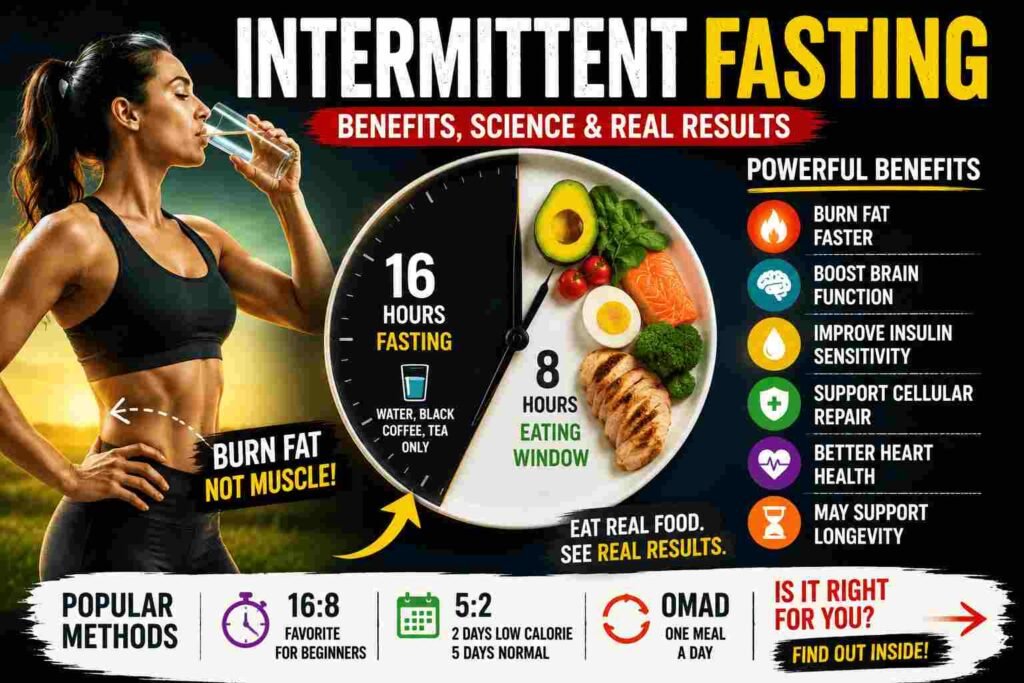
🍽️ Popular Intermittent Fasting Methods
16:8 Method
The 16:8 method remains the most popular style.
🕒 People fast for:
- 16 hours daily
- Eat during an 8-hour window
For example:
- Eating from 12 PM to 8 PM
- Fasting overnight and during the morning
Many beginners prefer this method because it feels sustainable.
5:2 Method
Under the 5:2 approach:
- People eat normally for five days weekly
- Reduce calories heavily on two days
Consequently, some people find it easier than daily fasting.
Alternate-Day Fasting
This method involves:
- Normal eating one day
- Significant calorie restriction or fasting the next
Although effective for some individuals, many people struggle with long-term consistency.
OMAD (One Meal a Day)
🍴 OMAD involves eating one large meal daily.
This aggressive fasting approach attracts significant online attention. However, many experts warn it may feel too extreme for beginners.
⚖️ Intermittent Fasting and Weight Loss
Weight loss remains the biggest reason people try it.
Why Weight Loss Happens
Intermittent fasting may help people:
- Eat fewer calories naturally
- Reduce snacking
- Improve appetite awareness
- Control cravings
Consequently, calorie intake often drops without intentional restriction.
Additionally, stable insulin levels may help fat metabolism function more efficiently.
However, fasting alone does not guarantee weight loss.
If people overeat heavily during eating windows, progress may slow or stop entirely.
🩸 Blood Sugar and Insulin Benefits
Some research suggests it may improve insulin sensitivity.
Consequently, the body may regulate blood sugar more effectively.
According to Mayo Clinic, fasting may support metabolic health in certain individuals when combined with healthy lifestyle habits.
However, people with diabetes or blood sugar disorders should always consult healthcare professionals before starting fasting.
🧬 Cellular Repair and Autophagy
One major scientific topic surrounding intermittent fasting involves autophagy.
Autophagy refers to the body’s natural cellular cleanup process.
🧪 During fasting periods, cells may:
- Remove damaged components
- Recycle waste material
- Improve maintenance processes
Scientists continue studying how fasting influences long-term health and aging.
Although early research appears promising, many questions still remain unanswered.
🧠 Mental Clarity and Focus
Many supporters report:
- Improved concentration
- Better focus
- More stable energy
- Reduced brain fog
Several factors may contribute:
- Stable blood sugar
- Reduced energy crashes
- Hormonal changes
Additionally, some people feel mentally sharper without constant digestion throughout the day.
Nevertheless, experiences vary greatly between individuals.
💪 Muscle and Exercise During Intermittent Fasting
A common concern involves muscle loss.
However, fasting does not automatically destroy muscle mass.
🏋️ When combined with:
- Resistance training
- Adequate protein intake
- Proper nutrition
many people successfully maintain muscle while losing fat.
Additionally, growth hormone levels may increase during fasting periods.
However, severe calorie restriction or poor nutrition can absolutely contribute to muscle loss over time.
😴 Sleep Quality Can Improve — Or Worsen
Some people report better sleep. Others experience:
- Hunger at night
- Restlessness
- Difficulty sleeping
Consequently, meal timing matters significantly.
Heavy late-night eating may disrupt sleep for some individuals, while earlier eating windows may improve sleep quality.
🚫 Common Intermittent Fasting Mistakes
Overeating During Eating Windows
One major mistake involves binge eating after fasting.
🍕 Some people mistakenly assume fasting allows unlimited junk food afterward.
However, nutrition quality still matters enormously.
Ignoring Hydration
Dehydration commonly occurs during fasting periods.
Therefore, people should prioritize:
- Water
- Electrolytes
- Proper hydration
throughout the day.
Starting Too Aggressively
Many beginners jump immediately into extreme fasting schedules.
Consequently, they often experience:
- Fatigue
- Headaches
- Irritability
- Burnout
Gradual adaptation usually works better long term.
⚠️ Potential Side Effects of Intermittent Fasting
Although many healthy adults tolerate intermittent fasting well, side effects can occur.
Common temporary symptoms include:
- Hunger
- Fatigue
- Dizziness
- Irritability
- Headaches
Additionally, it may not suit:
- Pregnant women
- People with eating disorders
- Certain diabetics
- Underweight individuals
Therefore, medical guidance remains important for people with health conditions.
🍎 Food Quality Still Matters
Intermittent fasting cannot cancel unhealthy eating.
Even with fasting, diets high in:
- Ultra-processed foods
- Excess sugar
- Refined carbohydrates
may still harm health.
Consequently, whole foods remain extremely important.
Healthy fasting plans usually include:
- Lean proteins
- Vegetables
- Healthy fats
- Fiber-rich foods
📱 Social Media Created Unrealistic Expectations
TikTok and YouTube dramatically accelerated it’s popularity.
Unfortunately, some influencers promote unrealistic claims involving:
- Instant fat burning
- Rapid transformations
- “Detox” myths
- Extreme fasting challenges
However, sustainable health changes typically happen gradually.
According to Cleveland Clinic, intermittent fasting should support long-term healthy habits rather than extreme restriction.
🏃 Exercise and Intermittent Fasting
Many people combine fasting with exercise successfully.
Popular combinations include:
- Walking
- Strength training
- Cardio
- Yoga
Some individuals prefer fasted workouts because they feel lighter and more energized.
Meanwhile, others perform better after eating.
Therefore, personal experimentation matters.
❤️ Intermittent Fasting and Heart Health
Some studies suggest it may positively influence:
- Blood pressure
- Cholesterol
- Inflammation
- Weight management
Consequently, cardiovascular health may improve indirectly through overall lifestyle changes.
However, fasting should complement healthy habits rather than replace them.
🌎 Why Intermittent Fasting Continues Growing Worldwide
Intermittent fasting appeals to modern lifestyles because it feels:
- Flexible
- Low-cost
- Simple
- Adaptable
Additionally, many people enjoy the freedom from constant meal preparation.
As a result, it continues expanding globally across:
- Fitness communities
- Medical discussions
- Wellness culture
🧘 Stress Management Matters Too
Fasting itself can stress the body temporarily.
Therefore, excessive fasting combined with:
- Poor sleep
- Overtraining
- Chronic stress
may backfire.
Balanced health routines work best long term.
❤️ Final Thoughts
This may offer meaningful health benefits for some individuals, especially regarding:
- Weight management
- Blood sugar control
- Appetite awareness
- Metabolic health
However, it is not a miracle solution.
Long-term success still depends heavily on:
- Nutrition quality
- Consistency
- Sleep
- Exercise
- Stress management
Most importantly, sustainable habits almost always outperform extreme approaches.
When practiced responsibly, it can become a useful tool within a balanced healthy lifestyle.
FAQs About Intermittent Fasting
What is intermittent fasting?
Intermittent fasting is an eating pattern that alternates between eating periods and fasting periods.
Does it help with weight loss?
It may help many people reduce calorie intake naturally and improve appetite control.
Can I drink water during fasting?
Yes. Water remains extremely important during fasting periods.
Does it slow metabolism?
Moderate intermittent fasting usually does not significantly slow metabolism in healthy individuals.
Can I exercise while fasting?
Yes. Many people successfully combine fasting with exercise.
What foods should I eat during fasting?
Whole foods including protein, vegetables, healthy fats, and fiber-rich meals work best.
Is intermittent fasting safe for everyone?
No. Certain medical conditions require professional guidance before starting fasting routines.
How long does it take to show results?
Results vary, although many people notice changes within several weeks when consistent.
This article has been made with the help of AI for better SEO but the research and inputs have been provided by me. Sources cited below.
- Harvard Health Publishing – Intermittent Fasting Guide
- Mayo Clinic – Intermittent Fasting Information
- Cleveland Clinic – Intermittent Fasting Benefits and Risks
- Johns Hopkins Medicine – Intermittent Fasting Overview
- National Institutes of Health
- American Heart Association
You may also like to read other health related articles here also authored by me :
Fish & Chips Secrets: What North Americans Are Missing