
- 🎬 Who Is Russell Andrews?
- 🧠 What Is ALS?
- ⚠️ Russell Andrews Described Early Symptoms
- 🩺 Why ALS Often Gets Diagnosed Late
- 📉 How ALS Progresses Over Time
- 📺 Why This Story Resonated With So Many Fans
- 🤝 ALS Community Organizations Provide Critical Support
- 🧠 ALS Awareness Month Brings Important Attention
- ⚕️ Could Early Symptoms Save Lives?
- FAQs About Russell Andrews and ALS
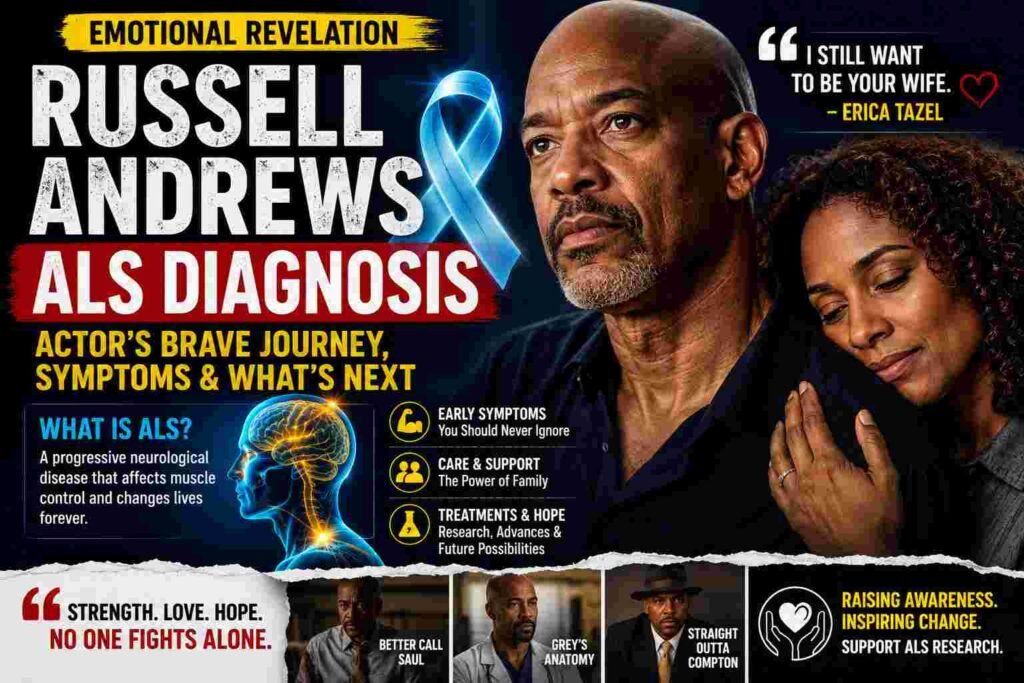
The entertainment industry and millions of fans recently reacted with shock and sadness after actor Russell Andrews publicly revealed his diagnosis with ALS, also known as Amyotrophic Lateral Sclerosis.
Best known for appearances in shows like Better Call Saul, Grey’s Anatomy, and films including Straight Outta Compton, Andrews shared his deeply personal health struggle during an emotional television interview alongside his fiancée, actress Erica Tazel.
The 64-year-old actor described how subtle symptoms gradually disrupted his everyday life before doctors eventually confirmed the devastating diagnosis in late 2025.
Consequently, his story has sparked renewed public attention toward ALS awareness, early symptoms, caregiving challenges, and the emotional realities families face after receiving this life-changing diagnosis.
This detailed guide explores Russell Andrews’ ALS diagnosis, the symptoms he described, how ALS affects the body, current treatments, emotional challenges, and why his public statement matters during ALS Awareness Month.
🎬 Who Is Russell Andrews?
Russell Andrews built a respected acting career through television, theater, and film performances over several decades.
Audiences recognize him from:
- Better Call Saul
- Grey’s Anatomy
- Straight Outta Compton
- NCIS: New Orleans
Additionally, Andrews earned praise within theater circles for his performances in productions connected to playwright August Wilson.
However, despite years in the entertainment industry, Andrews now finds himself facing a much different challenge outside Hollywood.
🧠 What Is ALS?
ALS stands for Amyotrophic Lateral Sclerosis.
Doctors also commonly call it Lou Gehrig’s disease.
🧬 ALS is a progressive neurodegenerative disease that damages nerve cells controlling voluntary muscle movement.
Over time, patients may lose the ability to:
- Walk
- Speak
- Swallow
- Move independently
- Breathe normally
According to Mayo Clinic, ALS gradually destroys motor neurons in the brain and spinal cord.
Unfortunately, there is currently no known cure.
⚠️ Russell Andrews Described Early Symptoms
During interviews, Andrews explained that his symptoms initially appeared subtle and confusing.
🫳 He described:
- Muscle twitches
- Strange nerve sensations
- Weakness
- Difficulty holding objects
- Dropping cups and glasses
At first, he reportedly believed he might have experienced a stroke or pinched nerve during the stressful COVID-19 period.
However, symptoms continued worsening gradually.
Eventually, doctors referred him to a neurologist, leading to the ALS diagnosis.
🖼️ ALS Awareness and Neurodegenerative Disease Support

7
💙 ALS awareness campaigns continue growing as more public figures share their diagnosis stories and advocate for research support.
❤️ Erica Tazel’s Emotional Support Moved Many People
One of the most emotional parts of Andrews’ interview involved the support from his fiancée, Erica Tazel.
Despite the diagnosis, she reportedly told him:
“I still want to be your wife.”
💙 That statement deeply resonated with viewers because ALS not only affects patients — it also dramatically changes family relationships, caregiving responsibilities, and emotional dynamics.
Tazel has now stepped into a caregiving role while continuing to support Andrews publicly.
🩺 Why ALS Often Gets Diagnosed Late
ALS symptoms may initially resemble:
- Pinched nerves
- Muscle strain
- Aging-related weakness
- Fatigue
- Minor neurological issues
Consequently, diagnosis sometimes takes months or longer.
🧠 Doctors often perform:
- Neurological exams
- MRI scans
- EMG testing
- Blood tests
to rule out other conditions first.
Unfortunately, no single test instantly confirms ALS.
📉 How ALS Progresses Over Time
ALS progression varies significantly between patients.
Some people decline rapidly, while others live many years after diagnosis.
⚠️ Common progression symptoms include:
- Muscle weakness
- Difficulty walking
- Slurred speech
- Trouble swallowing
- Paralysis
Eventually, breathing muscles may weaken severely.
According to ALS Association, many patients survive three to five years after diagnosis, although some live much longer.
🧬 Scientists Still Do Not Fully Understand ALS
Researchers continue studying:
- Genetics
- Environmental exposure
- Inflammation
- Brain cell damage
🧪 However, scientists still do not fully understand why ALS develops in most patients.
Some cases involve inherited genetic mutations.
Others appear sporadically without clear family history.
Consequently, research funding remains critically important.
🏥 ALS Has No Cure — But Treatments Exist
Although doctors cannot currently cure ALS, several treatments may help:
- Slow progression
- Improve comfort
- Maintain mobility
- Support breathing
💊 Medications such as Riluzole and Radicava may help some patients.
Additionally, patients often require:
- Physical therapy
- Speech therapy
- Respiratory support
- Nutritional assistance
😔 The Emotional Impact of ALS Can Be Enormous
An ALS diagnosis affects much more than physical health.
Patients commonly experience:
- Anxiety
- Depression
- Fear
- Identity loss
- Emotional exhaustion
💔 Families and caregivers also face:
- Financial stress
- Emotional strain
- Lifestyle changes
- Long-term caregiving demands
Consequently, emotional support networks become extremely important.

🌍 Public Figures Help Increase ALS Awareness
When celebrities share health struggles publicly, awareness often increases dramatically.
Previous public ALS cases involving figures like Stephen Hawking helped educate millions worldwide about the disease.
Now, Russell Andrews’ story may similarly encourage:
- Earlier medical evaluations
- Public awareness
- Research support
- Compassion toward caregivers
📺 Why This Story Resonated With So Many Fans
Fans responded emotionally because Andrews spoke honestly and vulnerably about his diagnosis.
Rather than hiding the disease, he openly discussed:
- His symptoms
- Fear
- Caregiving support
- Community connection
🧠 Many viewers related to the uncertainty surrounding unexplained neurological symptoms.
Others admired the strength shown by both Andrews and Erica Tazel.
🤝 ALS Community Organizations Provide Critical Support
During interviews, Andrews praised the ALS Network for helping his family navigate the diagnosis.
These organizations often assist with:
- Support groups
- Equipment access
- Advocacy
- Care coordination
- Emotional counseling
💙 Consequently, ALS communities become lifelines for many families facing the disease.
🧠 ALS Awareness Month Brings Important Attention
Andrews revealed his diagnosis during ALS Awareness Month.
This timing helped spotlight:
- Research funding needs
- Patient struggles
- Caregiver challenges
- Public education
📢 Advocacy campaigns continue pushing for:
- Faster diagnosis
- Better treatment access
- Increased clinical research
⚕️ Could Early Symptoms Save Lives?
Although ALS currently has no cure, earlier diagnosis may still improve:
- Care planning
- Symptom management
- Access to therapies
- Clinical trial participation
⚠️ Experts encourage medical evaluation for persistent neurological symptoms such as:
- Muscle weakness
- Twitching
- Coordination problems
- Speech difficulty
Ignoring symptoms may delay important care.
🌟 Russell Andrews’ Story Reflects Courage and Vulnerability
Many public figures carefully protect personal medical information.
However, Andrews chose openness instead.
❤️ That decision may help reduce stigma surrounding neurological diseases while encouraging more honest public conversations about chronic illness, caregiving, and emotional resilience.
His story reminds people that serious illness can affect anyone regardless of fame or career success.
❤️ Final Thoughts
Russell Andrews sharing his ALS diagnosis has brought renewed attention to one of the world’s most devastating neurological diseases. Although ALS remains incurable, stories like his help educate the public about early symptoms, caregiving realities, emotional resilience, and the urgent need for continued research.
Importantly, Andrews also highlighted the power of community support during life-changing medical challenges.
From the emotional support of Erica Tazel to assistance from the ALS Network, his story demonstrates how compassion and connection matter deeply during serious illness.
As ALS awareness continues growing, advocates hope increased visibility will drive faster diagnosis, better treatments, and eventually a cure.
FAQs About Russell Andrews and ALS
Who is Russell Andrews?
Russell Andrews is an actor known for roles in Better Call Saul, Grey’s Anatomy, and Straight Outta Compton.
What disease was Russell Andrews diagnosed with?
He publicly revealed he has ALS, also called Amyotrophic Lateral Sclerosis.
What are common ALS symptoms?
Symptoms may include muscle weakness, twitching, difficulty speaking, walking problems, and loss of coordination.
Is ALS curable?
Currently, there is no known cure for ALS.
What causes ALS?
Scientists still do not fully understand the exact cause of most ALS cases.
How long do ALS patients live?
Survival varies widely, although many patients live three to five years after diagnosis.
Who is Erica Tazel?
Erica Tazel is an actress and Russell Andrews’ fiancée.
What organization is supporting Russell Andrews?
The ALS Network has partnered with Andrews and his family to increase awareness and support.
This article has been made with the help of AI for better SEO but the research and inputs have been provided by me. Sources cited below.
- NBC News – Russell Andrews ALS Story
- ALS Association
- Mayo Clinic – ALS Information
- National Institute of Neurological Disorders and Stroke
- ALS Network
- People Magazine – Russell Andrews Interview
You may also like to read other health related articles here also authored by me :
Can Apple Cider Vinegar Help Weight Loss Journey?
Mewing Explained: Does This Viral Jawline Trend Actually Work?
Intermittent Fasting Benefits: The Science, Myths, and Real Results
Best Anti Aging Advice Wish I Knew Earlier: Science-Backed Habits

Pingback: Kyle Busch Cause of Death: Unknown As of Now - hospscout.com