
- 🧬 What Is Tecentriq SC?
- ⚡ Why the 7-Minute Cancer Shot Matters
- 🖼️ Modern Cancer Treatment and Immunotherapy
- 🧠 How Tecentriq Immunotherapy Works
- 🩺 Which Cancers Use Tecentriq?
- 💊 Tecentriq SC Still Carries Risks and Side Effects
- 🌍 Could Tecentriq SC Expand Global Access?
- 🏥 Cancer Treatment Is Becoming More Patient-Centered
- 🧠 Why This News Generated So Much Attention
- 🔬 The Future of Oncology May Look Different
- ❤️ Final Thoughts
- FAQs About Tecentriq SC
Cancer treatment has traditionally involved long hospital visits, IV infusions, waiting rooms, and exhausting treatment schedules. Consequently, many patients spend several hours inside oncology clinics during every treatment cycle. However, a new cancer therapy approach (Tecentriq SC Injection) may dramatically reduce treatment time for some patients.
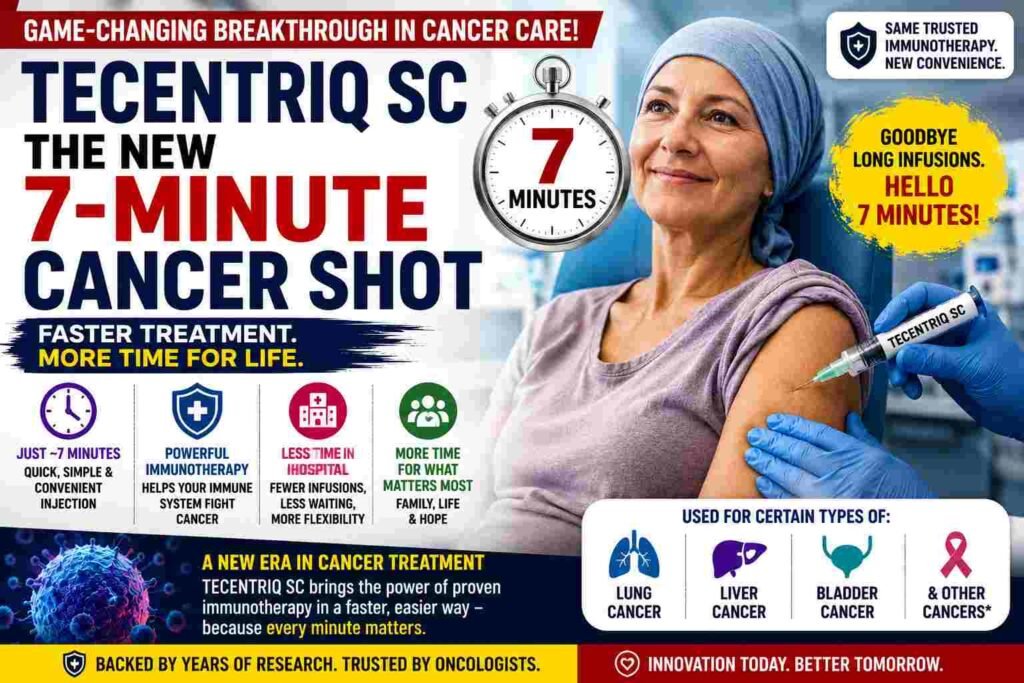
The spotlight now falls on Tecentriq SC, a newer injectable version of the immunotherapy drug Tecentriq that can reportedly deliver treatment in approximately seven minutes instead of lengthy intravenous infusions.
Naturally, this development has generated major excitement among doctors, patients, hospitals, and healthcare systems worldwide.
But what exactly is Tecentriq SC?
More importantly, how could this rapid injection change cancer care moving forward?
This detailed guide explains how Tecentriq SC works, which cancers it treats, why the 7-minute injection matters, potential benefits, limitations, side effects, and what this breakthrough could mean for the future of oncology.
🧬 What Is Tecentriq SC?
Tecentriq SC is a subcutaneous injectable version of Tecentriq, a cancer immunotherapy medication developed by Roche.
The original Tecentriq treatment typically requires intravenous (IV) infusion inside hospitals or cancer clinics.
However, Tecentriq SC uses a subcutaneous injection method, meaning healthcare providers inject the medication under the skin instead of delivering it slowly through an IV drip.
💉 This newer delivery method dramatically shortens treatment administration time.
According to reports, the injection process may take approximately seven minutes compared with traditional infusion sessions lasting much longer.
⚡ Why the 7-Minute Cancer Shot Matters
For many cancer patients, treatment involves more than medicine alone.
Patients often face:
- Long travel times
- Hours in infusion clinics
- Physical exhaustion
- Emotional stress
- Scheduling difficulties
Consequently, shorter treatment times may significantly improve quality of life.
⏳ A seven-minute injection could reduce:
- Hospital waiting periods
- Chair time in oncology clinics
- Healthcare workload
- Patient fatigue
Additionally, hospitals may potentially treat more patients efficiently because infusion chairs become available faster.
🖼️ Modern Cancer Treatment and Immunotherapy

🧠 How Tecentriq Immunotherapy Works
Unlike chemotherapy, immunotherapy helps the immune system recognize and attack cancer cells more effectively.
Tecentriq works as a checkpoint inhibitor.
Specifically, it targets a protein called PD-L1.
🧬 Some cancer cells use PD-L1 to hide from immune defenses. Tecentriq blocks this pathway, allowing immune cells to identify and fight cancer more effectively.
Consequently, the immune system may regain its ability to detect certain tumors.
According to National Cancer Institute, checkpoint inhibitors transformed treatment approaches for several cancer types during the past decade.
🩺 Which Cancers Use Tecentriq?

Doctors currently use Tecentriq for several cancers, including:
- Lung cancer
- Liver cancer
- Certain breast cancers
- Bladder cancer
However, eligibility depends on:
- Cancer type
- Disease stage
- Biomarker testing
- Previous treatments
🧪 Oncologists evaluate each patient individually before recommending immunotherapy.
🚑 Why Hospitals May Welcome Tecentriq SC
Cancer centers worldwide continue facing:
- Rising patient volumes
- Staffing shortages
- Resource limitations
Consequently, faster drug administration may help healthcare systems operate more efficiently.
🏥 Tecentriq SC may reduce pressure on:
- Infusion chairs
- Nursing schedules
- Oncology clinic congestion
Additionally, shorter appointments may improve patient flow substantially.
👨⚕️ Patients Often Feel Exhausted by Infusion Therapy
Traditional IV cancer treatment sessions sometimes require:
- Blood tests
- IV insertion
- Observation periods
- Long medication infusions
For fragile patients, these lengthy visits may feel physically draining.
😓 Consequently, many patients prioritize treatments that reduce time spent inside hospitals.
A shorter injection experience may improve:
- Comfort
- Convenience
- Emotional well-being
💊 Tecentriq SC Still Carries Risks and Side Effects
Although the injection method appears faster and more convenient, the medication itself still carries important risks.
Immunotherapy side effects may include:
- Fatigue
- Rash
- Diarrhea
- Inflammation
- Lung complications
- Liver problems
⚠️ Because immunotherapy activates immune responses, some patients may develop serious immune-related side effects affecting organs throughout the body.
Therefore, medical supervision remains essential.
🧬 Subcutaneous Injections Are Growing in Medicine
The success of injectable therapies reflects a larger healthcare trend.
Many pharmaceutical companies now develop subcutaneous versions of medications previously delivered only through IV infusions.
💉 Benefits may include:
- Faster administration
- Greater convenience
- Lower clinic burden
- Improved patient experience
Consequently, healthcare systems increasingly explore alternative delivery methods for complex treatments.
🌍 Could Tecentriq SC Expand Global Access?
In some regions, oncology infrastructure remains limited.
Hospitals may struggle with:
- Infusion capacity
- Oncology staffing
- Long patient waiting lists
🌎 Faster injectable therapies may potentially improve treatment access in overcrowded healthcare systems.
However, pricing, insurance coverage, and regulatory approvals will still strongly influence accessibility worldwide.
📈 Cancer Cases Continue Rising Worldwide
According to World Health Organization, global cancer cases continue increasing due to:
- Aging populations
- Lifestyle factors
- Environmental risks
- Improved detection
Consequently, healthcare systems urgently need:
- Efficient treatments
- Scalable oncology care
- Faster delivery systems
Tecentriq SC may represent one example of how oncology care is evolving to meet growing demand.
🧪 Clinical Trials Played a Major Role
Before approval, researchers evaluated Tecentriq SC through clinical studies comparing:
- Safety
- Effectiveness
- Drug absorption
- Side effects
📊 Clinical trial data helped determine whether the injectable version performed similarly to traditional IV treatment.
Regulatory agencies closely examine such evidence before approving newer drug formulations.
👩⚕️ Doctors Still Monitor Patients Carefully
Although administration becomes faster, cancer treatment itself remains highly complex.
Doctors still need to monitor:
- Tumor response
- Side effects
- Bloodwork
- Organ function
🩺 Consequently, patients should not assume shorter injections mean “simpler” cancer care overall.
Medical follow-up remains critically important.
🏥 Cancer Treatment Is Becoming More Patient-Centered
Historically, oncology often focused primarily on survival outcomes.
However, modern cancer care increasingly considers:
- Patient convenience
- Mental health
- Treatment burden
- Quality of life
❤️ Faster therapies like Tecentriq SC may help reduce emotional and logistical stress surrounding treatment schedules.
This shift reflects broader efforts to make cancer care more humane and manageable.
🧠 Why This News Generated So Much Attention
The phrase “7-minute cancer shot” naturally captured public attention because it sounds dramatically different from traditional chemotherapy experiences.
However, it is important to understand:
- Tecentriq SC does not cure all cancers
- Not every patient qualifies
- Immunotherapy still involves risks
⚠️ Nevertheless, reducing treatment time represents a potentially meaningful improvement for eligible patients already receiving this medication.
🔬 The Future of Oncology May Look Different
Cancer treatment continues evolving rapidly through:
- Personalized medicine
- Immunotherapy
- Genetic testing
- Injectable biologics
- AI-supported diagnostics
🚀 Consequently, future cancer care may become:
- Faster
- More targeted
- More convenient
- Less invasive
Tecentriq SC reflects this broader transformation within oncology.
🧘 Emotional Relief Matters Too
Cancer treatment affects more than the body.
Long treatment days often create:
- Anxiety
- Fatigue
- Financial strain
- Emotional burnout
💙 Shorter clinic visits may help patients spend more time:
- With family
- Resting
- Working
- Maintaining normal routines
Even small reductions in treatment burden may significantly improve emotional well-being over time.
❤️ Final Thoughts
Tecentriq SC represents an important step toward faster and more patient-friendly cancer care. Although the medication itself remains complex and requires careful medical supervision, the ability to deliver treatment in approximately seven minutes may substantially improve convenience for eligible patients.
Importantly, shorter treatment times could benefit:
- Patients
- Hospitals
- Oncology staff
- Healthcare systems
At the same time, immunotherapy still carries serious risks and does not replace comprehensive cancer monitoring.
Nevertheless, developments like Tecentriq SC Injection demonstrate how modern oncology increasingly focuses not only on survival — but also on improving the patient experience throughout treatment.
FAQs About Tecentriq SC
What is Tecentriq SC?
Tecentriq SC is a subcutaneous injectable version of the cancer immunotherapy drug Tecentriq.
How long does the injection take?
Reports suggest the injection may take approximately seven minutes.
What cancers does Tecentriq treat?
Doctors use Tecentriq for several cancers including lung cancer, liver cancer, bladder cancer, and certain breast cancers.
Is Tecentriq chemotherapy?
No. Tecentriq SC Injection is an immunotherapy medication.
How does Tecentriq work?
It blocks the PD-L1 pathway, helping immune cells recognize and attack cancer cells.
Is Tecentriq SC safer than IV treatment?
The medication carries similar risks and side effects, although the delivery method differs.
Can all cancer patients receive Tecentriq SC Injection?
No. Eligibility depends on cancer type, biomarkers, and physician evaluation.
Why is the 7-minute injection important?
Shorter treatment times may reduce hospital burden and improve convenience for patients.
This article has been made with the help of AI for better SEO but the research and inputs have been provided by me. Sources cited below.
- Roche – Tecentriq Information
- National Cancer Institute
- American Cancer Society
- U.S. Food and Drug Administration
- World Health Organization – Cancer
- The Week – Tecentriq SC Article
You may also like to read other health related articles here also authored by me :
Remove Skin Tags and Warts: Safe Treatments, Causes
Best Anti Aging Advice Wish I Knew Earlier: Science-Backed Habits
Intermittent Fasting Benefits: The Science, Myths, and Real Results
What Your Hands Are Warning You About Your Heart: Hidden Signs