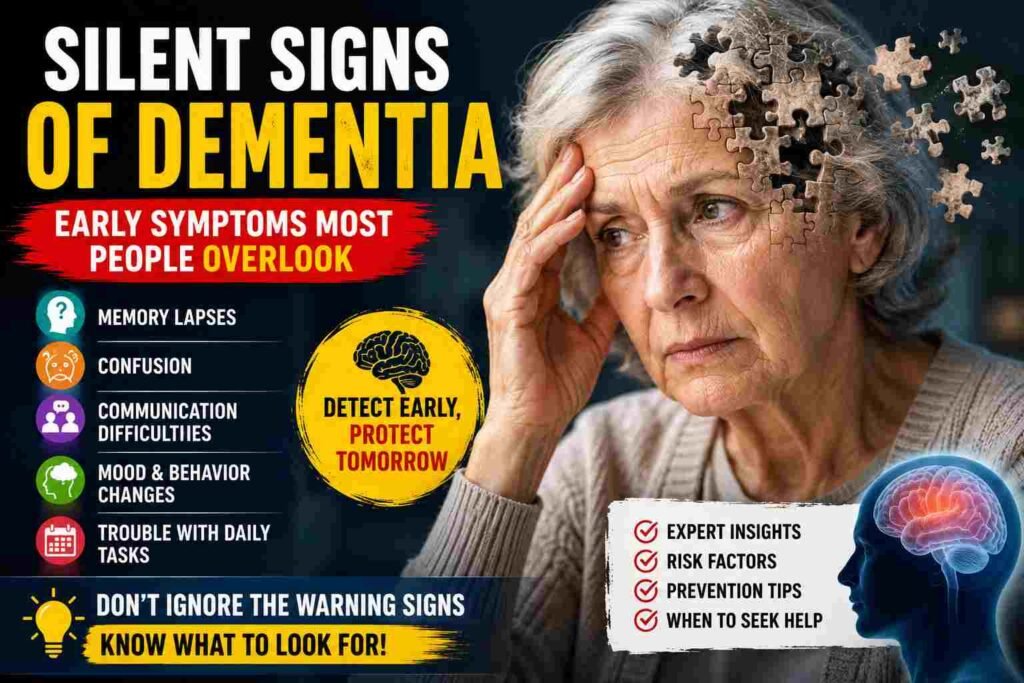
- 🧠 What Is Dementia?
- 😕 Memory Loss Is Not Always the First Sign
- 🔑 Silent Signs of Dementia Often Start Small
- 🖼️ Early Cognitive Changes and Confusion
- 😔 Mood Changes May Appear Early
- 🗣️ Communication Problems Can Signal Dementia
- 🚶 Wandering and Getting Lost
- 🍳 Difficulty Completing Familiar Tasks
- 😴 Sleep Changes and Dementia
- 🧍 Poor Judgment and Decision-Making
- 🖼️ Personality and Mood Changes
- 📅 Time Confusion Happens Frequently
- 👀 Visual and Spatial Problems Can Occur
- 🍽️ Appetite and Eating Habits May Change
- 📱 Why Dementia Symptoms Often Get Missed
- 🧬 Risk Factors for Dementia
- 😰 Chronic Stress and Isolation Matter Too
- 🩺 How Doctors Diagnose Dementia
- 💊 Can Dementia Be Treated?
- 👨👩👧 Families Often Notice Symptoms First
- ❤️ Final Thoughts
- FAQs About Silent Signs of Dementia
Most people associate dementia with severe memory loss. However, the earliest symptoms often appear far more quietly. In many cases, subtle behavioral changes, confusion, mood shifts, or communication problems emerge long before major memory decline becomes obvious. So, what are the silent signs of dementia people commonly ignore?
Families frequently dismiss the first warning signs as:
- Normal aging
- Stress
- Fatigue
- Personality changes
Unfortunately, delayed recognition may postpone medical evaluation and support.
Although occasional forgetfulness happens to everyone, persistent cognitive and behavioral changes deserve attention — especially when they gradually worsen over time.
This detailed guide explores the early symptoms, hidden behavioral changes, risk factors, diagnosis process, prevention strategies, and when families should seek medical help.
🧠 What Is Dementia?
Dementia is not a single disease.
Instead, dementia describes a group of conditions affecting:
- Memory
- Thinking
- Reasoning
- Communication
- Daily functioning
The most common type is Alzheimer’s disease. However, other forms include:
- Vascular dementia
- Lewy body dementia
- Frontotemporal dementia
According to Alzheimer’s Association, millions of people worldwide currently live with dementia-related conditions.
Importantly, dementia symptoms usually develop gradually rather than suddenly.
😕 Memory Loss Is Not Always the First Sign
Many people expect dementia to begin with obvious forgetfulness.
However, silent symptoms often appear first.
Some individuals initially experience:
- Personality changes
- Poor judgment
- Confusion
- Withdrawal from hobbies
- Communication difficulties
Consequently, family members may notice “something feels different” long before major memory issues emerge.
🔑 Silent Signs of Dementia Often Start Small
Early symptoms frequently appear subtle and inconsistent initially.
Therefore, people often ignore them for months or even years.
Common Early Changes Include:
- Misplacing items frequently
- Repeating questions
- Difficulty following conversations
- Forgetting appointments
- Losing track of time
🧩 Additionally, people may struggle more with:
- Planning
- Organization
- Problem-solving
These cognitive changes may gradually interfere with daily routines.
🖼️ Early Cognitive Changes and Confusion


🧠 Silent cognitive changes often appear gradually before severe memory loss becomes obvious.
😔 Mood Changes May Appear Early
Emotional and personality changes commonly occur during early dementia stages.
Some People Become:
- Irritable
- Anxious
- Withdrawn
- Suspicious
- Depressed
Additionally, individuals who once enjoyed social interaction may suddenly avoid:
- Family gatherings
- Hobbies
- Conversations
According to Mayo Clinic, mood and behavioral changes sometimes appear before major cognitive decline.
🗣️ Communication Problems Can Signal Dementia
Many people with early dementia struggle finding words during conversation.
Consequently, they may:
- Pause frequently
- Repeat themselves
- Lose train of thought
- Use incorrect words
📖 Reading comprehension and following complex discussions may also become harder.
Importantly, occasional word-finding difficulty happens normally with aging. However, frequent communication breakdowns deserve attention.
🚶 Wandering and Getting Lost
One major warning sign involves spatial confusion.
People may suddenly:
- Get lost driving familiar routes
- Forget directions
- Wander unintentionally
- Feel disoriented in known places
🚨 These symptoms may create serious safety risks.
According to National Institute on Aging, navigation problems commonly occur during dementia progression.
🍳 Difficulty Completing Familiar Tasks
Daily activities that once felt automatic may gradually become confusing.
Examples Include:
- Cooking recipes
- Managing finances
- Using appliances
- Following instructions
🧾 Consequently, mistakes involving bills, medications, or household tasks sometimes appear early.
Family members often notice increasing frustration during previously simple routines.
😴 Sleep Changes and Dementia
Sleep disturbances commonly accompany dementia.
Some people experience:
- Nighttime confusion
- Restlessness
- Excessive daytime sleepiness
- Altered sleep cycles
🌙 Additionally, poor sleep may worsen memory and concentration problems further.
Although sleep issues alone do not confirm dementia, persistent cognitive decline alongside sleep disruption deserves medical evaluation.
🧍 Poor Judgment and Decision-Making
Subtle judgment problems may appear surprisingly early.
For example, people may:
- Fall for scams more easily
- Spend money impulsively
- Ignore personal hygiene
- Dress inappropriately for weather
Consequently, family members sometimes notice unusual financial or behavioral decisions before memory loss becomes severe.
🖼️ Personality and Mood Changes

💬 Personality shifts and emotional withdrawal often become some of the earliest silent signs of dementia.
📅 Time Confusion Happens Frequently
People with dementia may struggle understanding:
- Dates
- Seasons
- Schedules
- Passage of time
📆 Consequently, they may:
- Miss appointments
- Forget routines
- Become confused about events
Initially, these mistakes may seem harmless. However, increasing frequency may indicate cognitive decline.
👀 Visual and Spatial Problems Can Occur
Some dementia types affect visual processing significantly.
Consequently, individuals may struggle with:
- Depth perception
- Distance judgment
- Reading
- Recognizing faces
🚗 Driving may become especially dangerous as spatial awareness worsens.
🍽️ Appetite and Eating Habits May Change
Some people with dementia:
- Forget meals
- Lose appetite
- Overeat
- Crave unusual foods
Additionally, cooking safely may become difficult because concentration declines.
Consequently, nutrition problems sometimes appear gradually.
📱 Why Dementia Symptoms Often Get Missed
Families commonly overlook early symptoms because changes appear slowly.
Additionally, many people assume:
- “They’re just aging.”
- “Everyone forgets things.”
- “They seem fine most days.”
However, progressive cognitive decline differs from normal aging.
According to Cleveland Clinic, dementia symptoms typically worsen gradually over time rather than remaining stable.
🧬 Risk Factors for Dementia
Several factors may increase dementia risk.
Common Risk Factors Include:
- Aging
- Family history
- High blood pressure
- Diabetes
- Smoking
- Poor sleep
- Lack of exercise
🫀 Additionally, cardiovascular health strongly affects brain health.
Consequently, healthy lifestyle habits may help reduce cognitive decline risk.
🏃 Exercise and Brain Health
Physical activity supports:
- Blood circulation
- Brain oxygenation
- Mood regulation
- Cardiovascular health
🚶 Research increasingly suggests exercise may help support long-term cognitive function.
Even moderate activities such as:
- Walking
- Swimming
- Strength training
may benefit brain health.
🥗 Diet May Influence Cognitive Aging
Nutrition also matters significantly.
Brain-supportive diets often include:
- Vegetables
- Fish
- Berries
- Healthy fats
- Nuts
🥦 Meanwhile, diets high in:
- Excess sugar
- Ultra-processed foods
- Trans fats
may contribute to inflammation and vascular problems.
Consequently, healthy eating habits may support long-term brain function.
😰 Chronic Stress and Isolation Matter Too
Long-term emotional stress affects brain health.
Additionally, social isolation may worsen:
- Depression
- Cognitive decline
- Mental health
❤️ Therefore, maintaining social connection and emotional well-being remains extremely important as people age.
🩺 How Doctors Diagnose Dementia
Doctors evaluate dementia through:
- Medical history
- Cognitive testing
- Brain imaging
- Neurological exams
- Blood tests
Importantly, some conditions mimic dementia symptoms, including:
- Vitamin deficiencies
- Thyroid disorders
- Depression
- Medication side effects
Therefore, professional evaluation becomes essential.
💊 Can Dementia Be Treated?
Currently, no cure exists for most dementia types.
However, early diagnosis may help:
- Slow symptom progression
- Improve safety
- Support planning
- Enhance quality of life
Some medications and therapies may temporarily improve symptoms for certain individuals.
👨👩👧 Families Often Notice Symptoms First
People experiencing cognitive decline may not recognize changes themselves initially.
Consequently, spouses, children, or close friends often identify warning signs first.
🚨 Families should pay attention if changes become:
- Persistent
- Progressive
- Interfering with daily life
Early support can dramatically improve long-term care planning.
❤️ Final Thoughts
Silent signs of dementia often begin gradually and quietly. Consequently, families may overlook important symptoms until cognitive decline becomes more advanced.
Although occasional forgetfulness remains normal, persistent changes involving:
- Memory
- Communication
- Mood
- Judgment
- Daily functioning
deserve medical attention.
Most importantly, early evaluation may help identify treatable conditions, improve planning, and support better long-term quality of life.
The earlier families recognize symptoms, the sooner they can seek guidance, support, and care.
FAQs About Silent Signs of Dementia
What are the earliest silent signs of dementia?
Early symptoms may include confusion, communication problems, mood changes, poor judgment, and difficulty completing familiar tasks.
Is memory loss always the first dementia symptom?
No. Behavioral and personality changes sometimes appear before major memory decline.
Can stress mimic dementia symptoms?
Yes. Stress, depression, sleep problems, and certain medical conditions may cause similar symptoms.
At what age does dementia usually begin?
Most dementia cases develop after age 65, although some forms appear earlier.
Does getting lost easily indicate dementia?
Repeated confusion in familiar places may represent an early warning sign.
Can lifestyle habits reduce dementia risk?
Exercise, healthy diet, sleep, social connection, and cardiovascular health may support brain health.
Should families seek medical help for mild symptoms?
Yes. Early evaluation may help identify causes and improve long-term management.
Is dementia curable?
Currently, no cure exists for most dementia types, although treatments may help manage symptoms.
This article has been made with the help of AI for better SEO but the research and inputs have been provided by me. Sources cited below.
- Alzheimer’s Association
- National Institute on Aging – Dementia Information
- Mayo Clinic – Dementia Symptoms and Causes
- Cleveland Clinic – Dementia Overview
- World Health Organization – Dementia Facts
- Alzheimer Society of Canada
You may also like to read other health related articles here also authored by me :
Symptoms of Diabetes and High Blood Pressure? Warning Signs
How Can I Lose Weight Fast Safely? Practical Guide That Actually Works
North American vs European Food: Habits, Their Effects on Health