- 1. Follow a Consistent Sleep Schedule
- 2. Reduce Screen Time Before Bed
- 3. Keep Your Bedroom Cool and Dark
- 4. Stay Hydrated — But Not Too Late
- 5. Avoid Heavy Meals Before Sleeping
- 6. Manage Stress and Anxiety
- 7. Sleep on a Clean Pillowcase
- 8. Use a Nighttime Skincare Routine
- 9. Exercise Regularly
- 10. Limit Caffeine and Alcohol
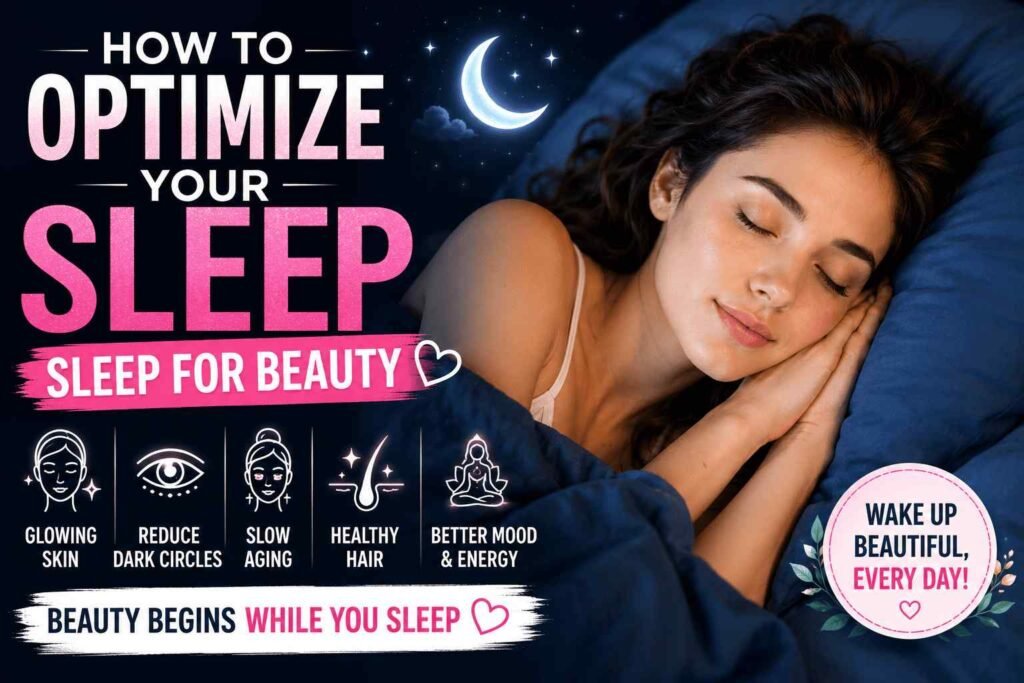
We often hear the phrase “beauty sleep,” but is it actually real? The answer is yes. Quality sleep is one of the most powerful and natural beauty treatments available. While expensive skincare products and beauty routines may help on the surface, true beauty begins with proper rest which basically translates into “optimize your sleep”.
When you sleep, your body repairs skin cells, balances hormones, restores energy, and rejuvenates your mind. Poor sleep, on the other hand, can lead to dark circles, dull skin, acne, premature aging, and constant fatigue.
In today’s stressful and screen-filled world, optimizing sleep has become more important than ever. If you want glowing skin, brighter eyes, healthier hair, improved mood, and better overall health, learning how to sleep properly can transform your life.
In this article, we’ll explore the science behind beauty sleep and practical ways to optimize your sleep for maximum beauty and wellness benefits.
Why Sleep Is Essential for Beauty
During sleep, your body enters repair mode. Skin cells regenerate faster, collagen production increases, and stress hormones decrease. Blood flow to the skin also improves, helping your face look fresh and healthy.
Poor sleep disrupts these natural recovery processes, causing visible changes in appearance and health.
Benefits of quality sleep include:
- Brighter skin
- Reduced dark circles
- Fewer wrinkles
- Better mood
- Healthier hair
- Improved energy
- Reduced stress
- Balanced hormones
Beauty sleep is not a myth — it is backed by science.
What Happens to Your Skin While You Sleep?
Your skin works hardest at night.
While you sleep:
- Collagen production increases
- Damaged skin cells repair themselves
- Blood circulation improves
- Moisture balance restores
- Inflammation decreases
Collagen is especially important because it keeps skin firm, smooth, and youthful. Poor sleep reduces collagen production, which can accelerate aging and wrinkle formation.
The body also produces growth hormone during deep sleep, which supports tissue repair and healthy skin regeneration.
Signs You Are Not Getting Enough Beauty Sleep
Your face often reveals sleep deprivation before you even feel it.
Common signs include:
- Puffy eyes
- Dark circles
- Pale or dull skin
- Fine lines
- Acne breakouts
- Dry skin
- Red eyes
- Tired appearance
Chronic sleep deprivation can make people appear older than they actually are.
The Connection Between Sleep and Aging
One of the biggest beauty benefits of sleep is slower aging. Thats why you must optimize your sleep.
Poor sleep increases cortisol, the body’s primary stress hormone. High cortisol levels break down collagen and increase inflammation, both of which contribute to premature aging.
Research shows that people who sleep poorly often experience:
- More wrinkles
- Uneven skin tone
- Reduced skin elasticity
- Slower skin recovery
Sleep is essentially your body’s natural anti-aging treatment.
How Sleep Affects Hair Health
Sleep also influences hair growth and scalp health.
During deep sleep, the body repairs tissues and regulates hormones that affect hair follicles. Poor sleep can contribute to:
- Hair thinning
- Hair fall
- Weak hair growth
- Increased stress-related shedding
Stress and sleep deprivation are closely connected, and chronic stress can push hair follicles into a resting phase, leading to noticeable hair loss.
Best Sleep Duration or sleep optimization for Beauty and Health
Most adults need between 7 and 9 hours of quality sleep every night.
Sleeping too little prevents the body from fully recovering, while excessive sleep may leave you feeling sluggish.
The key is not only sleep duration but also sleep quality.
Deep, uninterrupted sleep is where the most powerful restoration occurs.
How to Optimize Your Sleep for Beauty
Now let’s look at practical ways to improve your sleep naturally.
1. Follow a Consistent Sleep Schedule
Your body has an internal clock called the circadian rhythm.
Sleeping and waking up at the same time every day helps regulate:
- Hormones
- Energy levels
- Skin repair
- Sleep quality
Irregular sleep schedules confuse the body and reduce sleep efficiency.
Even on weekends, try to maintain a similar routine.
2. Reduce Screen Time Before Bed
Phones, tablets, and laptops emit blue light, which suppresses melatonin — the hormone that helps you sleep.
Late-night scrolling can:
- Delay sleep
- Reduce sleep quality
- Increase stress
- Cause mental overstimulation
Try to avoid screens at least 1 hour before bedtime.
Instead, consider:
- Reading a book
- Listening to calming music
- Meditation
- Light stretching
3. Keep Your Bedroom Cool and Dark
A comfortable sleep environment improves sleep quality dramatically.
For better sleep:
- Keep the room cool
- Use blackout curtains
- Reduce noise
- Use comfortable bedding
Darkness helps increase melatonin production, which supports deeper sleep.
4. Stay Hydrated — But Not Too Late
Hydration supports healthy skin and overall body function.
However, drinking too much water right before bed may interrupt sleep due to nighttime bathroom trips.
Try to stay hydrated throughout the day rather than late at night.
5. Avoid Heavy Meals Before Sleeping
Eating large or greasy meals before bed can:
- Cause indigestion
- Increase acid reflux
- Disrupt deep sleep
Try to finish dinner at least 2–3 hours before bedtime.
Light snacks like bananas, yogurt, or almonds may support better sleep.
6. Manage Stress and Anxiety
Stress is one of the biggest enemies of beauty sleep.
High stress levels increase cortisol, which can:
- Trigger acne
- Increase inflammation
- Speed up aging
- Disrupt sleep cycles
Helpful stress-reduction techniques include:
- Meditation
- Journaling
- Deep breathing
- Yoga
- Relaxing music
Even 10 minutes of relaxation before bed can improve sleep quality.
7. Sleep on a Clean Pillowcase
Your pillowcase collects:
- Oil
- Sweat
- Dirt
- Bacteria
Dirty pillowcases can contribute to acne and skin irritation.
For healthier skin:
- Change pillowcases regularly
- Use soft, breathable fabrics
- Consider silk pillowcases for reduced friction
Silk pillowcases may also help reduce hair breakage and facial creases.
8. Use a Nighttime Skincare Routine
Your skin absorbs products more effectively at night.
A simple nighttime routine may include:
- Gentle cleanser
- Moisturizer
- Hydrating serum
- Eye cream
Avoid harsh products that irritate the skin before bed.
Consistency matters more than expensive products. To optimize your sleep you have to exercise regularly.
9. Exercise Regularly
Physical activity improves sleep quality and circulation.
Benefits include:
- Faster sleep onset
- Deeper sleep
- Reduced stress
- Improved skin glow
However, intense exercise too close to bedtime may keep some people awake.
Morning or evening exercise works best for many people.
10. Limit Caffeine and Alcohol
Caffeine can stay in the body for several hours and interfere with sleep.
Alcohol may make you sleepy initially, but it reduces deep restorative sleep.
For better beauty sleep:
- Limit caffeine after afternoon hours
- Reduce alcohol intake before bed
Best Foods for Better Sleep and Skin
Some foods naturally support healthy sleep.
These include:
- Almonds
- Kiwi
- Bananas
- Oats
- Chamomile tea
- Walnuts
- Yogurt
Foods rich in magnesium and melatonin may help improve relaxation and sleep quality.
Healthy nutrition also directly affects skin appearance and energy levels.
Morning Habits That Improve Sleep
Good sleep starts during the day.
Helpful habits include:
- Getting morning sunlight
- Staying physically active
- Avoiding excessive naps
- Managing stress early
Sunlight exposure helps regulate the body clock and supports better nighttime sleep.
Can Sleeping Position Affect Beauty?
Yes, sleeping position may influence wrinkles and skin health.
Sleeping face-down can increase pressure and friction on the skin.
Experts often recommend sleeping on your back because it may:
- Reduce facial compression
- Help prevent wrinkles
- Reduce puffiness
Proper neck and spine support also improves overall comfort.
The Mental Beauty of Good Sleep
Beauty is not only physical.
When you sleep well, you often feel:
- More confident
- Happier
- More energetic
- Emotionally balanced
Good sleep improves mood, focus, and emotional resilience, all of which influence how you present yourself to the world.
Final Thoughts
Optimizing your sleep is one of the simplest and most powerful ways to improve your beauty and overall health naturally. While skincare products and beauty treatments can help externally, true restoration begins from within.
Quality sleep supports:
- Youthful skin
- Healthy hair
- Better mood
- Stronger immunity
- Reduced stress
- Higher energy levels
Beauty sleep is not a trend — it is essential self-care.
By improving your sleep (optimize your sleep pattern) habits and creating a healthy nighttime routine, you can wake up looking fresher, feeling healthier, and glowing naturally every day.
Frequently Asked Questions (FAQs)
Does sleep really improve skin?
Yes. During sleep, the body repairs skin cells, produces collagen, and reduces inflammation.
How many hours of sleep are best for beauty?
Most adults benefit from 7–9 hours of quality sleep per night.
Can poor sleep cause acne?
Yes. Poor sleep increases stress hormones and inflammation, which may contribute to acne breakouts.
Does sleeping late affect skin?
Irregular sleep schedules and late nights can disrupt hormone balance and reduce skin recovery.
Is beauty sleep scientifically real?
Yes. Research supports the connection between good sleep, skin repair, hormone balance, and healthier appearance.