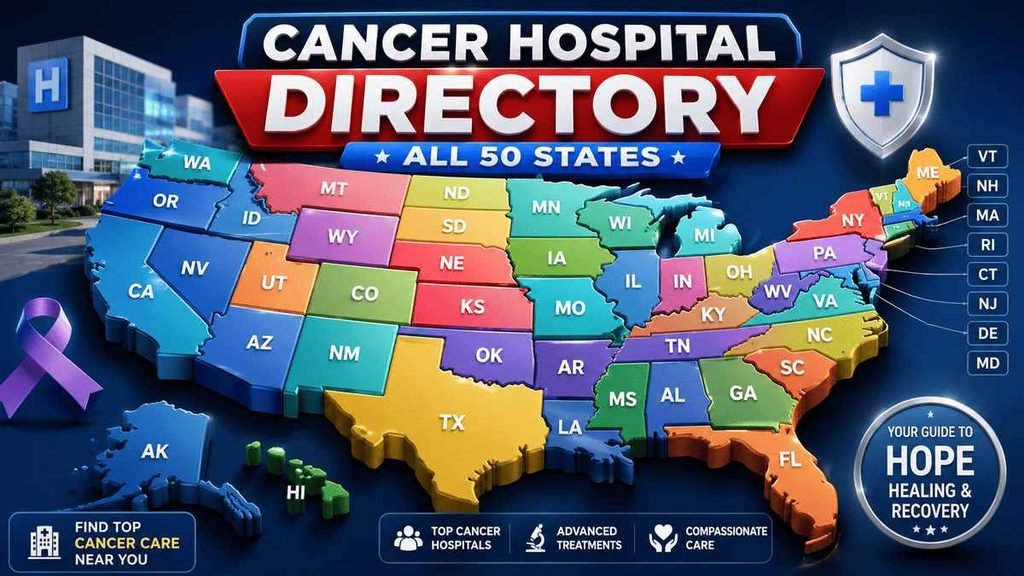
- 🏥 Best Cancer Hospitals by State
- 🔎 How We Compare Cancer Hospitals
- ⭐ How to Choose the Right Cancer Hospital
- 💳 Don't Forget About Cancer Treatment Costs
- 🚗 Hospital Location, Parking & Travel Matter More Than You Think
- 🧭 How to Use This Cancer Hospital Directory
- ❓ Frequently Asked Questions
- 🩺 A Final Word for Patients and Families
Best Cancer Hospitals USA : Finding the right cancer hospital can feel overwhelming. Patients and families often have to compare cancer centers, treatment options, doctors, specialties, locations, insurance networks, costs, parking, patient experience, and access to clinical trials—all while dealing with an incredibly difficult diagnosis.
That is why we created this complete U.S. cancer hospital directory.
You Can Press Ctrl + F or Comd + F and search/find your states name easily
This guide brings together our state-by-state research on the best cancer hospitals in all 50 states, making it easier to find leading cancer care close to home or identify a major academic cancer center for complex treatment.
Whether you are looking for a nationally recognized cancer center, a strong regional hospital, a convenient community oncology program, or a facility known for compassionate patient care, use the directory below to quickly find your state.
Quick answer: There is no single “best cancer hospital” for every patient. The right choice depends on the type and stage of cancer, treatment needed, clinical-trial availability, insurance coverage, location, physician expertise, and your personal priorities. Our state guides are designed to help you compare those factors more easily.
🏥 Best Cancer Hospitals by State
🔎 Find Cancer Hospitals by State
A–F
Alabama | Alaska | Arizona | Arkansas | California | Colorado | Connecticut | Delaware | Florida
G–M
Georgia | Hawaii | Idaho | Illinois | Indiana | Iowa | Kansas | Kentucky | Louisiana | Maine | Maryland | Massachusetts | Michigan | Minnesota | Mississippi | Missouri | Montana
N–W
Nebraska | Nevada | New Hampshire | New Jersey | New Mexico | New York | North Carolina | North Dakota | Ohio | Oklahoma | Oregon | Pennsylvania | Rhode Island | South Carolina | South Dakota | Tennessee | Texas | Utah | Vermont | Virginia | Washington | West Virginia | Wisconsin | Wyoming
Or use the grouped links below 👇
Northeast
- Connecticut 👉 Best Cancer Hospitals in Connecticut
Explore the leading cancer hospitals and cancer centers in Connecticut, including major academic and community-based options. - Delaware 👉 Best Cancer Hospitals in Delaware
Compare Delaware cancer hospitals based on cancer-care capabilities, accessibility, patient experience, and other practical factors. - Maine 👉 Best Cancer Hospitals in Maine
Discover leading cancer-care options across Maine, including facilities serving patients in both metropolitan and rural communities. - Maryland 👉 Best Cancer Hospitals in Maryland
Explore Maryland’s leading cancer centers, including major academic cancer-care programs and hospitals serving communities throughout the state. - Massachusetts 👉 Best Cancer Hospitals in Massachusetts
Compare some of the country’s most prominent cancer-care institutions with other highly regarded Massachusetts options. - New Hampshire 👉 Best Cancer Hospitals in New Hampshire
Find leading cancer hospitals and oncology programs serving patients throughout New Hampshire. - New Jersey 👉 Best Cancer Hospitals in New Jersey
Explore leading cancer centers and hospitals across New Jersey, including major academic and regional providers. - New York 👉 Best Cancer Hospitals in New York
Compare prominent cancer hospitals and comprehensive cancer programs across New York. - Pennsylvania 👉 Best Cancer Hospitals in Pennsylvania
Discover leading cancer hospitals throughout Pennsylvania, from major academic centers to strong regional programs. - Rhode Island👉 Best Cancer Hospitals in Rhode Island
Explore Rhode Island’s leading cancer hospitals and oncology programs. - Vermont 👉 Best Cancer Hospitals in Vermont
Compare cancer-care options available throughout Vermont, including academic and community-focused facilities.
🌽 Midwest
- Illinois 👉 Best Cancer Hospitals in Illinois
xplore leading cancer hospitals in Illinois, including major Chicago-area academic cancer centers and regional providers. - Indiana 👉 Best Cancer Hospitals in Indiana
Compare leading cancer hospitals and oncology programs across Indiana. - Iowa 👉 Best Cancer Hospitals in Iowa
Find major cancer-care providers serving patients across Iowa. - Kansas 👉 Best Cancer Hospitals in Kansas
Explore leading cancer hospitals and oncology programs throughout Kansas. - Michigan 👉 Best Cancer Hospitals in Michigan
Compare Michigan’s major cancer centers, academic hospitals, and regional oncology programs. - Minnesota 👉 Best Cancer Hospitals in Minnesota
Discover leading cancer hospitals in Minnesota, including major academic and specialty-care institutions. - Missouri 👉 Best Cancer Hospitals in Missouri
Explore prominent cancer hospitals and cancer-care programs throughout Missouri. - Nebraska 👉 Best Cancer Hospitals in Nebraska
Compare leading cancer-care facilities serving communities across Nebraska. - North Dakota 👉 Best Cancer Hospitals in North Dakota
Find cancer hospitals and oncology programs serving patients throughout North Dakota. - Ohio 👉 Best Cancer Hospitals in Ohio
Explore leading cancer hospitals across Ohio, including major academic and comprehensive cancer programs. - South Dakota 👉 Best Cancer Hospitals in South Dakota
Compare cancer-care options available to patients throughout South Dakota. - Wisconsin 👉 Best Cancer Hospitals in Wisconsin
Discover leading cancer hospitals and oncology programs across Wisconsin.
🌵 South & Southwest
- Alabama 👉 Best Cancer Hospitals in Alabama
Explore leading cancer hospitals and oncology programs serving communities across Alabama. - Arkansas 👉 Best Cancer Hospitals in Arkansas
Compare major cancer-care providers and regional oncology facilities throughout Arkansas. - Florida 👉 Best Cancer Hospitals in Florida
Discover prominent cancer hospitals and comprehensive oncology programs across Florida. - Georgia 👉 Best Cancer Hospitals in Georgia
Explore leading cancer centers and hospitals throughout Georgia. - Kentucky 👉 Best Cancer Hospitals in Kentucky
Compare cancer hospitals and oncology programs serving patients throughout Kentucky. - Louisiana 👉 Best Cancer Hospitals in Louisiana
Find leading cancer-care facilities across Louisiana, including major regional and academic programs. - Mississippi 👉 Best Cancer Hospitals in Mississippi
Explore cancer hospitals and oncology programs serving communities across Mississippi. - North Carolina 👉 Best Cancer Hospitals in North Carolina
Compare leading cancer hospitals and comprehensive cancer programs throughout North Carolina. - Oklahoma 👉 Best Cancer Hospitals in Oklahoma
Discover leading cancer hospitals and oncology providers across Oklahoma. - South Carolina 👉 Best Cancer Hospitals in South Carolina
Explore major cancer hospitals and regional oncology programs throughout South Carolina. - Tennessee 👉 Best Cancer Hospitals in Tennessee
Compare leading cancer hospitals across Tennessee, including major academic and regional cancer programs. - Texas 👉 Best Cancer Hospitals in Texas
Explore some of the nation’s largest and most advanced cancer-care programs across Texas. - Virginia 👉 Best Cancer Hospitals in Virginia
Find leading cancer hospitals and oncology programs serving patients throughout Virginia. - West Virginia 👉 Best Cancer Hospitals in West Virginia
Find leading cancer hospitals and oncology programs serving patients throughout West Virginia.
🏔️ Mountain & West
- Alaska 👉 Best Cancer Hospitals in Alaska
Explore cancer-care options available to patients across Alaska, including facilities serving geographically remote communities. - Arizona 👉 Best Cancer Hospitals in Arizona
Compare leading cancer hospitals and oncology programs throughout Arizona. - California 👉 Best Cancer Hospitals in California
Discover major cancer hospitals and comprehensive cancer centers across California. - Colorado 👉 Best Cancer Hospitals in Colorado
Explore leading cancer hospitals and oncology programs throughout Colorado. - Hawaii 👉 Best Cancer Hospitals in Hawaii
Compare cancer-care facilities serving patients across Hawaii. - Idaho 👉 Best Cancer Hospitals in Idaho
Find leading cancer hospitals and oncology programs serving communities throughout Idaho. - Montana 👉 Best Cancer Hospitals in Montana
Explore cancer-care options throughout Montana, including facilities serving patients across large geographic areas. - Nevada 👉 Best Cancer Hospitals in Nevada
Compare leading cancer hospitals and oncology programs across Nevada. - New Mexico 👉 Best Cancer Hospitals in New Mexico
Discover cancer-care providers serving patients throughout New Mexico. - Oregon 👉 Best Cancer Hospitals in Oregon
Explore leading cancer hospitals and oncology programs throughout Oregon. - Utah 👉 Best Cancer Hospitals in Utah
Compare prominent cancer hospitals and cancer-care programs across Utah. - Washington 👉 Best Cancer Hospitals in Washington
Discover leading cancer hospitals and comprehensive oncology programs throughout Washington. - Wyoming 👉 Best Cancer Hospitals in Wyoming
Explore cancer-care options serving patients throughout Wyoming.
🔎 How We Compare Cancer Hospitals
A hospital’s reputation matters, but it should not be the only factor you consider.
For each state guide, we look at multiple dimensions of cancer care so readers can make a more informed comparison.
1. Cancer Treatment Expertise
We consider the breadth and depth of oncology services, including medical oncology, radiation oncology, surgical oncology, and specialized cancer programs.
For patients with less common or complex cancers, access to highly specialized teams can become particularly important.
2. Academic & Research Strength
Major academic cancer centers often provide access to cancer research, advanced treatment approaches, multidisciplinary specialists, and clinical trials.
However, a community cancer center may offer something equally valuable: convenience and continuity of care closer to home.
Therefore, bigger does not automatically mean better for every patient.
3. Cancer Specialties
Different hospitals may have particular strengths in areas such as:
- Breast cancer
- Lung cancer
- Prostate cancer
- Colorectal cancer
- Brain and neurological cancers
- Blood cancers
- Pediatric cancer
- Gynecologic cancers
- Head and neck cancers
- Gastrointestinal cancers
- Skin cancer
- Rare cancers
Consequently, patients should always consider whether a hospital has significant experience treating their specific diagnosis.
4. Patient Experience
Cancer treatment involves far more than medical procedures.
Communication, nursing care, appointment coordination, emotional support, facility navigation, and staff responsiveness can significantly influence the overall experience.
Our state guides therefore consider patient sentiment alongside clinical and institutional factors.
5. Accessibility
Location can make a major difference.
Frequent chemotherapy, radiation, imaging, follow-up appointments, and laboratory visits can mean dozens of trips to a medical facility.
For that reason, we consider practical factors such as:
- Geographic accessibility
- Urban versus community location
- Parking convenience
- Facility navigation
- Availability of outpatient centers
- Regional coverage
6. Clinical Trials
For some patients, clinical trials may provide access to treatments that are not yet widely available.
Therefore, patients interested in experimental or emerging therapies should ask each cancer center about current trial eligibility.
7. Patient Support Services
Cancer care can involve financial, emotional, nutritional, social, and transportation challenges.
Depending on the facility, support may include social workers, nutrition services, counseling, survivorship programs, financial assistance resources, and patient navigation.
⭐ How to Choose the Right Cancer Hospital
The highest-ranked hospital on a list may not necessarily be the best hospital for you.
Instead, start with your diagnosis.
For example, someone seeking treatment for a rare blood cancer may prioritize a specialized academic cancer center, while another patient may place greater value on a highly regarded community oncology program located 15 minutes from home.
Next, ask your oncologist whether you need specialized surgery, radiation, transplantation, immunotherapy, genomic testing, or a clinical trial.
Then check your insurance network before making a final decision.
Finally, consider the practical side of treatment. A hospital with excellent medical expertise but a difficult three-hour commute may create a very different experience from a strong cancer center located nearby.
In other words, the best cancer hospital is the one that fits your medical needs and personal circumstances—not simply the hospital with the biggest name.
💳 Don’t Forget About Cancer Treatment Costs
Cancer treatment can become expensive quickly.
Depending on the diagnosis and treatment plan, costs may include:
- Specialist consultations
- Surgery
- Chemotherapy
- Immunotherapy
- Radiation therapy
- Diagnostic imaging
- Laboratory testing
- Prescription medications
- Hospital stays
- Rehabilitation
- Follow-up appointments
Insurance coverage can also differ considerably between hospitals and treatment providers.
Before beginning treatment, ask the hospital’s financial services department for an estimate of your expected out-of-pocket costs.
Also confirm whether your oncologist, hospital, anesthesiologist, radiologist, laboratory, and other relevant providers participate in your insurance network.
🚗 Hospital Location, Parking & Travel Matter More Than You Think
Cancer treatment often requires repeated visits.
That means parking, traffic, transportation, and appointment logistics can become surprisingly important.
For example, a patient receiving several weeks of radiation therapy may visit the facility repeatedly. In that situation, convenient parking and a short drive can make everyday treatment substantially easier.
Meanwhile, patients traveling from rural areas may need to consider nearby hotels, transportation services, lodging assistance, or whether the hospital has satellite oncology locations.
Therefore, don’t overlook convenience when comparing cancer hospitals.
🧭 How to Use This Cancer Hospital Directory
Start by selecting your state above.
Then review the detailed state guide and compare the hospitals listed there.
Pay particular attention to the factors most relevant to your situation. You may want to prioritize cancer specialty, clinical trials, research, patient experience, location, insurance acceptance, treatment costs, or access to specific specialists.
After narrowing your choices, discuss them with your oncologist or primary-care physician.
You can also contact the cancer centers directly and ask about second opinions, appointment availability, treatment programs, clinical trials, and insurance coverage.
❓ Frequently Asked Questions
What is the best cancer hospital in the United States?
There is no universally best cancer hospital for every patient. The right choice depends on the cancer type, treatment required, physician expertise, clinical-trial availability, insurance, location, and personal preferences.
Are academic cancer centers always better?
Not necessarily. Academic centers often provide extensive research and subspecialty expertise, while community cancer centers can offer excellent care with greater convenience and easier access for routine treatment.
Should I get a second opinion for cancer?
A second opinion can be helpful, particularly when you face a complex diagnosis, rare cancer, major surgery, or multiple possible treatment approaches. Ask your medical team whether a second opinion makes sense for your situation.
How do I compare two cancer hospitals?
Compare cancer-specific expertise, physician experience, treatment options, clinical trials, patient experience, insurance participation, expected costs, travel requirements, and support services.
Does insurance determine which cancer hospital I can use?
Your insurance plan can affect which hospitals and physicians count as in-network. However, coverage rules vary by plan. Always verify network status and expected out-of-pocket expenses directly with your insurer and the hospital.
Are the hospitals in this directory ranked purely by medical quality?
No. Hospital comparisons should consider multiple factors. Our state guides combine considerations such as cancer-care capabilities, patient experience, accessibility, research strength, specialties, and practical factors. Rankings should serve as a starting point rather than a substitute for professional medical advice.
Can I use this directory to find a hospital for a specific type of cancer?
Yes. Once you open your state’s detailed guide, look for hospitals with expertise relevant to your specific diagnosis. For complex or rare cancers, also ask whether the hospital has a dedicated specialty program and access to appropriate clinical trials.
🩺 A Final Word for Patients and Families
Choosing where to receive cancer treatment is one of the most important healthcare decisions you may face.
However, you do not have to make that decision based on a single ranking, star rating, or hospital name.
Instead, use this directory as your starting point.
Explore your state’s cancer hospitals. Compare the factors that matter most to you. Ask questions. Get a second opinion when appropriate. Check insurance coverage. Consider travel and treatment logistics. Most importantly, discuss your options with qualified healthcare professionals who understand your individual diagnosis.
Our goal with these state-by-state guides is simple: make cancer-hospital research easier, clearer, and more useful for patients and families across the United States.
Bookmark this page and return as we continue expanding and updating the state guides.
Find your state above, explore the detailed cancer hospital comparison, and take the next step toward making a more informed healthcare decision.
Authoritative source links
- National Cancer Institute (NCI) — NCI-Designated Cancer Centers: The official NCI directory explains the NCI Cancer Centers Program and provides information about designated centers and their research capabilities.
NCI-Designated Cancer Centers - NCI — Cancer Center Directory: Useful for checking individual NCI-designated centers, their institutions, locations, center types, and leadership.
NCI Cancer Center Directory - American Cancer Society — Choosing a Cancer Center or Hospital: Excellent supporting source for explaining how patients should evaluate cancer centers, including cancer-specific expertise, location, insurance, clinical trials, support services, and accreditation.
American Cancer Society: Choosing a Cancer Center or Hospital - NCI — Find Cancer Clinical Trials: A strong resource to link when discussing clinical-trial availability and helping readers search for trials by cancer type and location.
NCI Cancer Clinical Trials Search - American Cancer Society — Navigating the Healthcare System: Supports your discussion of choosing cancer doctors, cancer centers, insurance, location, and treatment decisions.
American Cancer Society: Navigating the Healthcare System - NCI — Cancer Clinical Trials Information: Helpful for explaining what clinical trials are, how they work, informed consent, and patient protections.
NCI: Cancer Clinical Trials Information